
The 5-Minute Cyber Brief
Good morning. Start with the issue most likely to reshuffle someone's priority list today, then move through the supporting developments that deserve attention.
Stay Current on Cyber Policy and Guidance
Track new CISA actions, regulations, guidance, and risk trends in a quick daily format.
Free. Weekday mornings. Unsubscribe anytime.
Lead Story
CISA warns of hackers exploiting Langflow, N-central, Apache Tomcat flaws
The U.S. Cybersecurity and Infrastructure Security Agency is giving federal agencies three days to mitigate vulnerabilities in IBM Langflow, N-central, and Apache Tomcat, all actively exploited.
Why it matters: This matters because one active-exploitation warning now spans AI tooling, remote management, and a deeply embedded app platform. The technical risk is real, but the bigger operational risk is losing a day to unclear ownership and incomplete exposure data.
Read more on CyberExperts: Read more on CyberExperts
Original source: BleepingComputer
Also Worth Your Attention
Hackers run khunt post-exploitation toolkit from Oracle database

Hackers exploited a SQL injection vulnerability to install a post-exploitation toolkit directly inside an Oracle database that was used to breach a corporate network.
Why it matters: This matters because post-exploitation running inside the database tier is a very different problem from a noisy web compromise. Once attackers can live where privileged data and trusted workflows already sit, containment gets harder and blast-radius assumptions get worse fast.
Read more on CyberExperts: Read more on CyberExperts
CISA Urges Water and Wastewater Systems Sector to Protect OT Against Activity Targeting PLCs

CISA is warning water and wastewater operators about activity targeting programmable logic controllers, pushing OT teams to review remote access, internet exposure, and controller change controls now rather than after an incident.
Why it matters: This matters because PLC-focused activity in water and wastewater environments can become an operations and safety problem quickly, especially where remote access is loosely controlled or asset inventories are incomplete.
Read more on CyberExperts: Read more on CyberExperts
New OVSwrap Linux Kernel Flaw Lets Local Users Gain Root via Open vSwitch

A memory corruption flaw in the Linux kernel's Open vSwitch datapath gives ordinary local users a path to root on a broad set of default-configured distributions, and a public exploit ships with pre-built records for roughly 800 kernel builds.
Why it matters: This matters because a public local-to-root path on broadly deployed Linux builds can turn one ordinary foothold into full system control. Teams that rely on segmentation alone should assume post-compromise escalation is still a live part of the risk.
Read more on CyberExperts: Read more on CyberExperts
From open lures to cloaked gates: How a macOS ClickFix campaign learned to hide
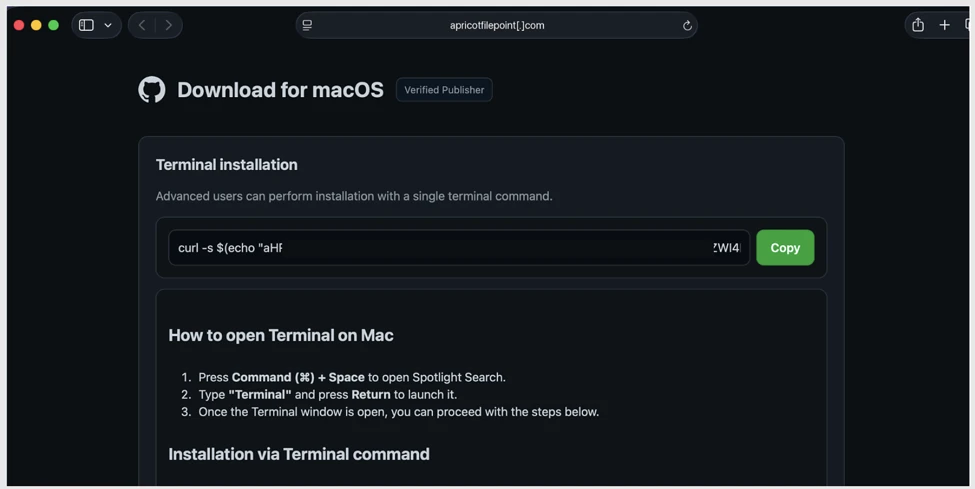
A macOS ClickFix campaign shifted tactics from openly serving infostealer lures to hiding them behind a browser-fingerprinting gate. The change makes malicious infrastructure harder to detect while giving defenders new hunting opportunities.
Why it matters: This matters because ClickFix-style attacks keep evolving faster than user awareness programs do. Hiding payload stages in browser cache artifacts gives attackers another low-friction way to turn a convincing prompt into malware execution.
Read more on CyberExperts: Read more on CyberExperts
Go Deeper
Editorial Promise
CyberExperts should help you get the signal fast, understand what actually matters, and know where to go deeper before the day gets noisy.