The 5-Minute Cyber Brief
Good morning. Start with CISA’s KEV move on two exploited PaperCut flaws, because this is the kind of update that changes patch order immediately. Then move through the identity-pressure stories that show how Teams abuse, trusted channels, and ClickFix tradecraft keep turning ordinary workflow into attacker leverage.
Lead Story
CISA Adds Two Known Exploited Vulnerabilities to Catalog

This is not just another catalog update. CISA is effectively telling defenders that these flaws have crossed from known problem into active exploitation territory, which means affected environments now belong in the patch queue's front row. The signal here sits at the intersection of kev, advisories, critical infrastructure.
Don’t Miss the Policy Changes That Affect Security Decisions
Get the key CISA actions, new regulations, guidance, and risk shifts in a quick daily brief.
Free. Weekday mornings. 5 minutes or less.
Built from 100+ trusted cybersecurity sources.
Why it matters: KEV additions matter because they turn patching debates into exposure decisions. Once CISA adds a flaw here, slower teams lose room to treat it like routine backlog.
Read more on CyberExperts: Read more on CyberExperts
Original source: CISA
Also Worth Your Attention
Berlin confirms data theft after Rhysida ransomware attack claims

Berlin's city administration has confirmed that cybercriminals are attempting to extort the city after the Rhysida ransomware gang listed it on their data leak site.
Why it matters: The real implication is not just attacker activity. It is how quickly uncertainty around exposure, ownership, and recovery can turn a contained problem into a messy operational one.
Read more on CyberExperts: Read more on CyberExperts
Spring Ring: An Inside Look at Voice Phishing Campaigns in Microsoft Teams

Learn how the Spring Ring campaign abuses Microsoft Teams and voice phishing to deploy malware and target enterprise domain controllers.
Why it matters: This matters because the right response is usually not panic. It is better prioritization, clearer judgment, and faster translation from source material into action.
Read more on CyberExperts: Read more on CyberExperts
TerminalFix campaign deploys a reverse tunnel through multistage intrusion
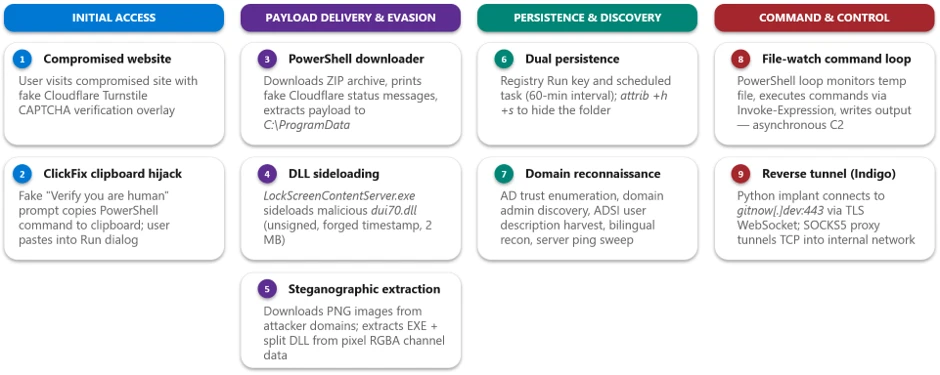
Microsoft Threat Intelligence provides analysis of a ClickFix campaign that uses fake CAPTCHA prompts, DLL sideloading, and a reverse tunnel, with detections and hunting guidance.
Why it matters: This matters because ClickFix-style attacks keep evolving faster than user awareness programs do. Hiding payload stages in browser cache artifacts gives attackers another low-friction way to turn a convincing prompt into malware execution.
Read more on CyberExperts: Read more on CyberExperts
Identity Abuse Through Trusted Communication Channels

Unit 42 shows how attackers abuse trusted business channels like chat, support flows, meeting invites, and collaboration tools to make credential theft, MFA pressure, and remote-access abuse look like normal work.
Why it matters: This matters because strong identity controls still fail when attackers can hijack the workflow around them. If chat, support, and collaboration channels become the delivery path, MFA prompts and remote-access requests can feel routine right up until the compromise lands.
Read more on CyberExperts: Read more on CyberExperts
Go Deeper
Editorial Promise
CyberExperts should help you get the signal fast, understand what actually matters, and know where to go deeper before the day gets noisy.