The 5-Minute Cyber Brief
Good morning. Here are the cybersecurity developments most likely to matter to your day.
Lead Story
Keyv-Linked npm Worm Poisons Hundreds of Packages, Plants Claude Code and VS Code Hooks

The value here is not just speed. The Hacker News is useful when it helps readers notice a practical development early enough to ask better questions before the rest of the day gets noisy. It also touches breaking news, campaigns, research.
Reading an older article? Use the brief to stay current.
This Article Gives You the Background. The Brief Gives You What Changed Next.
Get the weekday cyber brief for new policy moves, CISA actions, and risk developments this article could not cover when it was published.
By subscribing you agree to our Privacy Policy.
Free. Weekday mornings. 5 minutes or less.
Why it matters: This matters because the right response is usually not panic. It is better prioritization, clearer judgment, and faster translation from source material into action.
Read more on CyberExperts: Read more on CyberExperts
Original source: The Hacker News
Also Worth Your Attention
TP-Link patches Omada ZTP flaws allowing hackers to breach networks

TP-Link has patched 15 vulnerabilities in the zero-touch provisioning (ZTP) mechanism of its Omada network devices that could be chained with previously disclosed flaws to achieve remote code execution (RCE).
Why it matters: The real implication is not just attacker activity. It is how quickly uncertainty around exposure, ownership, and recovery can turn a contained problem into a messy operational one.
Read more on CyberExperts: Read more on CyberExperts
CISA Urges Water and Wastewater Systems Sector to Protect OT Against Activity Targeting PLCs

The signal here is not raw novelty. It is whether this development changes what security teams need to look at first, explain more clearly, or stop treating like background noise. It also touches kev, advisories, critical infrastructure.
Why it matters: This matters because the right response is usually not panic. It is better prioritization, clearer judgment, and faster translation from source material into action.
Read more on CyberExperts: Read more on CyberExperts
128 Seconds to disruption: Microsoft Defender stops ransomware at QNET
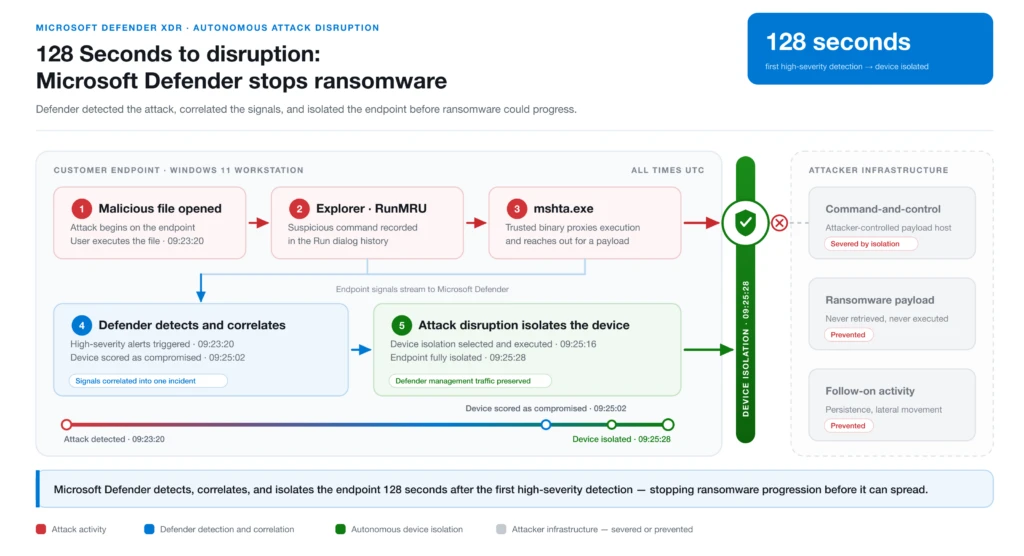
The useful signal here is not just that another attacker campaign exists. It is that defenders may need to revisit how exposed they are, how quickly they can verify impact, and whether recovery assumptions are actually as strong as they think. This one touches patches, vulnerabilities, identity.
Reading an older article? Use the brief to stay current.
This Article Gives You the Background. The Brief Gives You What Changed Next.
Get the weekday cyber brief for the developments, risk shifts, and new signals that changed the picture after this article was published.
By subscribing you agree to our Privacy Policy.
Free. Weekday mornings. 5 minutes or less.
Why it matters: The real implication is not just attacker activity. It is how quickly uncertainty around exposure, ownership, and recovery can turn a contained problem into a messy operational one.
Read more on CyberExperts: Read more on CyberExperts
DOUBLECUP Uses ClickFix and Cached PNGs to Deliver CountLoader and DeviceManager RAT

A new Russian loader-as-a-service (LaaS) codenamed DOUBLECUP has been using ClickFix lures as a way to stage malware-laced PNG images in victims' browser cache and ultimately deliver CountLoader and a previously undocumented remote access trojan called DeviceManager.
Why it matters: This matters because ClickFix-style attacks keep evolving faster than user awareness programs do. Hiding payload stages in browser cache artifacts gives attackers another low-friction way to turn a convincing prompt into malware execution.
Read more on CyberExperts: Read more on CyberExperts
Go Deeper
Editorial Promise
CyberExperts should help you get the signal fast, understand what actually matters, and know where to go deeper before the day gets noisy.
Newer CyberExperts coverage on this topic
This article still works as background. If you want the current picture, start with the freshest related coverage below and today's brief.
Coder’s registry infrastructure compromised to push malicious modules
The Coder incident is a supply-chain lesson in miniature: once attackers can tamper with trusted module distribution, defenders are no longer verifying...
Attackers Turn Trusted Node.js Runtime Into Malware Delivery Tool in Targeted Attacks
The useful lesson in this campaign is not that Node.js is bad. It is that adversaries keep choosing legitimate runtimes defenders already...
HPE patches critical ArubaOS-CX remote code execution flaw
ArubaOS-CX deserves attention because switching software rarely gets treated with the same urgency as identity or edge security until exploitation arrives. A...
The 5-Minute Cyber Brief: September 18, 2026
The fastest way to catch up on what changed after this article was published.
Start your morning with the signal that matters.
Get the biggest cybersecurity developments, why they matter, and where to go deeper on CyberExperts.
By subscribing you agree to our Privacy Policy.
Free. Weekdays. Built for operators.