

“`html
Sneaky Linux Malware Exploits RAR Filenames to Outsmart Antivirus Systems
Summary
- Rising Threat: A new Linux malware leverages RAR filenames to bypass antivirus detection.
- Exploitation Tactics: Cybercriminals are using sophisticated packaging techniques to disguise malicious files.
- Key Players: Advanced Persistent Threat (APT) groups are believed to be behind these attacks.
- Future Implications: As the malware continues to evolve, cybersecurity measures must advance rapidly to combat these threats.
Introduction
In a continuously evolving game of cat and mouse, the cybersecurity landscape faces yet another complex adversary: a new Linux malware exploiting RAR filenames to slip past antivirus systems. This innovation in cyber threats poses a significant challenge to enterprises and personal users alike, highlighting the dynamic and adaptive behavior of threat actors. As outlined in The Hacker News, a growing trend involves sophisticated techniques in hiding malware within seemingly innocuous file types, demanding a more strategic approach to cybersecurity.
Methods of Exploitation
Packing and Disguising Malicious Content
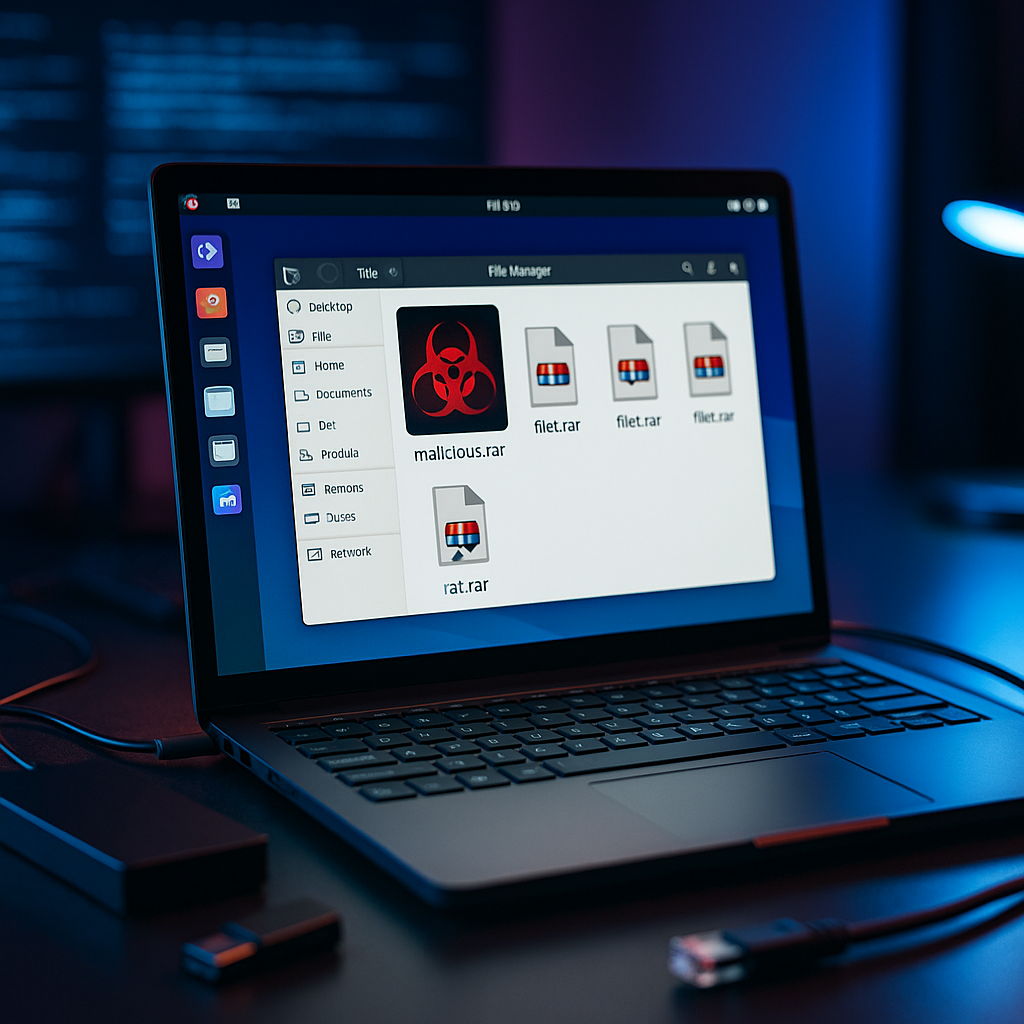
The discovered malware employs a cunning tactic of using file extensions and packaging methods to obscure its true nature. By disguising the malware within RAR files, which are typically used for data compression and archiving, the threat actors make it difficult for traditional antivirus systems to detect malicious activities. This method takes advantage of RAR’s popularity and vast use, ensuring a low suspicion rate by leveraging common file-sharing protocols.
Advanced Techniques in Deception
This approach is sophisticated enough to circumvent many conventional protective measures. By embedding within legitimate-looking compression files, the malware can skirt past initial security checks, opening the door for more advanced stages of attacks. Such intricacy in covertness is a chilling reminder of the adeptness that accompanies modern cyber threats.
Key Players Behind the Threat
Security researchers suspect that Advanced Persistent Threat (APT) groups, known for their advanced cyber espionage capabilities, are behind these malware activities. These groups are often state-sponsored, possessing the resources required to develop and deploy such sophisticated attacks. Their involvement suggests a targeted intent, often aligning with geopolitical interests.
Implications for Cybersecurity
Need for Enhanced Detection Systems
The appearance of this malware necessitates advancements in antivirus and security protocols. Traditional signature-based detection methods may not suffice, as they often lag in recognizing newly crafted threats with no previous footprint. As these threats become more adaptive, cybersecurity infrastructure must innovate in predictive analysis and anomaly detection.
Future of Linux Security
The complexity of these exploits highlights a need for dedicated focus on securing Linux systems, which have historically been considered less prone to attacks compared to other operating systems. Organizations must prioritize Linux security in their overall cybersecurity strategies to mitigate risks associated with these sophisticated malwares.
Conclusion
The emergence of Linux malware leveraging RAR filenames to circumvent antivirus solutions signifies a precarious evolution in cyber threats—one that challenges the foundational security mechanisms in place today. As APT groups continue to pioneer intricate methods of attack, it is imperative for the cybersecurity community to advance at a similar pace. The battle against malware is far from over, and only through proactive innovation and strategic vigilance can we hope to thwart these digital adversaries. This situation serves as a stark reminder of the continual arms race that defines modern cybersecurity.
“`
Want to know how these risks apply to your business?
Get an AI Cyber Checkup and receive a practical AI-generated action plan showing what to fix first.
Get an AI Cyber Checkup
