

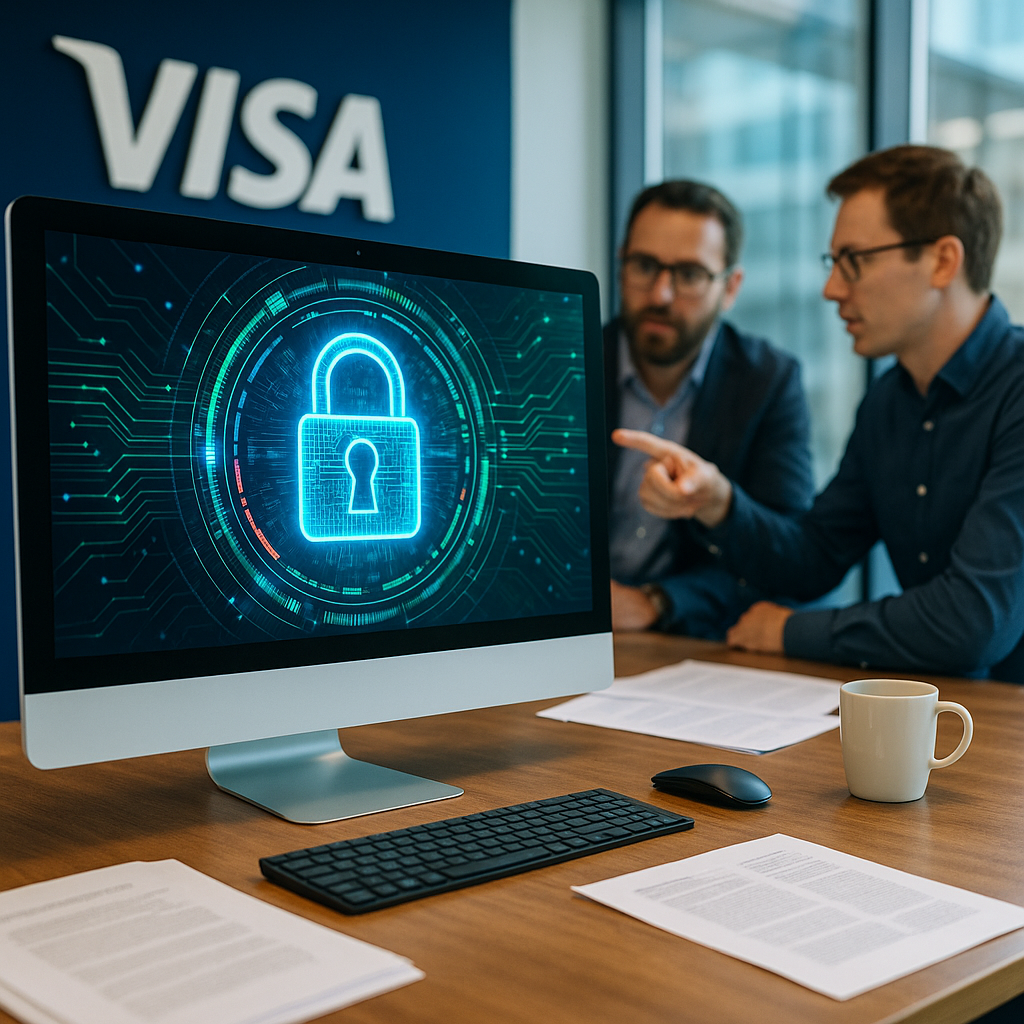
Visa Fortifies Client Defense with Enhanced Cybersecurity Strategies
Summary
- Visa’s Enhanced Cybersecurity Strategy: Visa is actively strengthening its cybersecurity measures to safeguard clients against emerging threats.
- Global Partnership for a Safer Digital Space: Visa partners globally with various entities to expand cybersecurity protections.
- Proactive Risk Management: Emphasizes proactive risk management and real-time fraud prevention strategies.
- The Role of Advanced Technology: Leveraging AI and machine learning to detect and mitigate threats more effectively.
- Educational Initiatives: Focus on educating clients and partners to foster a collaborative defense ecosystem.
Introduction
In a digital age marked by escalating security challenges, organizations across the globe face the daunting task of defending against complex cyber threats. Visa, a frontrunner in global payment technology, has bolstered its cybersecurity strategies to protect its vast network and clientele. These efforts are part of Visa’s commitment to ensure the safety of financial transactions amidst an ever-evolving threat landscape.
Visa’s Enhanced Cybersecurity Strategy
In a move to strengthen its defenses, Visa has implemented a comprehensive cybersecurity strategy that includes modernizing its infrastructure. By increasing investments in state-of-the-art technologies and expanding its team of cybersecurity experts, Visa aims to shield its clients from potential cyber threats. They have emphasized that cybersecurity is not merely a defense mechanism but a strategic priority.
Global Partnership for a Safer Digital Space
Visa has forged global partnerships as part of its strategy to create a safer digital space. These collaborations span across financial institutions, security firms, and governmental bodies. By sharing intelligence and resources, Visa and its partners work towards collective resilience against cyber adversaries. This initiative not only fortifies Visa’s own defenses but also contributes to a larger, more secure ecosystem.
Proactive Risk Management
Visa’s approach to cybersecurity is dynamic and proactive. It places a significant emphasis on risk management, highlighting the need for real-time monitoring and rapid response capabilities. The company has developed sophisticated fraud detection systems that offer continuous surveillance to anticipate and neutralize threats before they materialize. This forward-thinking approach helps maintain the integrity of transactions and protect customer data effectively.
The Role of Advanced Technology
Advanced technology plays a pivotal role in Visa’s cybersecurity framework. They leverage artificial intelligence and machine learning to enhance their threat detection capabilities. Through these technologies, Visa can analyze vast amounts of data to identify patterns and anomalies that suggest potential cyber threats. This technological edge allows for faster decision-making and mitigation strategies to counteract cyber threats promptly.
Educational Initiatives
Recognizing the importance of a well-informed user base, Visa has launched multiple educational initiatives aimed at empowering clients and partners. These programs are designed to raise awareness about cybersecurity threats and best practices. By fostering a culture of vigilance and preparedness, Visa encourages a cooperative form of defense where everyone plays a role in safeguarding sensitive information.
Conclusion
Visa’s commitment to bolstering cybersecurity is indicative of its overarching mission to provide secure and reliable financial services. By implementing advanced technology, fostering global partnerships, and promoting education, Visa addresses the multi-faceted nature of cyber threats. This comprehensive strategy not only protects individual transactions but also enhances the overall security of the financial ecosystem. As cyber threats continue to evolve, Visa’s proactive measures serve as a blueprint for fortifying defenses in an increasingly digital world. This approach invites reflection on the shared responsibility in cybersecurity, urging further collaboration and innovation in the field.
Want to know how these risks apply to your business?
Get an AI Cyber Checkup and receive a practical AI-generated action plan showing what to fix first.
Get an AI Cyber Checkup
