

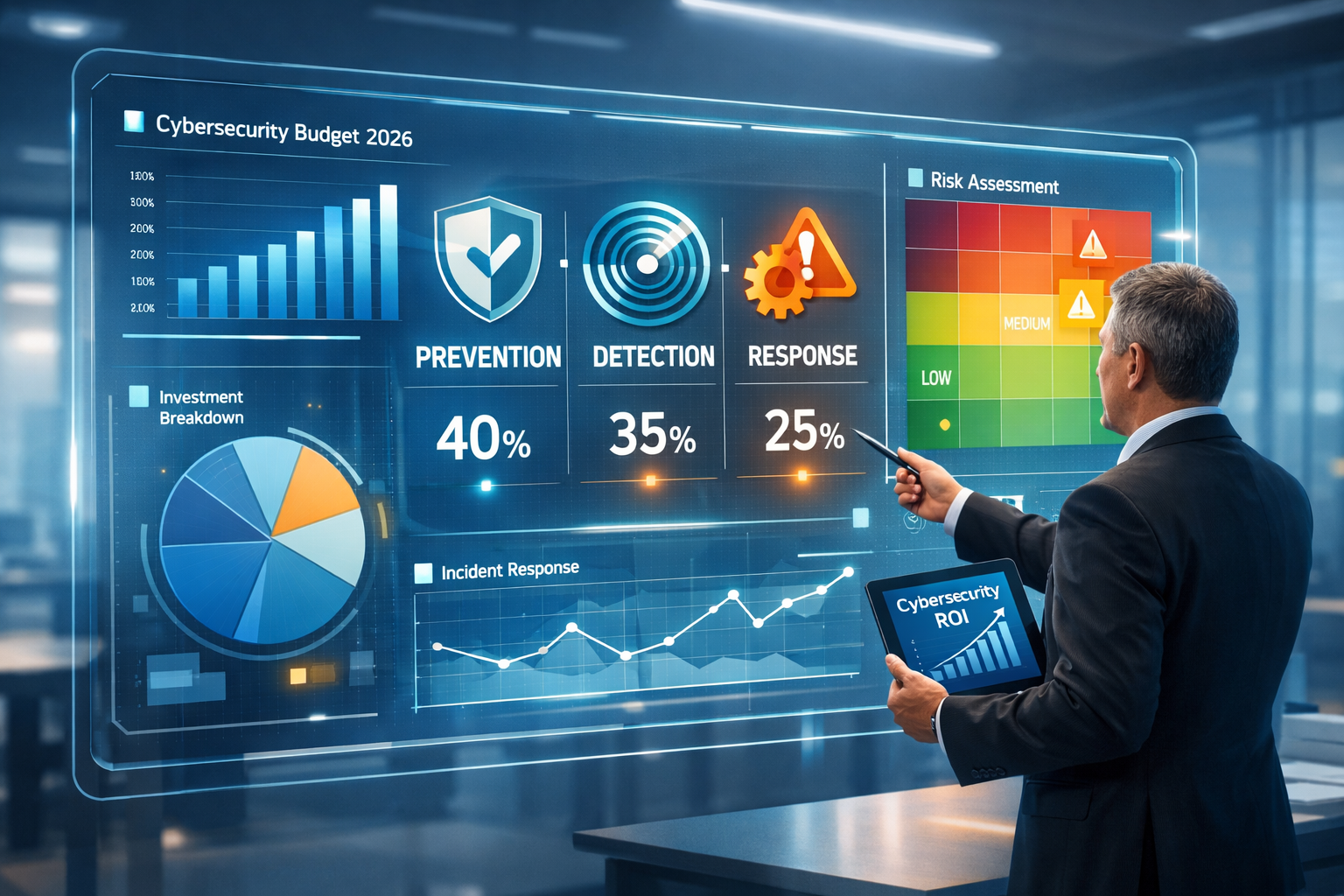
Threat actors, cloud complexity and regulatory pressure are changing what cybersecurity looks like in 2026, which is why organizations are investing more in what keeps the business running and enables safe growth. Yet, when budgeting for protection, they must ensure they’re prioritizing risk, funding detection and response and saving room for emerging needs. That’s where companies must outline a clear financial strategy that helps them balance prevention, detection and recovery without wasting money on low-value controls.
The Importance of Financial Clarity in Cybersecurity
Cyber incidents are costly. According to IBM, a single breach now costs an average of $4.4 million, so prioritizing cybersecurity as a budget line item is truly financial planning rather than just IT housekeeping. Framing security in dollars makes the risk tangible to executives and forces clearer benefits when resources are tight.
Think of it like personal finance. Studies have found that 65% of Americans don’t track monthly spending. This lack of visibility leads to avoidable surprises. At scale, the corporate equivalent is gaps in asset inventory, unclear residual risk or untracked security spend — all things that undermine a realistic budget. Clear, quantified scenarios make it far easier to justify investments to leadership and ensure each dollar reduces real business risk.
Top Cybersecurity Threats to Factor Into Your 2026 Budget
Knowing which threats matter most will make your budget decisions easier. For 2026, focus on the risks gaining momentum because each demands different mixes of prevention, detection and response funding.
The Continued Evolution of Ransomware
Ransomware is growing beyond encrypted files. Attackers now steal data, threaten leaks and combine extortion with encryption to squeeze victims from multiple angles. These newer tactics — along with ransomware-as-a-service and more automated tooling — enable criminals to scale attacks quickly. Some industry forecasts even warn ransomware losses could reach $265 billion annually by 2031.
Since ransomware is such a layered problem, it will require several tactics organizations must budget for in the new year. These include funding immutable backups and rapid recovery capabilities, beefing up detection and endpoint controls, and investing in identity and access hygiene to reduce initial compromise.
Also, reserve budget for incident response partners, forensic work, legal advice and potential negotiation costs. The ability to respond fast and confidently often determines whether an attack becomes an expensive disaster or a costly but contained incident.
AI-Powered and Hyper-Personalized Phishing
AI-powered phishing is changing the rules of social engineering. Since the emergence of generative AI, attackers can now utilize large language models and data scraping to craft context-rich, grammatically flawless messages that mimic an executive’s tone or replicate a vendor’s cadence. Add voice-synthesis and deepfake tools, and they can produce believable voicemail or video prompts that shortcut normal skepticism.
This phishing tactic makes attacks look more legitimate, even to experienced staff. To budget for defense, leaders should set aside funding for advanced email protection like machine learning (ML) filtering because AI-powered threats can easily bypass simple, rule-based filters. On the other hand, ML can identify patterns of AI-crafted phishing.
Include enterprise-grade multi-factor authentication so stolen passwords alone won’t let attackers into accounts. Finally, invest in endpoint detection that monitors for unusual behavior after a compromise, as behavior-based tools can catch attacks that signature lists miss.
Vulnerabilities in the Supply Chain
Vulnerabilities in the supply chain are different because they’re more than an organization’s problem. They become an issue for anyone connected to its systems. Therefore, a compromise at a vendor can be a backdoor into a company’s network.
Yet, with so many integrations, APIs and shared credentials, attackers increasingly exploit those weak links. No wonder 88% of respondents say they’re at least somewhat concerned about supply chain cyber risks — it’s widespread and often outside security teams’ immediate control. Hence, it deserves specific attention in a budget.
Make supply chain risk a funded program, starting with basic vendor due diligence and security questionnaires. Doing so helps security find weak controls before onboarding a partner. It’s also far cheaper to decline or harden a risky integration than to clean up after a breach.
Next, add continuous monitoring of key suppliers. Budgeting for this helps detect compromises quickly and isolates them before attackers move laterally. Finally, set aside funding for third-party incident response and legal support so you can mobilize experts fast and avoid costly recovery.
Insider Threats: The Risk From Within
Insider threats originate from individuals who already have authorized access to an organization’s data. These are workers who misplace data, contractors who retain credentials for too long or disgruntled parties who intentionally leak information. Because insiders already sit behind security controls, their actions can bypass perimeter defenses and cause damage faster than many external attacks.
Such attacks are common and costly. According to Verizon’s 2024 Data Breach Investigations Report, human error or employees falling victim to social engineering account for 68% of breaches, making it essential to budget for controls that eliminate easy opportunities and expedite detection.
Invest in identity and access management for least privilege, regular role reviews, and automated offboarding so teams can’t misuse accounts after a change. Also, fund user behavior analytics and centralized logging, as unusual actions can trigger alerts that security teams can act on. Furthermore, allocate consistent funding for regular training, which can reduce mistakes over time.
Cybersecurity Budgeting Tips for the New Year
The tips below are simple ways cybersecurity professionals can budget for cybersecurity and make it easier to justify dollars to leadership:
- Conduct a comprehensive risk assessment: Identify critical assets and likely loss scenarios so spending targets the places that would cause the biggest financial harm.
- Always prioritize: Rank controls by risk reduction per dollar so limited funds buy the most meaningful reductions in business exposure.
- Invest in the human firewall: Ongoing awareness training and realistic simulations reduce costly mistakes and strengthen the first line of defense.
- Fund the fundamentals: Patch management, multi-factor authentication and robust backups are low complexity controls that prevent common, high-impact failures.
- Reserve contingency and insurance: A small contingency fund plus appropriate cyber insurance helps cover unexpected forensic, legal and recovery costs without derailing operations.
Budget for Measurable Resilience
Organizations should consider cybersecurity budgets as an investment in reducing measurable business risk. By mapping risks to prioritized controls, funding detection and response, and keeping contingencies for the unexpected, leaders can protect operations while making defensible spending decisions.
Want to know how these risks apply to your business?
Get an AI Cyber Checkup and receive a practical AI-generated action plan showing what to fix first.
Get an AI Cyber Checkup
