
Thursday, April 16, 2026
Home Blog Page 267
AI cybersecurity guidance for small businesses

Know where your business is exposed, what matters most, and what to fix first.

CyberExperts gives small businesses AI-generated cyber checkups, practical recommendations, and recurring cyber hygiene monitoring — without enterprise consulting complexity.

AI Cyber CheckupIdentify likely weak points and get a prioritized action plan.
Recurring MonitoringStay current with updated cyber hygiene guidance over time.
Built for SMBsPractical recommendations for real-world small business setups.

Most small businesses know cybersecurity matters. Very few know what to fix first.

CyberExperts turns cybersecurity confusion into a practical action plan. Instead of vague fear, generic checklists, or expensive consulting, you get AI-generated guidance focused on likely risks, weak spots, and the most important next steps.

How it works

1. Tell us about your businessShare your team size, tools, email setup, device practices, and current security habits.
2. CyberExperts analyzes your setupOur AI reviews likely weak points, common risks, and practical cyber hygiene gaps.
3. Get a prioritized action planReceive clear next steps in plain English — focused on what matters most.
4. Stay current with ongoing monitoringAdd recurring cyber hygiene monitoring if you want updated guidance over time.

Start with a checkup. Continue with monitoring.

AI Small Business Cyber Checkup

A one-time AI-generated assessment that identifies likely weaknesses, highlights the biggest issues, and gives you a practical action plan.

  • Likely weak points and avoidable risks
  • Top-priority recommendations
  • Plain-English next steps

AI Cyber Hygiene Monitor

A recurring cyber hygiene subscription that updates your recommendations, flags likely weak spots, and helps you stay current over time.

  • Recurring reassessment
  • Updated recommendations
  • Refreshed priorities over time

What CyberExperts does — and does not do

Done by AICyberExperts is built as an AI-delivered cybersecurity guidance product.
For small businessesDesigned for operators who want practical guidance without enterprise complexity.
Not a magic guaranteeIt helps identify likely risks and prioritize what to fix first.
Recurring option availableContinue with ongoing Cyber Hygiene Monitor updates over time.

See your biggest cybersecurity gaps in plain English.

Start with an AI Cyber Checkup and get a practical view of what to fix first.

Google Introduces a ChatGBT Killer

Alphabet, the parent company of Google, has recently announced the development of its own AI language model, Claude. The announcement has put the new AI model in direct competition with OpenAI’s ChatGPT.

Claude, like ChatGPT, is designed to understand and generate human-like language, with the goal of improving natural language processing (NLP) capabilities in various industries. However, Claude claims to have some unique features that set it apart from ChatGPT.

One of the key differences is Claude’s ability to generate more personalized responses based on individual user behavior. This is achieved by analyzing a user’s previous interactions with the AI and using that information to tailor future responses. This personalized approach could be a game-changer in industries such as customer service, where individualized responses can greatly improve customer satisfaction.

Another unique aspect of Claude is its focus on privacy. Alphabet has emphasized that Claude is designed with user privacy in mind, and that the AI will not retain or use any user data beyond the scope of its intended use. This stands in contrast to concerns raised by some about ChatGPT’s potential to perpetuate bias and perpetuate harmful language, which OpenAI has taken steps to address.

However, despite its unique features, Claude still has some catching up to do in terms of development. ChatGPT has been in development for several years, and has been trained on a massive dataset that has allowed it to achieve impressive results in various NLP tasks. It remains to be seen how Claude will perform in comparison, and whether it will be able to attract the same level of attention and adoption as ChatGPT.

Overall, the development of Claude represents another exciting advancement in the field of AI language models, and further underscores the importance of natural language processing in various industries. The competition between Claude and ChatGPT will likely drive further innovation and progress in this field, ultimately benefiting businesses and consumers alike.

Shocking News: Massive Bank Data Breach

0

Breaking News:

In a shocking turn of events, one of the world’s largest financial institutions, Deutsche Bank, has become the latest victim of a massive data breach. According to reports, sensitive information belonging to the bank, including client information, personal data, and financial details, was found available on the dark web.

The data breach, which is believed to have occurred last year, has sent shockwaves throughout the financial industry, highlighting the ongoing threat of cybercrime. This is not the first time Deutsche Bank has been the target of a cyber attack, but it is one of the most significant.

The sheer volume of data leaked is staggering, with estimates suggesting that over 150,000 files have been compromised. The data is said to include sensitive personal information, such as Social Security numbers, credit card details, and even passport numbers. This could be a nightmare for those who have their data exposed, as it could be used to steal their identities, commit fraud or even blackmail them.

Deutsche Bank has confirmed the breach and is currently working with law enforcement agencies to investigate the incident. The bank has also taken steps to enhance its cybersecurity measures and ensure that this does not happen again.

This incident should serve as a wake-up call to all financial institutions, reminding them of the need to stay vigilant against cyber threats. It also highlights the importance of taking proactive measures to protect sensitive data, such as investing in state-of-the-art security systems and conducting regular security audits.

In today’s digital age, cyber threats are a real and present danger. The Deutsche Bank data breach is just the latest example of the need for businesses and individuals alike to take cybersecurity seriously. We can only hope that this incident will spur more organizations to take the necessary steps to protect themselves and their clients from cybercrime.

10 Most Lucrative IT Certifications in 2023

If you’re interested in the cybersecurity industry and looking for a possible job, getting certified can be a great way to showcase your skills and earn higher salaries. Here are the top 10 highest-paying IT certifications in cybersecurity, counting down to the most lucrative:

  1. CompTIA Security+

CompTIA Security+ is an entry-level certification that validates your knowledge of security concepts, including network security, threats and vulnerabilities, and compliance and operational security. With this certification, you can earn an average annual salary of $74,000.

  1. GIAC Security Essentials (GSEC)

GIAC Security Essentials (GSEC) is a certification that covers the fundamentals of security essentials, such as network security, access control, and cryptography. This certification can help you earn an average annual salary of $101,851.

  1. Certified Information Security Auditor (CISA)

The Certified Information Security Auditor (CISA) certification focuses on evaluating and auditing information systems. It covers IT governance, system and infrastructure life cycle management, and information asset protection. With this certification, you can earn an average annual salary of $111,039.

  1. Certified in Risk and Information Systems Control (CRISC)

The Certified in Risk and Information Systems Control (CRISC) certification teaches you how to identify and manage risks related to information systems. It covers risk identification and assessment, risk response, and risk monitoring and reporting. With this certification, you can earn an average annual salary of $111,049.

  1. Offensive Security Certified Professional (OSCP)

Offensive Security Certified Professional (OSCP) certification is designed for professionals who want to learn how to exploit vulnerabilities in computer systems. It covers network security, web application security, and wireless security. With this certification, you can earn an average annual salary of $103,738.

  1. Certified Ethical Hacker (CEH)

The Certified Ethical Hacker (CEH) certification teaches you how to identify and mitigate vulnerabilities in computer systems. It covers network security, system hacking, and web application security. With this certification, you can earn an average annual salary of $106,375.

  1. Certified Information Systems Security Professional (CISSP)

Certified Information Systems Security Professional (CISSP) is one of the most widely recognized certifications in cybersecurity. It covers security and risk management, asset security, and security architecture and engineering. With this certification, you can earn an average annual salary of $141,452.

  1. Certified Cloud Security Professional (CCSP)

The Certified Cloud Security Professional (CCSP) certification validates your knowledge of cloud security. It covers cloud data security, architecture and design, and operations. With this certification, you can earn an average annual salary of $141,589.

  1. Certified Information Security Manager (CISM)

Certified Information Security Manager (CISM) is ideal for professionals with experience in information security management. It covers risk management, incident management, and security program development. With this certification, you can earn an average annual salary of $148,622.

  1. Cisco Certified Internetwork Expert Security (CCIE Security)

The Cisco Certified Internetwork Expert Security (CCIE Security) certification is the highest paying IT certification in cybersecurity. It validates your skills in designing, implementing, and maintaining complex security solutions using Cisco technologies. With this certification, you can earn an average annual salary of $170,000 or more.

Whether you’re just starting out or looking to advance your career, earning one of these certifications can help you stand out in the cybersecurity industry and earn top salaries.

Popular Password Manger – Urgent Vulnerability

0

Attention all users of Bitwarden, a popular password manager used to protect online accounts: your sensitive information may be at risk due to a significant vulnerability recently discovered by security researchers.

The issue lies in Bitwarden’s encryption algorithm, which is not as secure as it should be, leaving users’ passwords vulnerable to brute force attacks. A brute force attack is a hacking technique that involves trying every possible combination of characters until the correct password is found. With Bitwarden’s encryption weakness, hackers may be able to crack the password manager and access all the stored passwords.

The implications of such an attack are dire. A hacker could gain access to all of your online accounts, including email, banking, and social media, potentially wreaking havoc on your personal and professional life. With your personal information in their hands, a hacker could even steal your identity or commit financial fraud.

What’s more concerning is that Bitwarden has yet to release a patch to address this vulnerability. This delay has prompted security experts to advise users to switch to a different password manager until a fix is released.

If you’re using Bitwarden, it’s crucial to take action to protect your sensitive information. Firstly, it’s recommended that you stop using it immediately and switch to a more secure alternative. Secondly, change your passwords regularly and use strong, unique passwords for each account. By taking these necessary precautions, you can minimize the risk of your information falling into the wrong hands.

In conclusion, the news of Bitwarden’s vulnerability is a significant concern for its users. If you’re one of those users, take action now to protect yourself and your sensitive information from potential hackers. Don’t wait for a patch from Bitwarden; switch to a more secure password manager immediately.

4 Essential Things to do Before you Sell your Old Computer

Selling your old Windows computer can be a great way to make some extra money, but before you do, there are a few things you should do to prepare your computer for its new owner. By taking these steps, you can protect your personal information, make the sale go smoothly, and ensure that your computer is in the best possible condition for its new owner.

First, back up your important files and documents to an external hard drive or cloud storage service. This will ensure that you don’t lose any important data when you wipe your computer’s hard drive. Some examples of cloud storage services are Dropbox, Google Drive, and OneDrive. These services offer a limited amount of storage space for free, and you can upgrade to a paid plan if you need more storage.

When backing up your files, make sure to include everything that is important to you, such as photos, music, documents, and videos. You can easily transfer these files to your external hard drive or cloud storage service by simply dragging and dropping them into the appropriate folder.

Next, wipe your computer’s hard drive to remove all of your personal information. You can do this by using the built-in reset feature in Windows 10. This will erase all of your files, applications, and settings, and restore your computer to its factory settings. This ensures that your personal information is not accessible to the new owner of your computer.

Another way to wipe your computer’s hard drive is to use a third-party software such as DBAN. DBAN is a free and open-source software that wipes the hard drive of your computer by overwriting every sector of the disk with a new random pattern. This is an effective way to make sure that your personal information is completely removed from the computer.

Once your computer is wiped clean, you can reinstall Windows and any necessary drivers and software. This will ensure that your computer is in the best possible condition for its new owner. You can either reinstall the original Windows installation that came with your computer, or you can install a new version of Windows.

If you choose to install a new version of Windows, you will need to purchase a license key. You can buy a license key from the Microsoft Store or from a third-party retailer. Once you have the license key, you can download the Windows installation files from the Microsoft website and create a bootable USB drive.

Finally, give your computer a thorough cleaning. This includes wiping down the screen and keyboard, and dusting the inside of the computer with compressed air. This will make your computer look and feel like new, and will help ensure that it works properly for its new owner.

In conclusion, by following these steps, you can sell your old Windows computer with confidence, knowing that you’ve protected your personal information and ensured that your computer is in the best possible condition for its new owner. So, get started today and turn your old computer into cash!

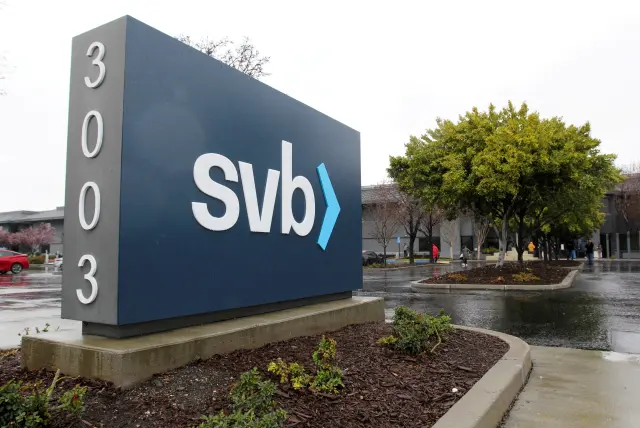
SVB Failure may lead to World Wide Financial Meltdown

The world of finance is bracing itself for a potential catastrophe, as the threat of a major financial institution’s failure looms large. According to recent reports, Silicon Valley Bank’s insolvency could have devastating effects on the US banking industry.

As per Gergely Orosz’s tweet, the failure of Silicon Valley Bank could lead to a “domino effect” that could trigger a run on regional banks across the country. This could cause widespread panic among customers who may withdraw their deposits, leading to a liquidity crunch.

The impact of such a crisis would be far-reaching, with the potential to cause significant economic damage. The shockwaves could be felt across the entire financial sector, and businesses may struggle to secure funding. This could lead to an overall decline in economic activity, and people may struggle to access their savings.

Given the potential consequences, it is imperative that authorities take steps to mitigate the risks of such a failure. The potential impact on businesses and individuals cannot be underestimated, and it is essential to ensure that appropriate measures are in place to avoid a worst-case scenario.

In any case, it seems that the banking industry is in for a rocky ride, with significant uncertainty and risk on the horizon. The potential failure of Silicon Valley Bank could be a defining moment for the US financial system, and the fallout could be felt for years to come.