
Tuesday, April 14, 2026
Home Blog Page 299
AI cybersecurity guidance for small businesses

Know where your business is exposed, what matters most, and what to fix first.

CyberExperts gives small businesses AI-generated cyber checkups, practical recommendations, and recurring cyber hygiene monitoring — without enterprise consulting complexity.

AI Cyber CheckupIdentify likely weak points and get a prioritized action plan.
Recurring MonitoringStay current with updated cyber hygiene guidance over time.
Built for SMBsPractical recommendations for real-world small business setups.

Most small businesses know cybersecurity matters. Very few know what to fix first.

CyberExperts turns cybersecurity confusion into a practical action plan. Instead of vague fear, generic checklists, or expensive consulting, you get AI-generated guidance focused on likely risks, weak spots, and the most important next steps.

How it works

1. Tell us about your businessShare your team size, tools, email setup, device practices, and current security habits.
2. CyberExperts analyzes your setupOur AI reviews likely weak points, common risks, and practical cyber hygiene gaps.
3. Get a prioritized action planReceive clear next steps in plain English — focused on what matters most.
4. Stay current with ongoing monitoringAdd recurring cyber hygiene monitoring if you want updated guidance over time.

Start with a checkup. Continue with monitoring.

AI Small Business Cyber Checkup

A one-time AI-generated assessment that identifies likely weaknesses, highlights the biggest issues, and gives you a practical action plan.

  • Likely weak points and avoidable risks
  • Top-priority recommendations
  • Plain-English next steps

AI Cyber Hygiene Monitor

A recurring cyber hygiene subscription that updates your recommendations, flags likely weak spots, and helps you stay current over time.

  • Recurring reassessment
  • Updated recommendations
  • Refreshed priorities over time

What CyberExperts does — and does not do

Done by AICyberExperts is built as an AI-delivered cybersecurity guidance product.
For small businessesDesigned for operators who want practical guidance without enterprise complexity.
Not a magic guaranteeIt helps identify likely risks and prioritize what to fix first.
Recurring option availableContinue with ongoing Cyber Hygiene Monitor updates over time.

See your biggest cybersecurity gaps in plain English.

Start with an AI Cyber Checkup and get a practical view of what to fix first.

Top 10 Cloud Migration Security Challenges and Mitigation Strategies

Is your organization considering migrating to the cloud? We outline the top 10 cloud migration security challenges. Undoubtedly, cloud computing has exploded over the past few years, and the number of cloud service providers is on the rise. Cloud migration involves transferring digital business operations into the cloud. The process is like a physical move that comprises moving information, applications, and IT processes from a local data center or legacy infrastructure to the cloud and vice versa.

Businesses are adopting the cloud strategy at a high rate to leverage the technology’s benefits, such as cost-saving, flexibility, security, mobility, increased collaboration, quality control, sustainability, automatic software updates, among others. Sixty-three percent of IT professionals say digital transformation is the leading factor driving increased cloud adoption today. In comparison, 66 percent indicate that security is the most significant concern for organizations operating local data centers.

Cloud Migration Types

  1. On-premise to the cloud: The process of migrating to the cloud involves moving data, applications, and other business elements from a local, on-premise datacenter to a cloud computing environment. Experts estimate that enterprises will transfer 83 percent of workloads to the cloud this year.
  2. Cloud-to-cloud migration: A business transfers workload from one cloud platform provider to another based on the needs of the changing business environment. This type of cloud migration allows an enterprise to switch cloud computing providers without first transferring their data and applications to in-house servers. The cost of cloud-to-cloud transfer should not outweigh the benefits of moving to a new cloud service provider.
  3. Reverse cloud migration: This migration process, also known as cloud repatriation or exit, is a situation where an organization moves applications and data off the cloud and back to an on-premise IT environment or datacenter. Typically, businesses transfer part or all business information and applications from the cloud to a local data center on security and control grounds. Other organizations move back to an on-premise IT environment due to relative costs incurred in the cloud. A major Fortune 500 company withdrew from the cloud, citing approximately $80 million monthly savings.

Cloud Migration Security Challenges

If a business is planning to migrate its operations to the cloud, it faces several security concerns.

Data Exposure, Loss, and External Attacks

During the migration process, businesses lose data and files because of incomplete, corrupt, and missing files. Hackers target insiders to steal legitimate credentials that allow them to move freely in the cloud storage in search of valuable information.

Hackers send phishing emails to distribute malware infections that cause data loss. They leverage social engineering to steal passwords that grant access to critical business systems and databases.

Misconfiguration

In some cases, organizations transferring their applications and data to the cloud grant users permission that essentially opens new attack surfaces and unauthorized access to sandbox environments. For instance, while migrating from a local data center to Amazon Web Services (AWS), users might open a network address translation (NAT) gateway from a hybrid networking environment. However, this action introduces the possibility of a cloud server using the NAT gateway to pull malicious content like malware from remote sources.

Insider Threats and Accidental Errors

Conceivably, employees might make errors that could corrupt, erase, or expose business data during the migration process. An employee can unintentionally share files with confidential information while transferring workloads from exceedingly controlled in-house services. The cloud migration process also exposes data and application to insider attacks from:

  • Careless workers or partners that mishandle and steal confidential data and install unauthorized applications
  • An insider agent or an employee working on behalf of outsider hackers to send information. An external actor recruits and pays the employee to exfiltrate data.
  • A disgruntled employee who decides to destroy company data to harm and disrupt business activities
  • An insider targeting to steal company data for personal gain
  • An incompetent service provider who compromise security through misuse, negligence, and unauthorized access

Study shows that financial benefits motivate 47.8 percent of malicious insiders, while espionage cause 14.4 percent of deliberate insider attacks. An undefined cloud migration process offers such workers the convenience of stealing data.

Lack of Resources

A survey conducted in the US and the UK reveals that 31 percent of small and medium enterprises have reported a lack of internal skills to handle cybersecurity demands. Besides, 27 percent desires to gain access to advanced security technologies to combat sophisticated cyber-attacks. An effective cybersecurity program requires budgets to buy the latest tools necessary for developing a defense-in-depth protection posture. The solutions also demand a skilled workforce to build and maintain countermeasures for the network, endpoints, and information during the migration process.

Regulatory Compliance Violations

During the cloud migration process, businesses introduce changes to applications and information. In most cases, organizations fall behind in implementing controls that validate the security and compliance of cloud services configuration changes.

Shortcutting Security During the Migration Phase

Cloud computing service providers (CSPs) offer advanced management consoles that allow businesses to adopt a cloud service by just clicking a link and adding cloud-based infrastructure. However, this process can mislead organizations that rush into a new IT environment without assessing the security challenges involved during the process. Organizations have recorded far too many instances of new attack vectors and non-compliance concerns.

Migrating Everything at Once

The worst thing enterprises do is attempting to migrate everything onto the cloud at once. Once they get the executive’s approval to adopt the strategy, many organizations are eager to shift to the new IT environment without prioritizing data and applications to migrate first.

Insecure APIs

APIs intended to streamline the cloud computing process can create gray areas if providers leave them unpatched and insecure. In effect, they open lines of connection that hackers exploit to steal sensitive business information. Securing APIs is an afterthought that creates a false sense of security for cloud providers. Insufficient API security caused at least half a dozen high-profile data breaches in 2018. Insecure APIs affected providers and users such as Strava, Panera, Venmo, USPS, and Salesforce.

Cloud Migration Security Mitigation Measures

This list rounds up expert recommendations about top security mitigation control for businesses planning a cloud adoption or migration plan.

Baseline the Security Before Migration

Many businesses operate a security architecture developed around isolated security devices, inconsistent application of security policies, and decentralized management of security strategies. The migration project aggravates the situation since companies opt to transfer their applications and data deploy tools to secure both in-house and remote environments. In such circumstances, an enterprise will need to control the security sprawl and implement a centralized security strategy by following these steps:

  1. Please review and understand the current security posture and its implications for the business goals.
  2. Determine if the organization has put in place appropriate policies and procedures for the present and proposed IT environments
  3. Perform a gap analysis for how a cloud environment will alter the security paradigm
  4. Establish the impacts of a cloud-based network on overall risk management

Similarly, a business should model and understand data flows and bandwidth requirements to ensure that recommended security controls meet performance requirements. The current environment’s baseline should also provide a map of existing roles and responsibilities, including the personnel required to migrate and operate the workloads. Enterprises should also filter out unnecessary data to save on storage costs and time.

The security team should keep in touch with the cloud service provider to query the security standards and compliance processes they deploy. The process involves communicating with the third party regularly to enable the two teams to keep abreast of any developing changes and security threats. Organizations should establish if the cloud provider performs routine system and organization controls audits and assessments.

Apply Adequate Security During the Migration Phase

Cyber attackers will exploit business systems and steal sensitive information during the cloud migration process. Accordingly, security teams should apply a wide range of security controls depending on the applications and information transferred to a cloud service. Some of the data protection tools that a business can deploy include a next-generation firewall (NGFW) solution, web application firewall, security information, and event management solution (SIEM), an intrusion detection and protection service (IDS/IPS), and a cloud access security broker (CASB).

Businesses should also ensure consistency between security solutions and policy enforcement for the migration phase that spans multiple environments. In effect, they should select suitable security solutions that interoperate seamlessly throughout the entire lifecycle. For instance, security personnel should ensure that their companies encrypt data, both at rest and in transit. Indeed, information is most vulnerable when exposed to the Internet. Therefore, organizations should ensure they deploy secure transport protocols like HTTPS during data and application transfers from in-house servers to the cloud environment. Enterprises may also consider transferring their workloads via an appliance. However, it is advisable to ensure that the tool encrypts data before leaving the on-premise data center.

Security teams can deploy decoys or deception documents to enable a business to detect hackers and insider leaks during the cloud migration process. This control alerts security analysts in the early stages of a breach or unusual user behavior. Besides, decoys act like a honeypot that can trick a malicious actor into thinking they have stolen valuable information while accessing a convincing fake document.

Whenever possible, an organization opting to migrate to the cloud should prevent password breaches by deploying multifactor authentication (MFA). In this practice, security experts add a policy that requires employees to verify their identity via a text or email sent to their devices while accessing remote information and applications. MFA also alerts users when a hacker attempts to access cloud profiles using stolen credentials.

Besides, organizations should ensure that cloud providers build security into the API development process. Today, users lean heavily on APIs to better integrate disparate applications hosted in the cloud, including external programs sourced and used by cloud providers and customers. Unfortunately, API vulnerabilities are not easy to spot and require specialized tools and expertise to detect and mitigate. Enterprises should insist on using API Security Gateways that adhere to fundamental secure product architecture principles, such as:

  • A lockdown and reliable operating system,
  • Integrated PKI engine,
  • Independent security certifications that validate the product’s security and
  • Self-integrity health checks that scan and detect malicious activities.

Proper Setup and Protection of User Identities

Organizations migrating to the cloud should prevent users from having permission to introduce new attack surfaces and access to sandbox environments. Keeping an accurate and complete copy of information enables a business to quickly correct any data exposure errors and loss by restoring files and systems to their original state.

Businesses migrating to a cloud environment should limit data and application access points. Granting access to many employees can cause a user to enable global permissions exposing data to open connections. In this case, an organization should understand who and what has access to data and applications in the cloud. Moreover, security teams should monitor all cloud connections thoroughly.

Ensuring Cloud Computing Service is Compliant with Applicable Cybersecurity Regulations

What security and data privacy regulations does your business have to comply with while transferring workloads to the cloud? Organizations should understand compliance implications before adopting cloud services. This measure is especially essential if a firm operates in a highly regulated environment, such as healthcare or finance. Security teams should determine how organizations meet requirements for storage, encryption, backup, and transfer.

Virtually all major cloud services providers have compliance certifications for popular regulations, such as PCI-DSS, GDPR, and HIPAA. However, enterprises should encrypt or exclude personally identifiable information before migrating to the cloud, even with these accreditations. Some regulations may require that companies keep certain types of data on-site only.

Establish Proper Logging and Monitoring

Businesses migrating to the cloud environment should establish proper logging, monitoring, and security analysis in the cloud, especially when transferring data and applications from in-house servers. They should identify simple script errors that can potentially bring business operations to a halt or open loopholes that hackers exploit. Automation procedures during cloud migration present unexpected nuisances that enterprises should address. Security teams can deploy granular monitoring of cloud resources access and control. Security information and event management solution (SIEM) is essential since it enables users to centralize alerts and logging while incorporating analytics, automation, and machine learning to detect and flag unusual activities. User analytics and monitoring platforms help detect breaches quicker by analyzing behavior to create a standard user profile for an employee and the device they use to access cloud resources. If any activity is abnormal from the user profile expectations, the monitoring system immediately sends an alert to security teams, indicating an outsider’s presence.

Data Backup before the Migration

An organization opting to transfer applications and data from on-premise data centers to the cloud should back up information in separate locations. A complete backup and restore solution for cloud workloads gives a business the ability to perform business process restore in case of challenges during the migration stage. In essence, a company can implement a third-party backup solution that features capabilities such as data recovery options, backup to a separate cloud provider, easy-to-use solution, automatic operations, scalable storage, security certifications, and data privacy protection.

Phased Migration

Moving workloads to the cloud is not a straightforward process of copying bytes into a designated storage type. The migration activity involves proper preparation before the copying starts. A good practice to prevent errors resulting from migrating everything at once consists of identifying and prioritizing data and applications. Businesses can then consider implementing a phased migration to allow security personnel to develop familiarity with cloud security challenges and measures. In this case, they can start moving low-priority applications and redundant data to enable security teams to test configurations and detect and remediate security gaps before transferring confidential data and systems.

A phased migration strategy can effectively prevent cloud vendor lock-in. Initial expectations for a cloud service provider are typically positive. However, businesses may discover that a vendor lacks the proper security practices necessary to protect sensitive data and applications after starting the migration process. If a company was moving everything to the cloud, the process of changing vendors becomes lengthy and costly, forcing the organization to stick with one provider who does not meet their security expectations. Migrating a workload in phases enables an organization to assess the cloud provider’s capabilities and compare their findings with the migration goals.

Implement a Disaster Recovery Strategy

A 2019 report reveals that 96 percent of firms suffered at least a single outage in the first few months of cloud adoption. Various factors, including hardware failures, power outages, software bugs, data corruption, external security breaches, and accidental user errors, caused these outages. Seventy-five percent of small and medium businesses lack suitable disaster recovery plans. Another 39 percent SMBs lack an incident response plan to respond to unexpected cyber risks and data breaches while migrating to the cloud. The study also shows that 59 percent of enterprises will deploy cloud-based disaster recovery as a service (DRaaS) by 2021.

In addition to security concerns, the availability of a cloud environment is another big fear that most enterprises face while migrating to the new IT setting. A business requires a suitable disaster recovery plan to maintain availability, performance, and business data protection and applications during the transfer process.

Employee Awareness

A study shows that only 45 percent of organizations provide employees with formal security awareness training mandatory for all workers. Ten percent of businesses have optional training programs. Only 6 percent of companies offer monthly training, while 4 percent do it quarterly. These findings reveal that only 10 of the 24 percent of firms with formal programs provide training frequently.

Businesses should educate employees about cloud migration security risks. Besides, the team handling the task should understand the appropriate access and integration requirements with on-premise systems. This practice helps an organization to identify and address the weakest penetration during the workload transfer window. Businesses should not stop researching and learning in an industry that is changing and adapting. Employees should understand the latest cloud vulnerabilities and trends. For instance, if the migration journey involves the Internet of Things (IoT), businesses only see the thin end of the wedge when it comes to understanding the technology’s risks and protection measures. In effect, organizations should invest in research and training about cyber threats and controls needed to secure novel technologies.

Cloud service providers operate a shared responsibility model that businesses should understand. Users’ responsibility depends on the type of cloud services they purchase. Cloud providers offer reliable resources and services to enable organizations to handle cloud security aspects under their docket.

Outsourcing Security Roles to an MSSP

An organization migrating to the cloud requires a different set of skills to manage the move from a local data center. In most cases, designing a cybersecurity program and hiring the right experts to implement and maintain it is costly and requires pricey and dedicated appliances and licensing. Besides, businesses need enough time to train internal staff to handle security issues during the migration phase.

In such cases, an organization can partner with a managed security service provider (MSSP) to empower its cybersecurity strategy with outsourced personnel, processes, and technology. Outsourcing security requirements to an MSSP offers superior data and application protection, saves cost, enables a business to focus on other activities, and manages incidents encountered in the process. MSSPs maintain a leading-edge set of security technologies and approaches that security experts have deployed across many companies facing various threats during cloud migration journeys. They offer affordable security operations center-as-a-service and cyber threat hunt operations that leverage advanced technologies and capabilities like artificial intelligence (AI), machine learning (ML), and threat intelligence.

Ultimately, successful cloud migration should also involve migrating appropriate security posture to the new IT environment. Automation, cloud computing benefits, and ease of cloud management offered by providers should not trick organizations into shortcutting security when transferring data and applications to the cloud. Before embarking on the cloud migration journey, careful preparation saves an organization from unforeseen cyberattacks and enables successful cloud adoption. The process requires attention and adequate resources from an enterprise to implement relevant control to detect and respond to security challenges faced during cloud migration.
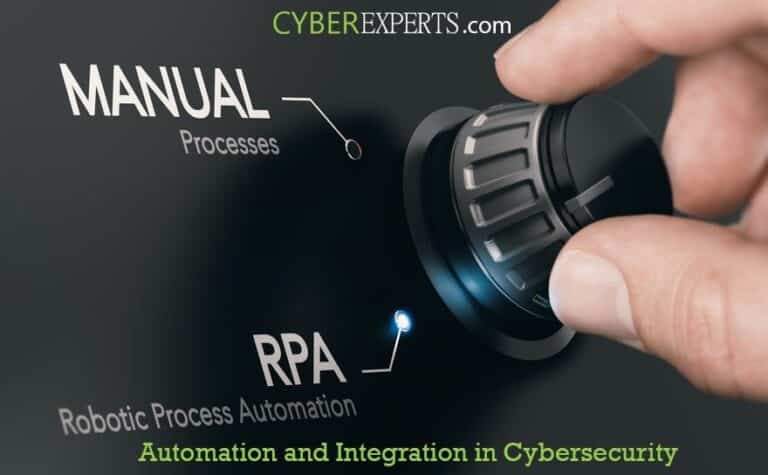

Automation and Integration in Cybersecurity

Automation is one of the trending topics in cybersecurity. The primary reason for automating mundane and repeatable tasks is to allow people to shift focus to problem-solving activities.

From a cybersecurity perspective, organizations can become more resilient to cyber-attacks by directing all the resources to these problem-solving activities.

Technological advancements also bring with it more sophisticated malicious attackers. Therefore Cybersecurity programs must be prepared to adopt automated cybersecurity solutions.

Globally, enterprises seek methods to improve their efficiency and profitability from their general activities like smart warehousing to automation and IT and cybersecurity integration.

Integrating automation in an existing infrastructure comes in a variety of ways and requires various security automation tools. What do these tools entail? On what principles do they work?  How are they incorporated into security systems? What’s the benefit of automation and integration to a business entity?

This article walks you through some of the basic concepts and ideologies that surround what might be the future of cybersecurity in the foreseeable future.

What is Cybersecurity Automation?

Today, there are numerous cybersecurity products designed to automate processes. You have likely implemented one or more of these tools within your organization. For instance, vulnerability management products such as anti-malware may be set up to scan and automatically detect BYODs on an organization’s system. These products identify cyber threats and eliminate identified defects based on the security protocols outlined by the organization.  When talking about adopting new best practices in automation, gurus in this industry refer to security equipment like robotic process automation (RPA), customized software and code, and Security Orchestration Automation and Respons (SOAR) products automate the sequence and perform analysis.

SOAR products have been designed to orchestrate activities between various security tools and, at the same time, execute specific automation activities in response to the identified vulnerabilities. On the other hand, RPA tools allow for the automation of a variety of processes. Custom-developed software and code are often leveraged for a specific challenge or niche that the organization cannot find an out of box tool. This is because they can automate all manner of analyses and efficiently synthesize data as per the given security regulations and standards.

All of the above-mentioned new approaches interact with an organization’s tools to perform a comprehensive analysis, collect intelligence and either prompt an assigned team member to take action or perform an automated reaction to the processed data.

Why Venture into Cybersecurity Automation?

Sophistication and complexity aspect of network infrastructure is rapidly increasing as organizations increase their emphasis on migration towards digitalization. Digital transformations affect the very nature of work performed by the organization, the module on which they interact with their customers, their strategies to stay competitive within the industry, and their overall efficiency level. The digitalization of enterprise network systems brings with it a new attack surface, which can significantly impact the organization negatively if not adequately defended, monitored, and responded to at the right time when threats emerge. From a corporate espionage perspective, it is important to understand the magnitude of vulnerability and threat exposure introduced into an organization as they move forward with various activities that aid with digital transformation.

Most organizations still rely on traditional methodologies while inspecting their systems for behavior abnormalities or threat indicators. This is a losing proposition in today’s organization set up and one which automation and integration of cybersecurity can help address. Concerning the organization’s growing digital footprint, ill-proportioned or lean Cybersecurity teams can be addressed by automation. Traditional tricks are relatively inefficient as they entail a combination of large amounts of data, which are is managed by human beings who are prone to error. This leads to cracks that threats can still slip through. Implementing automation in an organization is an important and reliable mechanism to protect your enterprise and, at the same time, ensure maximum defense through repeatable and robust processes.

Benefit of Automation

Automation is more than just a fad or a technical buzzword, but a technological revolution changing our business platforms. Adopting automation in an organization gives the security team to focus more on more productive and complex activities. This implies that the machine can carry out the repeatable work. At the same time, the cybersecurity team is devoted to more creative, critical, and technical work of resolving issues and improving the organization’s risk posture. After achieving a reliable automated cybersecurity system, security personnel can then focus on activities such as;

  • Architecture and Engineering: a shift of technology to automation will enable the cybersecurity team to focus on designing and actualizing strategies such as cyber hygiene and zero-trust networks within an entity.
  • Remediation Activities: after deficiencies have been identified, it is easy for the organization’s security team to identify the most repeatable activities within the businesses’ environment, leading to less vulnerability.
  • Development and engineering of automation: automation is an integral part of the cybersecurity program and requires specially dedicated resources to be comprehensively designed and implemented.


Tools and Platforms used in automation of cybersecurity

Below are some of the platforms and process tools for cybersecurity. This article covers each solution’s benefit and how they improve efficiency, reducing production costs improving cyber effectiveness, and generally enhancing organizational processes.

  1. Robotic Process Automation

Using to automate repetitive tasks either physically or virtually is referred to as robotic process automation. Security automation and cyber-space defense can be defined as assigning low-cognitive functions such as monitoring, scanning, and low-level incident response to be handled by automation. It allows one to be aware of, aggregate, and extract data while carrying out the basic threat search and detection process and other low cognitive activities.

Advantages of Integrating RPA into Your Enterprise

Implementing RPA has many benefits, both from compliance and logistical risk standpoints. First, it makes cyber-defense such an easy task to carry out as it eliminates the tasks of performing repetitive tasks physically. It also helps entities to reduce human interaction, one of the most significant vulnerabilities in cybersecurity.  Whether accidental or intentional, people pose one of the most critical threats to businesses and organizations’ cyber-being. Eliminating the human aspect, therefore, makes your stored data and information safer.

Below are some of how software robotics can help in reducing Cybersecurity vulnerability.

  • RPA employs automated detection and alert response, which leads to the reduced time taken for threat detection and feedback of response.
  • RPA helps identify exposed attack surfaces to mitigate security risks by helping in the application and device discovery.
  • RPA helps to bridge the talent gap by filling in for the missing cybersecurity expertise.
  • RPA eliminates the threat due to the human factor while dealing with sensitive personal information.
  • RPA provides proactive 24/7/365 security coverage, unlike human beings who tire or mentally clock out due to fatigue.
  • Automation of software updates and rollout of patches are some of the features that RPA uses to improve security.

Besides, RPA helps your enterprise stay compliant with rules and regulations such as PCI DSS or General Data Protection Regulation set by the European Union. For instance, RPA can be used to automate repetitive tasks such as notifications of data breach roll out of consent notifications, data collection, and documentation of all the data that your organization holds for audits. Therefore, why should one employ more employees to perform repetitive and tedious work if RPA can eliminate them?

RPA offers numerous advantages to enterprises and other organizations. However, no organization should solely rely on RPA for more critical security operations that might require higher analytical and cognitive capabilities. There is a need for a more in-depth analysis. An organization should adopt a mix of cognitive learning technologies and human analysts’ intervention.

  1. Certificate Management

The requirement by Google to encrypt its website resulted in the widespread adoption of SSL keys and certificates, which has created many dangerous blind spots.

Lack of transparency within your public key infrastructure and is one of the biggest security threats to your website and your enterprise’s success. Would you answer the following without any doubt if you were to be interviewed by a panel of cyber experts?

  • How many SSL certificates were given to your enterprise, domains, and employees?
  • What’s unique about the certificates?
  • Did the same authority issue all the certificates, or did some originate from a different source?
  • Who requested the certificates to be issued?
  • How many keys are there within the business?
  • Where is the storage facility for keys?
  • Who is not, and who is allowed to access SSL keys?

From my guess, I can tell that you cannot affirmatively answer any of those questions. Shadow certificates can lead to data breaches and substantial financial losses to an organization or, at the worst, the collapse of the entire network.  This also negatively impacts your organization’s bottom line in several ways; one, there’s lost revenues, lost customer trust, and various non-compliance fines and penalties. This is way too much loss for something you weren’t even aware of its existence in your system. Therefore, how can unknown certificates be kept from expiring? Yes, this is where cybersecurity and encryption of automation come into handy in the form of PKI certificate management.

Advantage of a Certificate Management Platform

Management platforms fitted with tools necessary for certificate delivery can be used in various functions other than website management tasks. It helps your organization point out every X.509 digital certificate found within your network despite the brand, issuance date, type, client certificates, IoT and device certificates, and TLS/SSL certificates. Sectigo Certificate Manager (SCM) is a perfect example of such a tool.

Some of the repetitive tasks that these certificate management tools can quickly eliminate include tasks such as:

  • Automation of renewal, issuance, revocation, and installation of management certificates
  • Use of self-enrollment to automatically generate and create end users.
  • Automatic notifications of 30, 60, and 90-day expiry certificates

My free advice is that you should take advantage of the modern certificate management solutions offered in the market today to keep a proactive insight into your organization’s digital certificates. This Is a cheaper means than financially paying for the severe consequences such as lawsuits, fines by regulatory bodies, or even dent to brand’s image.

  1. Event Management and SOAR

Gartner in 2017 defined the process of putting together various solutions to optimize the efficiency and capabilities of security as automation of security and response, on condition that no human assets are tied to any low-level activities. SORE optimizes security automation, security response, and orchestration by enhancing operations automation, response to a security incident, and capabilities of managing vulnerabilities. This may sound more like a security incident and event management because there are many similarities between siem and soar. Both gather information from various sources, analyze and detect any abnormal activity within a network system. Although the two work together, they differ in the following aspects;

  • SIEM is more manual and requires a physical response to notifications and frequent manual updates to technologies in use. However, SIEM’s are less effective at identifying unknown or new threats and are limited to identifying known threats.
  • SOAR is relatively diverse in how it uses applications, takes in notifications, and automatically sends a response for remediation or triage when the need arises. SOAR relies on Artificial Intelligence and advanced cognitive technologies such as machine learning to identify vulnerabilities and threats within and outside the network.

Advantages of adopting SIEM and SOAR solutions for your organization

SOAR is fundamentally about eliminating processes, technology, and people within an enterprise to maximize their output and improve incident response and other related security operations. For instance, SOAR compliments SIEM capabilities in a security operations center by investing in extra value.

Past researches have shown a drop by 50% to 70% on threat detection and response time; hence SOAR orchestration benefits the organization by preventing phishing attacks from being successful.

How to know whether SOAR solutions will benefit your organization or not;

Examine yourself with the following questions to accurately determine how the solution mentioned above will benefit your enterprise.

  • Are you continuously encountered ergonomic tasks that automation could eliminate?
  • Is your security team fatigued with alert notifications?
  • Are you literate and skilled enough to make sound decisions on matters related to cybersecurity?
  • Are there processes in your organizations that could be improved automation?

If your to a majority of these questions is yes, then you should dedicate more time and balance between the advantages and disadvantages of adopting automated solutions for every process to identify its real value to your business.

  1. Custom Automation Solution Development

Every organization is unique in one way or another, and the needs widely vary across various organizations. Therefore, as much as the existing solutions may be meaningful use, customization of the need-specific solution may still be of many benefits to an organization, if need be. Your security team can comfortably handle this if they are competent enough, or you can as well hand-it-off to a third-party service provider.

What is Next? What does the future hold for us?

Automation is bound to change the future of cybersecurity. However, advancements in technology bring smarter cyber-experts in software development and other code trick techniques. In the future, it can be predicted that cybersecurity programs may become more of an outlet shop where people go for various capabilities.

Steps on how to successfully adopt automation concepts

  1. Train and equip your cybersecurity with development capabilities so that they will report directly to cyber leadership.
  2. Develop an excellent interdepartmental relationship between the cybersecurity team with other departments within the organization.
  • Adopt a hybrid approach. Use your core team to develop tactics and techniques for developmental work, enhance organizational development goals, and carry out advanced integration activities.

As technology’s complexity continuously expands and evolves uniquely, the need for security automation and integration tools also continues to grow to the same degree. The future holds automation and integration as a significant element of organizations’ and businesses’ cybersecurity blueprint. Is your entity prepared to accommodate the inevitable change? And if not, what strategies will you use to keep up with speed in this industry?

How to secure your computer from any virus threats?

Cybersecurity is critical both for individuals and businesses of all sizes. An increase of the World Wide Web introduced a range of possibilities for the industries, but it also brought new downsides of connectivity. We use internet-connected devices in all aspects of life. People receive tons of spam every day, so they need to infiltrate accounts, and computer viruses wreak havoc on business networks. Viruses and malware could harm our files and steal personal data such as banking details and social security information. We prepare you for security solutions to rely on and protect a computer from viruses (e.g., Norton). Following the guide, you will always be confident that your computer is safe while browsing and staying aware of potential virus or malware signs.

  1. Antivirus software

Antivirus software protects your device from viruses that can destroy the data, slow down or even crash your device. With the help of an efficient antivirus program, you can scan files, check incoming emails for viruses and then delete those that can be malicious. Always check your system for viruses, especially if you download files from the web or check an email. 

  1. Keep your device secure

First of all, you need to be confident that your software is installed correctly. Make sure that you have the latest version of the antivirus. Install antivirus software, and anti-spyware, and firewalls are also significant tools to protect your digital device.

  1. Keep your antivirus up-to-date

We recommend controlling and updating your system and browser regularly because old versions of antivirus software are inefficient. If you update an antivirus in time, you can eliminate software flaws that can assist hackers in detecting and steal some information from your system. 

  1. Install a firewall

The best way to keep your computer safe is to prevent hacker attacks. For example, you can do it with the help of a firewall aimed to block attempts to gain access to your computer. Moreover, a firewall protects from viruses, malware, and other threats. So, check your computer whether it has installed a firewall or not because all Windows-based computers come with the Windows Firewall that is already preinstalled. 

  1. Create a boot disk

There can be such situations when a malicious cyber-attack could compromise the computers with the best Internet security precautions. In fact, malicious software can be so destructive that it could corrupt the computer’s operating system, and it would not be easy to restore the information. You can create a boot disk on a USB flash drive. 

  1. Configure strict web browser and email security settings

You can increase the level of cybersecurity by configuring strict security settings for a necessary web browser and an email application as well. For instance, we recommend you disable JavaScript since a variety of hackers usually use it. We recommend you disable the cookies in a web browser so that you’re the Internet could not fix your browsing preferences and habits. 

  1. Do not install unknown programs

Many hackers hide Trojans inside programs, which means that you will have a high risk of being infected when you download a software program from an unknown website. Hackers often hide malicious software in popular games and screensavers because they are popular among users and are easy to download. Anyway, you do not have to download or run any types of programs when you are not confident that they are safe and legit. In fact, you should never download a program before scanning it with your Internet security software. 

  1. Never open unknown email attachments or links

One of the most popular methods to communicate on the Internet is email. Therefore, email can often be attacked by hackers, and a user is tricked into sharing some personal information with identity thieves. You need to scan emails that you receive and never open their attachments or click on any links from unknown resources, even if a sender looks legit. 

  1. Disconnect your computer from the Internet

If you leave your computer with a stable connection to the Internet, there is a high risk of being attacked. So, when you have finished what you are doing on a computer, do not forget to turn it off. You should disconnect it from the Internet to ensure that there is absolutely no possible way for an attack. 

  1. Be careful what you share

In the present day, social media provides an opportunity for you to share information about all aspects of life. Still, it is important to control who has access to the information. The data can be stolen from social media postings and used to hack into other accounts or for identity theft. To protect yourself, you need to use privacy settings to limit the visibility of personal posts to your personal networks and restrict sharing the information from your account with the general public. 

Conclusion

Even though there are a variety of easy-to-use antivirus programs, the number of malware is increasing. To protect a computer from a potential threat, you need to follow the mentioned steps, which require minimal effort and funds to implement. Let’s recap all the important preventive measures for your computer:

  • install fast and easy-to-use antivirus program;
  • always keep your device secure;
  • keep your antivirus program up-to-date;
  • install a firewall;
  • create a boot disk;
  • choose strict security settings;
  • ignore and do not install unknown programs or programs from suspended or unknown websites;
  • always disconnect your computer from the Internet when you finish your work;
  • choose people to share the information, be careful what you share.

When you take all the mentioned precautions, you can increase the level of security significantly as well as ensure that a computer runs as fast as it should be.

Why 5G Requires New Approaches to Cybersecurity

A brief history of Wireless Networks

The University of Hawaii first developed the professional wireless network in 1969. The first commercial wireless network, WaveLAN product, was developed in 1986 by NCR. The second generation of wireless networks known as GSM was deployed in 1992. New standards were adopted every nine years, and in 2001, various 3G standards started popping up with equally competing deployments. After another nine-year cycle, wireless service providers deployed 4GLITE wireless technology, and it soon became the dominant technology. The fifth-generation technology for cellular networks, 5G, was deployed in 2019 and is currently expected to dominate the wireless technology market globally by 2025.

A New Era of 5G Wireless

News about fifth-generation technology (5G) is a fire in the digital world. 5G networks promise download speeds of 10 to 20 times faster than legacy networks. It aims to envelop the world, making it an international concern to ensure its integrity, availability, and confidentiality. It promises to deliver amazingly faster networks that will accommodate more devices than the existing telecommunication infrastructure. A forecast into potential use cases predicts that the 5G network is likely to aid in the efficient implementation of augmented systems and making the Internet of Things a reality. It foresees the network supporting millions and millions of devices, from smart kitchen equipment and phones to critical functions such as emergency communications and power plants. The fourth-generation (4G) infrastructure supports fewer devices and delivers fewer critical services. Dependence on 5G would increase the impact on societies if the infrastructure were to fail. However, some critics maintain that the risks from 5G are overhyped. So far, not so many new use cases have emerged. There’s a huge capital expense required for rollout, and approval from relevant authorities such as Information Technology, energy, and transport is needed.

The current 5G network infrastructure is not a revolutionary telecommunication transformation but an evolution or enhancement of the previous generations of telecommunication equipment. At present, 5G networks are non-stand-alone, implying that they depend on the earlier networks. Optimistically, future 5G networks are likely to be stand-alone due to revolutionary technologies, although this kind of network is not yet feasible. There is ongoing research to make stand-alone 5G networks a reality by several countries. Regardless, both stand-alone and non-stand-alone networks are characterized by their ability to accommodate more devices, minimal transmission delays, and high speeds. Achieving such characteristics requires a shift of focus from hardware to software. It relies on technologies such as virtualization and edge computing to move processing power closer to the end-user. From studies, I predict that this kind of advancement will enable this fifth generation of a telecommunications network to support even more functions globally, from smart autonomous house gadgets, self-driving cars, smart roads to smart cities.

5G Network Layers

5G comprises multiple “layers” that perform varying parallel functions across the network. Every layer has access to a given amount of data and can efficiently convey data packets within the network envelope. Additionally, every component within a layer also receives and transports data packets across the network depending on the degree of rights they have to access the other parts of the network.

Layer and examples*** Function Degree of Access to Data** Impact Radius Importance*
An end-user device such as IoT devices How the client carries out various functions using the network Varies Limited Varies
Access Layer Mostly categorized as edge as it communicates directly with the end-user device to transport packets. Low Local Medium
Transport Layer Moves information between nodes Low Local low
Switching and Routing Chiefly categorized as the core.

Determines which information is significant and where packets need to be conveyed.

Moderate Local or network-wide*** Medium
Management Pane Coordinates all other functions, often categorized as core High Network-wide High

5G networks are chiefly divided into two groups, that is, the core and the edge. The core consists of critical components or those components with significant control over the network than the edge components. Core components have much data about the network and include switching and routing functions on base stations. Because the core has functions that overlay and control the entire network, it would be a catastrophe if the network is compromised. The impact on the whole network would be extremely high. Network as the whole ceases to operate without these functions. For such reasons, 5G networks in the UK will have relatively more cores than the previous telecommunication generations, but the exact number and location depend on the operators’ purview.

Edge functions, however, are located at the periphery of the network. Although the definition of core and edge is not a precise science, this article describes edge components as those found within the network’s access layer, a definition derived from the National Computer Security Center. This part of the network is close to end-users and forms the link between the network and its clients. It contains and conveys data such as the type of information sent to and from the network by customers, the identity of who is accessing the network, etc. Failure of edge components such as radio access network (RAN) only affects a small local area of the network, which is easily identified, isolated, and rectified. Being at the periphery, the impact of an edge component’s failure has a limited impact radius, and limited access to the sensitive data helps run the network.

5G has brought with it the tremendous promise of efficiency and reliability. Although even as we race towards a connected future, we must place an equivalent focus on the security of those specific network infrastructure components, such as connections, applications, or software and devices within the network. The building or creating a network on top of a weak cybersecurity foundation is equivalent to building a luxurious mansion on sand that would be swept away with the slightest sea waves and tides. These risks, therefore, surpass just the end-user and can be considered a global concern.

Hyper-Focus on Huawei

The better part of the public debate on the cybersecurity of 5G networks relates to the implications of the continued provision of 5G infrastructure components by Huawei. Studies demonstrate low political and technical confidence in Huawei. The telecommunication company has been in the past accused of producing equipment of poor quality. According to HCSEC (Cyber Security Evaluation Centre), Huawei’s products and equipment for the 5G infrastructure have consistently demonstrated a significant number of defects. Poor quality and defects are attributed to poor processes in production. Finite State, a cyber-security firm, also discovered that Huawei software and hardware were more likely to have flaws than other competitors’ equipment. These defects pose a security threat to the entire network.

The presence of bug doors or backdoors may significantly affect the network’s infrastructure if a malicious intrusion or, even worse, allow Huawei to access customers’ confidential data. Despite all these serious allegations against Huawei, no one has ever presented concrete evidence on whether the company intentionally includes backdoors for malicious purposes or deliberately leaving backdoors in its equipment.

Also, the public discourse has considered the connection between the Chinese government and Huawei. China has a history of perpetrating hostile cyber-attacks against adversaries, including the UK and the United States. They have been several reports that there is a close relationship tie between Huawei and the Chinese government. Many people point out that they engage in malicious financial and trading practices. The legal environment in place also suggests that the Chinese government could share every access Huawei has to telecommunication networks. According to the Chinese National Intelligence and Cybersecurity Laws of 2017, it is a requirement that firms should comply with the demands from the national intelligence or military, and no information about the corporation should be disclosed. The laws do not provide for balancing measures such as having an independent judicial oversight or right of appeal that is a major feature of the Western Democratic legal regime.

As much as all the evidence, as mentioned above, is open for interpretation and public critic, the pattern is quite clear. Huawei maintains that it is a private company concerned about profit but has the utmost respect for the country’s laws in which it operates. The company also denies the claim that it’s subject to Cybersecurity Laws and National intelligence. However, the behavior and trading practice portrayed by Huawei to date leave ample room for doubt.

How 5G Expands Cyber Risks

Compared to its predecessors, 5G is more vulnerable to cyber-attacks in the following five significant ways.

  1. 5G uses a distributed software-based digital routing, unlike its predecessors, which utilizes centralized hardware-defined switching. The previous generations of networks were hub-and-spoke designs, in which all issues converged at choke points and cleaned away during cyber hygiene maintenance. However, 5G software-defined network does not provide for chokepoint inspection and control as such activities are pushed outward to a web of digital routers throughout the network.
  2. Change from physical appliances to virtualization further complicates the vulnerability of the 5G network. Software higher-level network functions are based on the well-known operating system and a well common language of the internet, making it a target for the black hats.
  3. Because the network also operates on software, protecting software vulnerabilities within the network is not an efficient means to provide security. Gaining control of the software managing networks implies that the hacker or intruder will also control the network.
  4. Additional venues of attack are created due to the expansion of bandwidth that makes 5G possible. Attackers will now aim at the small-cell antennas deployed throughout urban areas. The cells’ functionality is based on 5G’s Dynamic Spectrum Sharing capability, where various streams of information share the bandwidth in slices, and every slice has its varying degree of cyber risk. If the functions of a network are allowed by the software to shift dynamically, then there is a need to provide protection that is dynamic rather than relying on a common denominator solution.
  5. The last threat is caused by several devices that are part of the system. 5G networks can accommodate tens of billions of devices, all of which may act as attack surfaces. The range of connected devices may vary from medical things to transportation things, public safety things, and battlefield things, all of which have weak points that an individual may exploit with malicious intentions.

Fifth-generation telecommunication networks have therefore created a huge, multidimensional cyber-attack vulnerability. Because the nature of networks is redefined to form a new ecosystem of ecosystems, there arises a need for a new cyber-security strategy. Most of these vulnerabilities have been made known to manufactures and other producers, so they do in good faith what is right in an attempt to resolve the issue.

What You Should Know by Now

5G has changed every traditional assumption on network security, applications attached to the network, and security of the network’s relevant devices. Below is a list of some of the challenges experienced by Federal Communications Commission agents tasked with resolving the emerging threats?

  • Cumbersome rulemaking activity due to Industrial –era procedural laws, with less optimal non-rule making activities
  • High incentive by the bad actors in an attempt to compromise the entire process of maintaining the protection
  • Fear by major stakeholders of exposing their internally identified risk factors at the right time when a collective bargain by other stakeholders would be of great significance for the collective defense of the network

Also, the network operators who know the network infrastructure best exist as part of business structures that do not provide a conducive atmosphere for risk reduction. However, these challenges do not mean we suspend the race to harnessing the benefits of a challenge this fifth-generation network. Instead, it presents us with a challenge to solve the need for our status quo approach to 5G.

Two Elementals to Winning the Race to 5g Networks

The real race to the 5G network is whether the new infrastructure will be sufficiently secure in realizing its technological promises. As much as speedy and efficient connections may be a priority, security comes first. To ensure secure systems, there is a need to reevaluate the relationship between businesses and the government. The below suggestions may be too much of a departure from traditional practices, but so be it, as desperate times call for desperate measures. If 5G network security is treated normally, then the associated cyber-risks and threats will treat us abnormally. The new 5G reality justifies the below governmental and corporate actions.

1.  The organization must be held responsible for the new cyber duty of care.

This first key is a reward-based policy that will encourage companies to adhere to a cyber-duty of care instead of traditional penalty-driven measures. Traditionally, the duty of care was bestowed on those providing products and services to identify and prevent any cyber-harm that could result. With the new infrastructure, there is a need for a new corporate culture. The new culture must be where cyber-risks are treated as an essential corporate duty and rewarded with appropriate incentives. These incentives might be tax reduction, regulatory, or any other means to motivate societies to proactively adhere to cyber hygiene standards. Such a cyber-duty of care may include the following;

  • Implementation of artificial intelligence and machine learning protection
  • Reversing chronic underinvestment in cyber risk reduction
  • A shift from reactive measures to proactive measures that will ensure active cyber-preparedness
  • Cybersecurity starts with the 5G networks.
  • Best practices – identify, protect, detect, respond, and recover.
  • Incorporate security into the development and operations

2. An establishment of a new cyber regulatory paradigm by the government to establish new realities

The current procedural rules for government agencies were developed in an industrial environment where change and innovation developed relatively slow. With the advancement in technology, there is a need for a fast-paced approach to the rapidly evolving network infrastructure and a new approach to business-government relationships. Some of the methods to use may include;

  • Identification and recognition of marketplace shortcomings
  • More effective regulatory cyber relationships with those regulated
  • Consumer transparency
  • Enhancement of inspection and certification of connected devices
  • We need more than contracts.
  • Re-engage with international bodies

Also, there is a need for an informed third-party oversight early in the 5G industry’s design and deployment cycle to categorize cybersecurity in prioritizing what is critical and those to be given minimal attention.

Conclusion

As we increasingly connect life-sustaining devices to the internet, more people will be at risk, and others will probably die due to such impacts. This cold reality is because the internet’s connection to people and significant elements heavily rely on will be through vulnerable 5G networks. It is a situation that’s facilitated by a cyber cold war that is simmering below consumer awareness.

Managing a Cybersecurity Crisis During a Pandemic

Most enterprises have taken extraordinary measures to protect their workers and ensure business continuity. They also ensure the continuance of service delivery during the coronavirus pandemic. The COVID-19 disease has ravaged the world, with the total confirmed cases and deaths exceeding 3,500,000 and 248,000, respectively.

However, the measures have exposed businesses to a variety of cyber threats. Due to imposed lockdowns and curfews, companies have opted to allow employees to work from home. Organizations with insufficient cyber defenses remain exposed to multiple risks as the majority of homeworkers may engage in insecure practices. Such include sharing devices with vital data, failing to update devices with latest updates and patches, poor password hygiene, among others.

Cybercriminals are also taking this opportunity to scale up their attack campaigns. According to FBI deputy assistant director, Tonya Ugoretz, cybercrime reports have quadrupled since the pandemic emerged. Ugoretz claims the FBI’s Internet Crime Complaint Center receives between 3000 and 4000 complaints a day, compared to 1000 daily complaints before the COVID-19 crisis. Ugoretz also noted an increase in nation-state attacks targeting the healthcare sector. The main motivation for such malicious activities is to gain access to critical data such as information on the latest vaccine research efforts.

Furthermore, the Microsoft Security Intelligence team noted a spike of Trickbot malware attacks. In particular, the team indicated that cybercriminals behind Trickbot malware sent hundreds of electronic messages purporting to be COVID-19 medical information and advice. The aim, however, is to use macro-laced documents to trick recipients into installing the Trickbot malware. Also, IBM X-Force researchers stated in a report that internet scams related to COVID-19 increased by over 6000%. They range from impersonating WHO (World Health Information) officials to US SBA (Small Business Administration) claiming to offer financial assistance. The coronavirus pandemic has caused an unprecedented increase in cybercrimes. As such, businesses should have relevant information on how to manage a cybersecurity crisis during a pandemic.

Time is a vital resource.

A cybersecurity crisis can directly impact essential assets and resources. This outcome can disrupt business operations, resulting in diminished revenues and customer loss. In such a scenario, time is a vital and precious resource. Every minute counts if the affected company will ably avert the crisis.

Containing the crisis is one of the options that can provide an enterprise with additional time to manage it. Containment means restricting an attack only to the affected networks or systems. To contain a crisis, the security team should disconnect the infected systems from the network, implement network segmentation to separate the compromised network from other networks or pull them down from the internet. The additional time permits the deployment of necessary solutions for managing a cybersecurity crisis.

Additionally, threat intelligence is an essential tool for managing cyber-attacks. Threat intelligence and analysis provide relevant information regarding security risks. For instance, security experts use threat intelligence to determine current and expected threats, assets they might compromise, and estimated impacts on business operations. Through the acquired information, an enterprise gains thoughtful analysis to decide how best to use the time to protect itself. Data obtained from threat intelligence analysis can inform planning, preparation, and proper practice. As a result, a business can prepare the required tools and responses when things go haywire due to a cybersecurity crisis.

Part of the preparation entails using the time to brief the C-Suite on the potential security risks and expected consequences. During a crisis, there might lack adequate time to inform executives about the threats causing the incidence or how they affect normal operations. Worse still, the time might be insufficient to correct any misconceptions executives might have regarding cyber threats. Moreover, during a pandemic, news and media stories may sometime draw reactions that drive individuals into denial or fear. This observation can cause executives to make erroneous decisions that escalate a crisis instead of de-escalating it. Furnishing executives with information on potential threats can assist them in making well-informed decisions for effective cybersecurity crisis management.

More importantly, it is prudent for all businesses to embrace the WHO message; “this is a time for facts, not fear”. Sometimes, individual incident responders might be overly afraid that their input is not sufficient in managing a security crisis. Such panic is not supportive nor definitive in achieving the overall objectives. Therefore, companies must ensure incident responders focus on managing the riskiest aspects of a cybersecurity crisis rather than lose their concentration due to dread of unlikely scenarios. Instead of focusing on fear of the unknown, businesses should ensure incident responders have a reasonable level of caution concerning a cybersecurity crisis but one that matches the risk levels. Despite this, some individuals might be overly fixated on specific threats like advanced hackers, while overlooking likely issues such as phishing attacks. Managing a cybersecurity crisis should find the right balance of incident responders.

Managing a cybersecurity crisis might, however, be fruitless if the involved personnel isn’t worried enough. As such, a business must provide employees with adequate reasons why they need to prepare how to manage a cybersecurity crisis effectively. One way to achieve this is by painting a realistic scenario by clearly quantifying attack likelihoods and damages. For example, as most businesses continue encouraging work from home during the COVID-19 pandemic, organizations should illustrate the likely threats and outcomes of poor security hygiene. To assist employees, get the full picture, the employer can consider using business instead of technological terms. Also, considering other risks such as recessions, technological changes, regulatory changes, competitors, among others, can enable employees to understand the magnitude of a cybersecurity crisis. Subsequently, everyone would understand the significance of their roles in managing the crisis.

Empower employees to manage a cybersecurity crisis

Threat-aware staff members provide the first defensive line against cyber-crimes. More often than not, the defense requires empowerment to strengthen it, especially during a pandemic period. PricewaterhouseCoopers did a phishing attack simulation targeting mid-to-large-sized financial organizations before the COVD-19 pandemic struck. During the exercise, 70% of the phishing emails got delivered to the intended targets, with 7% of the recipients clicking and opening the attached malicious links. However, as has been the case time and again, hackers only require one click to unleash cybercrimes. There has been an upsurge of phishing campaigns as adversaries target ignorant and gullible employees with COVID-19-themed phishing emails.

Heightened security awareness and training, therefore, is a powerful and necessary antidote. For businesses to protect themselves from phishing and other related social engineering attacks, they must train their employees on the precautions to observe to avert a cybersecurity crisis. Some points to consider during training include:

  1. Be conscious of emails originating from unknown senders or familiar individuals who don’t communicate directly, such as CEO. Clicking or opening any attachments in the emails might result in costly breaches and IT infrastructure damage.
  2. Before clicking on sent attachments, first examine the sender’s address to verify the authenticity of the email message. Phishing criminals often substitute a single character in the sender’s email address to make the information more convincing.
  3. If an official email contains grammatical errors, it is most likely a spear-phishing email. Rarely do officially communicated emails from employers, financial entities, or the hospital have any mistakes.
  4. Training employees the mitigation actions to take once they mark an email message as scam or phishing email allows cybersecurity crisis management. These include alerting the IT department, informing other employees, deleting the message, and marking the sender as spam, among others.
  5. Always ensure the company-approved antivirus solutions and anti-phishing filters have proper configurations and running whenever connected to the internet.

Additionally, as organizations focus more on protecting employee safety and health, and also ensure they remain productive during the pandemic, most have opted for remote working. In light of this, the Cybersecurity and Infrastructure Security Agency (CISA) issued a warning about remote working threats. They include:

  • Increased possibilities of phishing attacks for businesses without multi-factor authentication
  • An increasing number of vulnerabilities found in VPN solutions
  • Limited VPN connections that expose a business to more security risks
  • An increase in phishing campaigns as hackers seeks to steal vital information, such as passwords and usernames.

Despite the threats, organizations had a few weeks to roll out the infrastructure supporting remote work and access. However, to ensure the prevention of a cybersecurity crisis, enterprises should take note of the following guidelines:

  1. Focus on security when transitioning to remote working. The practice involves deploying the required solutions such as multi-factor authentication, VPN connections for all employees, and anti-phishing filters.
  2. Match the available solutions to the current circumstances. For example, to curb the security risks resulting from vulnerable improperly configured devices, businesses can issue secure smartphones and laptops.
  3. Leverage on security technologies such as machine learning and artificial intelligence to monitor and identify suspicious user activities.
  4. Implement proven and security-conscious remote working models.

Take the pandemic as a test for enhancing resilience.

Companies should consider the COVID-19 pandemic as a continuous test of their resilience to become stronger. Whereas technical safeguards and training can prevent attacks such as BEC (Business Email Compromise) scams and phishing, a multifaceted defense approach is vital to managing a cybersecurity crisis. The following pointers can assist businesses to increase the resiliency and security of their IT infrastructures and networks, thus enabling effective management of potential cybersecurity crisis:

  1. Improve the response plans: IT security teams should enhance the response plans to cover new security requirements resulting from new work methodologies, such as remote working. Also, lessons drawn from past adversarial occurrences should inform the required measures needed to close existing gaps in the response plan.
  2. Strengthen the defense perimeter: Organizations should use the security resources and solutions at their disposal to identify security vulnerabilities. Once identified, they should deploy working mitigation strategies to prevent attackers from exploiting the vulnerabilities. Also, incorporating proven and tested solutions for monitoring and detecting harmful events can assist in strengthening the defensive capabilities. Other necessary measures include restricting data access to only essential needs and minimizing the attack surfaces.
  3. Strengthen the remote access policies: Remote working and access have become the norm as businesses aim to remain productive and competitive during the COVID-19 pandemic period. As such, strengthening the procedures governing work from home and remote system or data access can significantly boost organizational security, as well as facilitate easier crisis management. The measures to consider when strengthening remote access policies are deploying VPN tools for all staff to ensure multi-factor authentication whitelisting IP address, restricting RDP (remote desktop protocol) access, and bolstering monitoring of networks connecting remotely.
  4. Enhance endpoint security: Organizations are responsible for protecting user devices from advanced or standard malware. Endpoints provide hackers with multiple attack vectors. As most enterprises grapple with the COVID-19 pandemic, attackers may focus on endpoints. Remote working presents multiple endpoints, some of which could be insecure. Focusing on endpoint security can facilitate efficient monitoring of cybersecurity incidents. Implementing an (EDR) endpoint detection and response system can enable security teams to monitor cyber-attacks in real-time. Also, due to its distributed and centralized nature, an EDR can assist in containing attacks. This control involves disconnecting the vulnerable endpoints to prevent further spread. Endpoint security can enable easier management of a cybersecurity crisis.

Plan, evaluate, and maintain 

Businesses should conduct meaningful and thorough evaluations of their current emergency plans. These include disaster recovery, incident response, and business continuity plans. Often, conducting reviews allows an assessment of the sufficiency of a current plan concerning existing conditions. However, for such plans to contain a strong shelf-life, it is advisable to review them against all the potential future and current requirements. It enables a company to plan well in advance on how to manage cybersecurity crises from different perspectives. It can acquire the physical and human resources capable of managing and thwarting a cybersecurity incidence. It also provides a clear awareness of expected roles for different individuals.

There are different tools a business can use to identify potential security threats that can lead to a cybersecurity crisis in the future. Others enable a hazard vulnerability analysis, providing insight onto existing vulnerabilities, thus informing the remediation measures. Despite the availability of different models, the data confidence and accuracy entered in the model to get an outcome is essential. The complete reviews also provide direction regarding the updates to implement, as they must be operational and practical. In tandem, all employees, and in particular those responsible for managing an expected crisis, must familiarize themselves with the newly updated plans.

However, the created and continuously updated plans may contain undetected flaws that could cause fruitless efforts when managing a cybersecurity crisis. This calls for frequent and detailed testing and exercises. Before the exercises, the cybersecurity crisis management plans are merely a concept. Although most organizations consider training and testing as extensive in regards to expenses and planning, they can evaluate the response components through a progressive program with minimized staff and devoid of operational impacts. All key partners and stakeholders should be involved in the exercises. The exercise and testing methods must also allow areas for improving the plans and addressing existing challenges before the subsequent and more complex tests. The final plan would enable the response team to contain a cybersecurity crisis effectively, eliminate it, and deploy the necessary preventive measures.

Think globally

The word pandemic means a disease that has ravaged most parts of the world. The COVID-19 illness has already spread to all countries resulting in country-wide lockdowns. Therefore, when evaluating security threats to inform business continuity and disaster recovery planning, organizations must prepare for possible impacts on a global scale. As such, all plans for responding to and managing a cybersecurity crisis must factor all international aspects of the supply chain. These include service providers, supply chain partners, and customers. Besides, unlike other calamities such as natural disasters, the coronavirus pandemic can not be isolated according to geographic locations. Also, considering that most businesses thrive on reliance on various global inputs, enterprises must regularly follow the security preparedness and reliability of worldwide partners and providers.

Time to trace the roots to basic cybersecurity hygiene

Businesses cannot stress enough the essence of observing unquestionable cybersecurity discipline and hygiene. This is due to the exponential growth of factors such as more employees having to work remotely, and the direct proportion of increasing risks. Some best practices applying to employees, supply chains, and partners can significantly enable an organization to manage and avert a cybersecurity crisis. They are as follows:

  1. Separate work from home devices: One of the top risks for employees working from home is using home devices for work reasons. Using devices for personal use may increase the attack surface due to frequented applications such as social media platforms and movie streaming sites. Besides, unauthorized individuals such as family members or friends could access private information, which could become a crisis if leaked.
  2. Safe password practices: Strong password creation and practices are basic cybersecurity hygiene every employee must adhere to. Today, there are numerous tools used to crack simple and complex passwords. To counter a potential cybersecurity crisis, therefore, organizations should ensure to implement multi-factor authentication across all applications and server access. Incorporating accurate device security testing and identity management can further boost cyber defenses and wield of dangerous attacks.
  3. Quick IT support: Businesses have the prerogative of providing employees working remotely with standby IT support. They must also ensure the workers are aware of the expected actions once they misplace a device or if it becomes compromised. Moreover, the IT support, as well as security teams, should have access to the latest tools and technologies with full visibility of the organizational networks. This should include the connected devices, irrespective of whether they are remote. Full visibility can allow 24/7 monitoring for abnormal user behavior, and containment of an incident to the original point of infection, thus containing and managing a crisis.

Make sure all technological controls are in place.

As organizations roll out technologies for facilitating remote work and access to ensure business continuity, the IT and security teams need to mitigate arising risks. Implementing technological controls can provide stricter data control and network access. Additionally, they prevent security vulnerabilities from emanating to a cyber crisis. The following are some controls businesses can use to protect themselves:

  1. Automatic patching: Automating patching and security update installation can strengthen security and prevent a cybersecurity crisis. An automated patching approach shortens the patch cycle for critical systems. It also ensures timely patching for other IT infrastructure, including cloud interfaces, virtual private networks, and end-to-end security. These systems play a crucial role in remote work and access since they assist companies to discover security flaws rapidly and eliminate them.
  2. Fill the security gaps of migrating facility-based applications: For some organizations, some systems are only accessible onsite. However, the pandemic has forced most to migrate to cloud-based services to support remote working. Such processes often result in more vulnerabilities. This necessitates the deployment of additional controls to counter emerging risks. Using VPN tools presents new risks that must be mitigated to avert a security crisis.
  3. Monitor shadow IT: The current generation has a higher inclination for trying out new technologies. Some employees might set them up without support or approval, especially during the current COVID-19 pandemic, where most work from home. This is termed as shadow IT. Using shadow, IT places the employees and organizations at a disadvantage. Without approval, the systems might break down, become infected with malware, or be compromised. To prevent such a crisis, the IT teams must transition, secure, and support the shadow IT systems. Moreover, they should lookout for new shadow IT set up from home and monitor foe security weaknesses and flaws. This is key to managing and controlling a crisis, should it arise.

Incident Response – A Complete Guide

Incident response is an organized approach addressing and managing the aftermath of a security breach or cyber-attack, also known as a security incident, computer incident, or IT incident. A cyber-attack such as a data breach can cause havoc to an organization and, therefore, should be handled to limit damage and reduce associated costs and recovery time. A comprehensive investigation is done about the given incident to prepare for the future.

Advancement in technology has led to an increase in the number of security incidents. As technology becomes better, black hats also enhance their skills and techniques, implying that organizations are being hit more frequently than before. Developing a repeatable incident response is, therefore, the best way to secure your company.

Ideally, incident response is carried out by the organization’s computer security response team. This group is selected to include information security and general IT staff as well as C-suite level members. The team may also comprise representatives from human resources, public relations, and the legal department. Organizations have a set of standard operating procedures to follow if there is an incident or breach: The Incident Response Plan.

The incident response plan is a proactive plan that prepares an organization to counter a security breach of their system. An incident response plan helps an organization make a quick decision based on reliable information when defined elaborately. The process does include IT experts and experts from other core aspects of the business.

Importance of Incident response

Poor handling of an incident exposes an organization for a possible future attack which, may lead to adverse effects such as considerable expense, data breach, or collapse of the entire system. A fast response helps to restore denied services, minimize losses, and mitigate exploited vulnerabilities.

Incident response is a defense tool used to provide armor to an organization for anticipated unknowns and the known, likely to reoccur. Incident response also enables an organization to set up a series of best practices to stop an intrusion before it causes much damage.

Most organizations rely on sensitive information for running their day-to-day organizations. Incidents may range from compromised laptops due to weak passcodes and security protocols to simple malware, impacting the entire organization’s success. Damages caused by security incidents may be costly, and if not mitigated quickly, could cause massive loss.

Types of security incidents

There are different kinds of incidents, depending on different factors. Organizations categorize incidents differently depending on the extent of impact or the effect on day-to-day operations. Below is a list of some of the common types with negative impacts on businesses.

  • Ransomware or malware which affects critical business files across the organization
  • A missing laptop with unencrypted critical customer data
  • A successful phishing attempt that has exposed confidential customer information
  • A distributed denial of service attack against critical cloud services

Security incidents that are considered urgent warrant immediate response, and they must be dealt with immediately. A rapid must be executed when it is expected that the negative impact on business, information system, or network is significant.

Incident response can also be defined elaborately by pointing out the difference between threats and vulnerabilities. A threat is any element such as a malicious individual within the organization looking for an opportunity to exploit the vulnerability for ill intentions or financial gain. On the other hand, a vulnerability is a weakness in a network system, workforce, or business process that a black hat can easily exploit. When a threat exploits a vulnerability, there are consequences such as legal and compliance violations, identity theft, and access to sensitive information assets.

Incident response plan

The incident response plan is a set of instructions followed by a response team when an incident occurs. The plan outlines a methodology to follow while responding to and limiting the impact of a security incident. The specifics include instructions on responding to potential attack scenarios such as distributed denial attacks, insider threats, malware outbreaks, and data breaches.

Lack of a proper incident response plan may not allow the organization to conduct proper protocol to contain the threat and recover from it in case of a breach. A well-documented response plan helps an organization respond rather than react to an incident. Lack of a formally documented incident response plan only worsens the situation and can be indefensible if lawyers are involved.

There are six critical phases of an incident response plan as per the SANS Institute;

  1. Preparation– capacitating employees, IT staff, and Users with the capabilities to handle an incident in case of an attack
  2. Identification – categorizing an event as a security incident or not
  3. Containment – separating the affected systems to limit the extent of damage
  4. Eradication – identifying the original cause of the problem and eliminating the affected part of the system, the vulnerable employee, or the hiccup in the system
  5. Recovery – after eliminating the threat, one can carefully re-introduce the affected parts back into the system or production environment.
  6. Lessons learned – finalizing on documentation process, executing a comprehensive analysis to learn from the incident, and perhaps suggest recommendations on how to upgrade the system.

Creating an incident response plan

An incident response plan should be prepared in advance by the IR coordinator or the relevant IR team, and it should contain the components listed in the chart below.

Incident plan element Purpose and scope
Overview A brief introduction to what the plan is all about, goals to be achieved, scope, and the underlying assumptions.
Outline of roles and responsibilities Outlines the specific roles and duties of every team member.
A detailed list of incidents that should be responded to Lists exploits, threats, and situations that require formal response actions. Systems are exposed to a range of threats and exploits; the possibilities range from malware attacks to email phishing, lost laptops with no strong passwords, to denial-of-service attacks. This component is the most significant part of the incident response plan.
Detection, investigation, and containment process The first step of the actual response procedures that you intend to use. It includes tasks such as evaluating the situation, informing team members, involving external parties, eliminating the threats, confirming the incident, collecting information, reporting findings, and documentations.
Eradication procedures Outlines the general steps for cleaning up the incident, such as system log and network traffic analysis, forensics review, and subsequent testing to confirm resolution.
Recovery phase Explains tasks in the recovery phase, such as reimaging hosts, adjusting firewalls, and reinstalling hosts and other related configurations
Breach notifications Outlines how the alert is to be raised and when it should be communicated.
Follow-up tasks Includes additional reports, advanced documentation, and lessons learned that might come out of this phase.
Call list Provides contact information for incident response team members and involved vendors, such as cloud service providers or internet service providers.
Testing scenarios Outlines the exact testing scenarios that will be carried out

Depending on the need, IR plans may differ from organization to organization. However, the above-listed elements are essential and should be included as part of every organization. To make it integrate organizations’ goals and objectives to make it more specific to your organization.

An organization’s incident response plan should not be combined with other documents such as security plans and procedures, business continuity plans, or disaster recovery. Instead, it works as a stand-alone document that all your incident response team members know about and have easy access to both in hard copy and network form.

What’s the role of a response team?

An effective incident response program requires putting together a cross-functional team from diverse parts of the business. Failure to include the right people will only see the failure of the response execution plan. The team helps with the execution of the plan and the ongoing oversight and maintenance, such as administering day-to-day technical controls. These are activities that take place during the occurrence of the incident and afterward as well. The team may include members of the organization’s overall security as well.

Who is accountable for incident response?

An incident response team is formed as part of a proactive measure to counter incidents should they occur. The team has the task of analyzing security events and responding appropriately. The team may include;

  • Response manager – in most cases, an IT director prioritizes and oversees actions during detection, analysis, and containment of an incident. Therefore, the manager is the top management and communicates high-severity incidents and other critical information with the rest of the organization.
  • Security analysts – are experts who aid in top management by giving technical advice and working directly with the affected network research to identify the location, time, and other essential elements of the incident. Triage analysts filter out false-positive threats and mark out the potential intrusions. Essential artifacts left behind and can act as tangible leads are collected and analyzed by forensics analysts.
  • Threat researchers – provide threat context and intelligence for an incident. This group does extensive research to find out external information that may have been reported externally. In conjunction with the data within an organization, such as records of previous incidents, data are combined to build and maintain a database of internal intelligence. This type of intelligence can be outsourced from eternal sources if it does not exists in the house.

An incident response team may include a human representative, where the investigations reveal that an employee has played a role in an incident. Management specialists in audit and risk can develop vulnerability assessments, threat metrics and advocate for the organization’s best IR practices.

Incident response plan management

Just like all other aspects of information security, incident response is not any different. At the core, it requires thoughtful planning, clear metrics, and ongoing oversight to measure efforts appropriately. Some of the ongoing measurement initiatives include intermittently evaluating the response plan to ensure its effectiveness, training all response team members to be relevant to the response procedures. The specific metrics used to quantify how effective the response initiative includes the following;

  • Number of missed incidents
  • Quantity of incidents to be acted upon
  • How many incidents repeat?
  • The number of missed incidents
  • The number of incidents that led to breaches
  • Remediation timeframe

Incident response problem-solving

Problem-solving is an integral part of incident response. It is easy to get sidetracked while executing the IR methodology. One, therefore, must prioritize what to focus efforts on and what to ignore. This can be effectively done by evaluating incidents on their urgency for a response, evaluating the worth of the specific areas hit by the intrusion, and the response methodology required for different incidents. The best way to achieve this desired preference, therefore, is to view security incidents, breaches, and confirmed attacks from the following perspective;

  1. What is important but not urgent?
  2. What is urgent but less significant?
  3. What is both significant and urgent?

For instance, a malware attack on a branch office sales workstation that only connects to the office network via guest Wi-Fi would be considered urgent but not equally important. On the other hand, losing a newly purchased laptop with no significant data may be considered important but not urgent. Example of an issue which is both important and urgent would be, a malware attack affecting production servers, phishing attempt on executives leading to the compromise of network credentials and denial of service on an e-commerce website. Urgent and significant scenarios occur when there is an extreme attack on an essential part of the system.

In most cases, the security issues you are faced with fall in the first two categories. While these must be addressed, they can be more of a distraction. This is why, as an organization, you must filter out the “noise” and focus on the core elements of the target. The third category, both urgent and important, is where you will find most of your incidents and issues fall. The most important thing to do is look at the bigger picture and address those most impactful towards your vital network resources first.

With the advancements in technology, where decisions are often made for us, it is challenging to find a competent IT and security staff who will be reliable in case of an event?

Incident response plans vs. business continuity plans

The incident response role keeps threats at bay and keeps the business running at low external risks. Therefore, it should be considered part of business continuity since it aims to minimize the negative impacts of unforeseen events proactively. Incident response out to have the highest visibility within an organization due to what is at stake and the various variables involved, such as technologies, business processes, and people. An incident response plan is largely dedicated to breaches and intrusions affecting applications and databases, networks and computers, and other related information assets. Most organizations, therefore, keep the incident response plan as a stand-alone document, separate from the business continuity plan although referenced. Of significance is to ensure that the response plan is easily accessible by all team members when there is a need to do so.

Tools used for incident response

A wide range of tools and methodologies are used to minimize issues and assist in the response plan, categorized as per detection, response, or prevention functionalities. Some organization has adopted the OODA loop, used by the military for incident response. OODD loop is a methodology that encourages an entity to observe, orient, decide, and act upon the occurrence of an incident. For instance, an organization may observe an incident by conducting system resource monitoring, examining various file integrity technologies, or simple packet analysis. Real-time threat intelligence or indicators may be used to gain insight.

The emergence of Artificial intelligence allows for the capability to use technology to automate and streamline response, hence reducing system errors and detection time. Incident response tools provide professionals with the necessary information to know what to do once an abnormality has been detected within a given system.

Conclusion

Prevention is key to incident response. The main intent of creating a great IR program is to mitigate cyber-attacks and deal with other system vulnerabilities and exploits. However, your first line of defense is to keep your system safe and employees empowered to defend and react in case of an incident or security breach.

The most significant and urgent security incidents are those that can directly affect your employees. Malware, phishing attacks on executives, and misconfigured computer systems and software that black-hats can exploit for further penetration and enumeration. With all the know-how on computer security and an accompanying A-class tool at our disposal, there is no need to offer hackers with low hanging-fruits. Unencrypted data, missing patches, and weak passwords can easily lead to an incident or security breach. Although that’s how breaches normally occur, it is upon every incident response team to up their game and identifies where the gaps and opportunities lie.