
Tuesday, April 14, 2026
Home Blog Page 307
AI cybersecurity guidance for small businesses

Know where your business is exposed, what matters most, and what to fix first.

CyberExperts gives small businesses AI-generated cyber checkups, practical recommendations, and recurring cyber hygiene monitoring — without enterprise consulting complexity.

AI Cyber CheckupIdentify likely weak points and get a prioritized action plan.
Recurring MonitoringStay current with updated cyber hygiene guidance over time.
Built for SMBsPractical recommendations for real-world small business setups.

Most small businesses know cybersecurity matters. Very few know what to fix first.

CyberExperts turns cybersecurity confusion into a practical action plan. Instead of vague fear, generic checklists, or expensive consulting, you get AI-generated guidance focused on likely risks, weak spots, and the most important next steps.

How it works

1. Tell us about your businessShare your team size, tools, email setup, device practices, and current security habits.
2. CyberExperts analyzes your setupOur AI reviews likely weak points, common risks, and practical cyber hygiene gaps.
3. Get a prioritized action planReceive clear next steps in plain English — focused on what matters most.
4. Stay current with ongoing monitoringAdd recurring cyber hygiene monitoring if you want updated guidance over time.

Start with a checkup. Continue with monitoring.

AI Small Business Cyber Checkup

A one-time AI-generated assessment that identifies likely weaknesses, highlights the biggest issues, and gives you a practical action plan.

  • Likely weak points and avoidable risks
  • Top-priority recommendations
  • Plain-English next steps

AI Cyber Hygiene Monitor

A recurring cyber hygiene subscription that updates your recommendations, flags likely weak spots, and helps you stay current over time.

  • Recurring reassessment
  • Updated recommendations
  • Refreshed priorities over time

What CyberExperts does — and does not do

Done by AICyberExperts is built as an AI-delivered cybersecurity guidance product.
For small businessesDesigned for operators who want practical guidance without enterprise complexity.
Not a magic guaranteeIt helps identify likely risks and prioritize what to fix first.
Recurring option availableContinue with ongoing Cyber Hygiene Monitor updates over time.

See your biggest cybersecurity gaps in plain English.

Start with an AI Cyber Checkup and get a practical view of what to fix first.

Importance of Cybersecurity in Military

The basic role of the military is to provide security to every citizen and it cannot protect the citizens if it cannot protect itself. The mass embracement of information technologies has triggered the risk of cyber-attacks. There is a greater need for the military to join hands with all the stakeholders and professionals to create awareness and provide secure cyberspace through the provision of resilient and robust capabilities.

The major focus of these capabilities is to detect, Defend, respond to and prevent cyber-attacks that can by any chance affect the military systems and networks that in turn may have verse effect on the military operations. The essential role of the military in relation to cyber-security, therefore, is to offer protection to the Communications and Information systems. There is more need to advance on the resilience by the capabilities due to the increasing rise in the interconnectedness.

The military has been progressively making steps to have a deeper understanding of the challenges of cyber defense and this has led to better integrations of operational planning. We can say that the general purpose of the bigger agenda cybersecurity and technology used by the military is to mitigate any possible risks.  It’s therefore mandatory for the military to fully incorporate and embrace the cyber defense aspect in their work and even in their thinking.

Role of Military in cybersecurity

Basically, cybersecurity is simply the collection of practices, processes, and technologies that have been designed to protect systems, networks, data, computers, and programs from damage, attacks and unauthorized access. In a simpler term, cybersecurity is the protection of personal information and secrets. Military just like any other organization or businesses rely on cybersecurity for protection because they use these systems and networks in their operations.

The information to be protected here includes social security and even the nation’s highest secrets. These pieces of information should be kept safe from all vulnerabilities and attackers who may want to exploit them. We can’t limit cybersecurity to the military alone; we are all vulnerable to cyber-attacks because we all have information from cell phones to Xbox and other things that we may connect to the internet.

Militaries have developed cyber capabilities to help them in fighting in the battlefields and to defend their systems from enemies during peacetime.  The military have an important role in providing its nation with national signal intelligence regularly. Due to their Mission-oriented nature, the military are always better resources compared to other arms of the government. The military are properly structured to offer the exact obligatory and effective cyber defense.

The cyber military must now implement offensive actions to cyber-threats and hackers. It would also be better if every country pays attention to cross-border legal actions to those who are not friendly.

How to keep safe

To ensure that you and your home remain safe, you need to take some precautions to secure your data because they are vulnerable to someone somewhere. Your personal information such as social security number, address, and banking information can be used by hackers or fraudsters to open drain your account, create credit card or even destroy your credit. These attackers can also use military grades, job titles and clearance levels for terrorist attacks.

To keep yourself safe from any cyber-attacks it’s prudent to consider using these simple tips: Close and log out your accounts when you’re done with what you were doing, use a strong password and don’t share your password with anyone, always update your security software and don’t just open any emails from unknown or untrusted source that you’re not familiar with. These great tips will help you to keep safe and protect your finance and identity from attackers.

IoT in the Smart Home: Challenges and Solution

Only five years ago there was a breeze of IoT everywhere, and people were talking about vision 2020 where 20 billion IoT devices would be online. Now in 2019, we are close to that reality, and IoT is rapidly evolving into the atmosphere in various fields. All the tech giants are now considering the IoT as it finds a lot of applications in smart homes, vehicular networks, healthcare, big data, etc.

A recent survey in the US shows more than 50% population willing to spend $500 on smart home devices and appliances. IoT is most widely deployed in smart homes to automate various home tasks. These smart homes devices are transforming TV, refrigerators, doors, and that makes life easier for the residents. This also allows business to offer IoT devices and services to their customers.

Threats to smart home IoT

While IoT promises a lot of convenience for the end-users as apparent in the smart homes, the security and privacy issues are growing concerns because not much work is done in this regard, talking about security by design. From WannaCry incident it is apparent that IoT devices are an open opportunity for hackers to launch excessive attacks and undermine a lot of commercially available devices such as Belkin WeMo motion sensor, Nest Smoke Alarms, Withings Smart Body Analyzer lack security features to prevent the device against any malicious users. Security researchers have analyzed the devices in great depth and found them vulnerable to various security threats. These devices communicate in plain-text, which can be eavesdrop by a malicious entity. In addition to security, privacy issues are also apparent. These sensors, used in abundance have a lot of personal information that an attacker can use to track, as found by researchers in the widely used motion sensors. These issues will continue to persist and demand attention and awareness from technology innovators and consumers.

Solutions

There is no single plug that you turn on, and your IoT devices get secured. However, there are some available solutions which the consumers can adapt to maximize security. On the other side, the research community, technical community and business need to work together to enhance device security.

Consumers should follow these 3 common steps to secure their Home IoT Devices.

1.    Make sure the devices are protected with a strong password. Learn about the security features your devices provide and turn them on.

2.    Make sure that the devices are tuned to automatic updates. Often consumers turn this off to make their device work faster.

3.    Your home router is the main gateway to the outside insecure internet. Make sure you have proper Wi-Fi setting, encryption setting and non-default passwords checked.

Novel Long-term solutions

In the long term, upcoming technologies have great potential to enable security and privacy in IoT devices. Various research is underway to use SDN to provide security as a Service for smart home IoT device. Another approach is following blockchain-based architecture to enhance the privacy and security of the IoT devices through a low scale instantiation of the blockchain.

IoT has numerous applications in next-generation evolution. Its success coinsides with protective measures embedded in the technology to meet the future challenges of security and privacy.

Guarding Ourselves from Cybersecurity Threats

We cannot live without technology, it has changed the way we live and do things. We will agree with me that life without technology will be a very difficult one since we have gotten used to technology helping us to live a good life. Your workplace relies on technology, from communication, sending files, meetings, financial transactions and even transportation.  Technology is in control of what we do, how we do it and every day, we are discovering new ways of doing things using technology. However, as we rely of technology, we need to ask ourselves important questions, are we totally secure? This is because, hackers and intruders are all over, come up with ways to hack the systems and technology that we are using and take advantage of it. Communication systems can be compromised and this can cause a great damage to organization.

Just to give an example, Telecoms giants, Talk Talk, had their systems hacked in 2015 and over £400,000 fine was imposed on them due to not having strong security for their system. Similar case was witnessed in Three Mobile where hackers exposed more than 200,000 people’s information. Cyber-attacks damages businesses and takes down big institutions, making them incur great losses.

From those cases, what do we learn? Cybersecurity is important for any firm or organization that needs to be protected from intruders.  We need to think of cyber security even before as we plan to setup systems, networks and even as we add components to our organizations. It is absolutely crucial we use the right system to help us deter any security breach from taking place. There are many reasons to this and we will have guarded ourselves from many dangers that we are exposed to when we do not have working cyber security.

Use of cybersecurity system

We have systems that are able to detect any cyber threat. These systems are able to protect the systems from threats and anything happening to organizations. They are able to do checks on organizations systems, networks and components to know if there are any vulnerabilities or loopholes that hackers can use to access organizations system or information. The use of centralized system will be of great help because it helps in controlling every organizations component at ease. In addition, we can put firewalls to help keep intruders away and strong antiviruses that have advanced capabilities.

Need for hiring a cybersecurity professional

For any organization to be secure from cyber threats, there are need to hire cybersecurity professional to allow organization to remain ahead of any threat. There are threats and attacks that need a professional person to handle them. Not everyone can deal with sophisticated threat and attacks that can bring systems down and render them useless, unless a professional cybersecurity person deals with it. With increase in sophisticated innovation of technology, which brings a greater demand of sophisticated skills, therefore, just waiting for an attack is not wise at all, there need to prepare ourselves with people who can deal with such threats and attacks.

Familiarizing with current cyber security threats

Most threats in cybersecurity have a way to counter them or even avoid them. Most common cyber security attacks are send through emails, maybe a malware inform of an attachment. They are also found in websites inform of links.  We need to constantly be informed of current risk that can harm us. There are recent implementations like GDPR that helps to gather information regarding any threats, breaches. Therefore, getting informed of how to deal with this threat can help because one can avoid any activity that might make him or her vulnerable.

We need to be alert every time, because many of attacks are from who we know or what we do daily. Cyber security is something that we cannot protect ourselves from, but we can always have ways on how to deal with it.

Securing Network Printers

IoT is among many buzz words of today and is one of the technologies guiding our future lifestyle. According to data and analytics company, Global Data, the IoT business is projected to reach $318bn by 2023.   Given this, there is a high interest in IoT.

However, the security of IoT is a growing concern as more and more devices are connected online and are likely to be hacked and exploited due to their poor security features.

Network printers are now widely connected all over the internet and are quite useful. Unfortunately, as an IoT device facing the public internet, printers are very vulnerable due to their protocol design.

Recently, in the Black Hat 2018. A security researcher made a comprehensive presentation on how the printers are so vulnerable. There is a lot of technical details discussed in his talk. All tech-savvy people can go through this link: https://www.youtube.com/watch?v=DwKzSO4yA_s

In short, network printers work on a protocol such as PostScript and PJL that can be used easily to manipulate print jobs and access sensitive files. The talk also suggested some ways that can be employed to secure the network printers. Here is the list of steps to take:

1.    Make sure the printers are unconnected to the public internet and are not accessible via public IP.

2.    Prevent physical access to the printing rooms. Ensure that device rooms are locked and provided with enough physical protection measures such as locks, cameras etc.

3.    The printers at the network level should have security enhanced. The network administrators should harden the printer server security through separating print VLANs and hardening with the print server.

4.    Vendors should focus on long-term redesigning of insecure PJL and postscripts and data encoding over the same channels.

5.    Browsers should be configured to block access to port 9100 that can be used to send malware and obtain print jobs.

6.    Administrators should ensure the password protection of the printer’s device to protect against any rough attacks such as pass-back attacks.

Tips to Increase your Cybersecurity

Often, many people think that cybercrime is just about hackers out there who want to steal their financial information. This is not the case; cybercrime entails a lot and includes even terrorism. There are so many concerns apart from financial threats. It’s so unfortunate that cybercrime is continually evolving day by day and new and more complicated cases arise yearly.

The truth is that there are some things you can do to protect yourself against the attackers or hackers but the reality is that there is no way we can completely keep ourselves safe. Before you treat a disease you must first begin by diagnosing its cause and then try to prevent it. In a similar way, it is good to know the risk factors that can make you vulnerable and try to find protective ways to keep yourself safe from such attacks.

These tips are for anyone who is using a smartphone, a computer or any mobile device because they are all vulnerable to cyber-threats. When you use a computer or mobile device there are some personal data that you’ll be storing in these devices either knowingly or unknowingly. These data are vulnerable and can be stolen by hackers through the use of malware. These data will then be used in the wrong way because they will be in the wrong hands. Here is how to keep safe.

1.    Use a strong password

You should create a very strong password for your devices and all the accounts that you’re using. These passwords should also be managed properly. If possible, protect everything with a password. One common mistake that many people make is using the same password for different accounts, avoid this. A strong password should be complex and contain 12-14 characters that combine symbol, a number, lowercase, and uppercase letter. Try as much as you can to change your passwords regularly, preferably after ninety days and enable multi-factor authentication. Contact your service provider if you notice anything unusual.

2.    Protect your device

Remember your attackers are not just online alone, cybercrime can be committed even offline. You need to protect your devices like a computer or operating systems from theft. You should protect your computers by installing lock ports tracking devices and USB security keys. Some cybercriminals hack devices just by compromising the operating system, apps or the entire hardware. It’s therefore very important to update your devices regularly.

3.    Update your device regularly

This tip is very essential for your internet security software and operating systems. Anytime you connect to the internet you automatically become vulnerable, most hackers or cybercriminals take advantage of this to exploit you that’s why you must keep all the apps, operating systems, and all connections up to date. Software and security systems help a lot in limiting vulnerability. Tactics used by cybercriminals are evolving that’s why you need to use the latest software version available.

4.    Browse Safely

Which internet do you use? Can it be trusted? You should completely avoid using public and untrusted Wi-Fi. Using public or untrusted Wi-Fi will give hackers easy access to your device or system and they might get away with your data such as login credentials for your bank accounts or social media profile. Another thing to take into consideration when browsing is to avoid insecure websites without HTTPS, if the ‘S’ is missing then that website could expose you to malware and other vulnerabilities. 

5.    Avoid internet fraudsters

You need to update your antivirus regularly, this is because spam filters and antivirus helps a lot in keeping you safe from online fraudsters though they have limitations. Cybercriminals can attack you through emails and attachments sent in the email, be very careful and avoid opening such phishing emails. Online crimes and attacks are normally engineered by emails that contain virus and ransomware.  Avoid sharing sensitive information via email and don’t click or download attachments from an unknown source.

Conclusion

Cybercrime is evolving and becoming more complex so it is always good to be on the watch to be safe. It would be better if you implement VPNs to all your connections and also retire al your unused services. Sensitize those around you and always be on the guard.

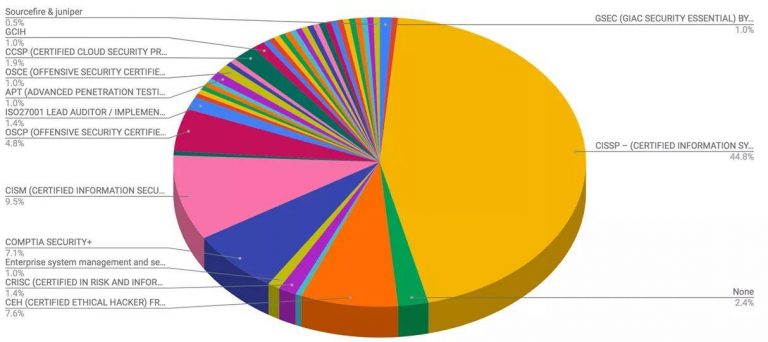
What is the best IT certification to have?

A picture is worth a thousand words.

There are a ton of IT certifications but the monster of all certifications is the Certified Information Security Professional (CISSP) Certification by ISC2.

There are a number of reasons that the CISSP is one of the most sought after and highly acclaimed certifications in the IT industry.

First, the CISSP exam is very difficult to pass. The pass rate usually hovers right around 50%. The difficulty of the test means that the folks who are able to pass really know their stuff. The test is mind bending and even people who are highly knowledgeable in the cybersecurity field often have a very difficult time with this exam.

Secondly, passing the test is just the beginning. CISSP holders need to prove that they have the required years of full time experience working in cybersecurity. They also have to get someone to sponsor them and vouch for their expertise and experience.

Finally, the CISSP certification proves knowledge that is not just specific to technical aspects of cybersecurity. A mastery of cybersecurity management, cybersecurity governance, and cybersecurity policy is required in order to obtain this IT Certification.