

Wednesday, April 29, 2026
Home Blog Page 124
AI cybersecurity guidance for small businesses

Know where your business is exposed, what matters most, and what to fix first.

CyberExperts gives small businesses AI-generated cyber checkups, practical recommendations, and recurring cyber hygiene monitoring โ€” without enterprise consulting complexity.

AI Cyber CheckupIdentify likely weak points and get a prioritized action plan.
Recurring MonitoringStay current with updated cyber hygiene guidance over time.
Built for SMBsPractical recommendations for real-world small business setups.

Most small businesses know cybersecurity matters. Very few know what to fix first.

CyberExperts turns cybersecurity confusion into a practical action plan. Instead of vague fear, generic checklists, or expensive consulting, you get AI-generated guidance focused on likely risks, weak spots, and the most important next steps.

How it works

1. Tell us about your businessShare your team size, tools, email setup, device practices, and current security habits.
2. CyberExperts analyzes your setupOur AI reviews likely weak points, common risks, and practical cyber hygiene gaps.
3. Get a prioritized action planReceive clear next steps in plain English โ€” focused on what matters most.
4. Stay current with ongoing monitoringAdd recurring cyber hygiene monitoring if you want updated guidance over time.

Start with a checkup. Continue with monitoring.

AI Small Business Cyber Checkup

A one-time AI-generated assessment that identifies likely weaknesses, highlights the biggest issues, and gives you a practical action plan.

  • Likely weak points and avoidable risks
  • Top-priority recommendations
  • Plain-English next steps

AI Cyber Hygiene Monitor

A recurring cyber hygiene subscription that updates your recommendations, flags likely weak spots, and helps you stay current over time.

  • Recurring reassessment
  • Updated recommendations
  • Refreshed priorities over time

What CyberExperts does โ€” and does not do

Done by AICyberExperts is built as an AI-delivered cybersecurity guidance product.
For small businessesDesigned for operators who want practical guidance without enterprise complexity.
Not a magic guaranteeIt helps identify likely risks and prioritize what to fix first.
Recurring option availableContinue with ongoing Cyber Hygiene Monitor updates over time.

See your biggest cybersecurity gaps in plain English.

Start with an AI Cyber Checkup and get a practical view of what to fix first.

Popular Password Manger – Urgent Vulnerability

0

Attention all users of Bitwarden, a popular password manager used to protect online accounts: your sensitive information may be at risk due to a significant vulnerability recently discovered by security researchers.

The issue lies in Bitwarden’s encryption algorithm, which is not as secure as it should be, leaving users’ passwords vulnerable to brute force attacks. A brute force attack is a hacking technique that involves trying every possible combination of characters until the correct password is found. With Bitwarden’s encryption weakness, hackers may be able to crack the password manager and access all the stored passwords.

The implications of such an attack are dire. A hacker could gain access to all of your online accounts, including email, banking, and social media, potentially wreaking havoc on your personal and professional life. With your personal information in their hands, a hacker could even steal your identity or commit financial fraud.

What’s more concerning is that Bitwarden has yet to release a patch to address this vulnerability. This delay has prompted security experts to advise users to switch to a different password manager until a fix is released.

If you’re using Bitwarden, it’s crucial to take action to protect your sensitive information. Firstly, it’s recommended that you stop using it immediately and switch to a more secure alternative. Secondly, change your passwords regularly and use strong, unique passwords for each account. By taking these necessary precautions, you can minimize the risk of your information falling into the wrong hands.

In conclusion, the news of Bitwarden’s vulnerability is a significant concern for its users. If you’re one of those users, take action now to protect yourself and your sensitive information from potential hackers. Don’t wait for a patch from Bitwarden; switch to a more secure password manager immediately.

4 Essential Things to do Before you Sell your Old Computer

Selling your old Windows computer can be a great way to make some extra money, but before you do, there are a few things you should do to prepare your computer for its new owner. By taking these steps, you can protect your personal information, make the sale go smoothly, and ensure that your computer is in the best possible condition for its new owner.

First, back up your important files and documents to an external hard drive or cloud storage service. This will ensure that you don’t lose any important data when you wipe your computer’s hard drive. Some examples of cloud storage services are Dropbox, Google Drive, and OneDrive. These services offer a limited amount of storage space for free, and you can upgrade to a paid plan if you need more storage.

When backing up your files, make sure to include everything that is important to you, such as photos, music, documents, and videos. You can easily transfer these files to your external hard drive or cloud storage service by simply dragging and dropping them into the appropriate folder.

Next, wipe your computer’s hard drive to remove all of your personal information. You can do this by using the built-in reset feature in Windows 10. This will erase all of your files, applications, and settings, and restore your computer to its factory settings. This ensures that your personal information is not accessible to the new owner of your computer.

Another way to wipe your computer’s hard drive is to use a third-party software such as DBAN. DBAN is a free and open-source software that wipes the hard drive of your computer by overwriting every sector of the disk with a new random pattern. This is an effective way to make sure that your personal information is completely removed from the computer.

Once your computer is wiped clean, you can reinstall Windows and any necessary drivers and software. This will ensure that your computer is in the best possible condition for its new owner. You can either reinstall the original Windows installation that came with your computer, or you can install a new version of Windows.

If you choose to install a new version of Windows, you will need to purchase a license key. You can buy a license key from the Microsoft Store or from a third-party retailer. Once you have the license key, you can download the Windows installation files from the Microsoft website and create a bootable USB drive.

Finally, give your computer a thorough cleaning. This includes wiping down the screen and keyboard, and dusting the inside of the computer with compressed air. This will make your computer look and feel like new, and will help ensure that it works properly for its new owner.

In conclusion, by following these steps, you can sell your old Windows computer with confidence, knowing that you’ve protected your personal information and ensured that your computer is in the best possible condition for its new owner. So, get started today and turn your old computer into cash!

SVB Failure may lead to World Wide Financial Meltdown

The world of finance is bracing itself for a potential catastrophe, as the threat of a major financial institution’s failure looms large. According to recent reports, Silicon Valley Bank’s insolvency could have devastating effects on the US banking industry.

As per Gergely Orosz’s tweet, the failure of Silicon Valley Bank could lead to a “domino effect” that could trigger a run on regional banks across the country. This could cause widespread panic among customers who may withdraw their deposits, leading to a liquidity crunch.

The impact of such a crisis would be far-reaching, with the potential to cause significant economic damage. The shockwaves could be felt across the entire financial sector, and businesses may struggle to secure funding. This could lead to an overall decline in economic activity, and people may struggle to access their savings.

Given the potential consequences, it is imperative that authorities take steps to mitigate the risks of such a failure. The potential impact on businesses and individuals cannot be underestimated, and it is essential to ensure that appropriate measures are in place to avoid a worst-case scenario.

In any case, it seems that the banking industry is in for a rocky ride, with significant uncertainty and risk on the horizon. The potential failure of Silicon Valley Bank could be a defining moment for the US financial system, and the fallout could be felt for years to come.

OpenSea NFT Vulnerabilty Discovered

A vulnerability was found in the OpenSea NFT marketplace that allowed attackers to create fake listings and deceive buyers into purchasing fake NFTs. The issue was reported to OpenSea’s security team by a security researcher who discovered the vulnerability.

The vulnerability allowed attackers to create listings for non-existent NFTs or to alter the details of existing listings. This could lead to unsuspecting buyers purchasing NFTs that didn’t actually exist or were not what they appeared to be. The attacker could then take the buyer’s payment and disappear, leaving the buyer with nothing in return.

OpenSea took immediate action to address the vulnerability by temporarily disabling the ability to edit listings and introducing new security measures to prevent future attacks. The company also refunded affected buyers and urged its users to be cautious when making purchases.

While OpenSea was quick to respond and take action, the incident raises concerns about the security of NFT marketplaces as a whole. As the popularity of NFTs continues to grow, so too does the potential for cyber attacks and fraud. This could have significant consequences for artists and creators who rely on NFTs as a source of income.

To address this issue, it’s important to implement stricter security measures across all NFT marketplaces. This could include measures such as identity verification for sellers, greater transparency around NFT provenance and authenticity, and more rigorous auditing of NFT listings.

In conclusion, the vulnerability found in the OpenSea NFT marketplace highlights the importance of maintaining high levels of security in the growing NFT industry. By taking proactive steps to address vulnerabilities and implement stricter security measures, we can help to protect NFT buyers and sellers and ensure the integrity of this emerging market.

New Cisco Vulnerability Discovered

0

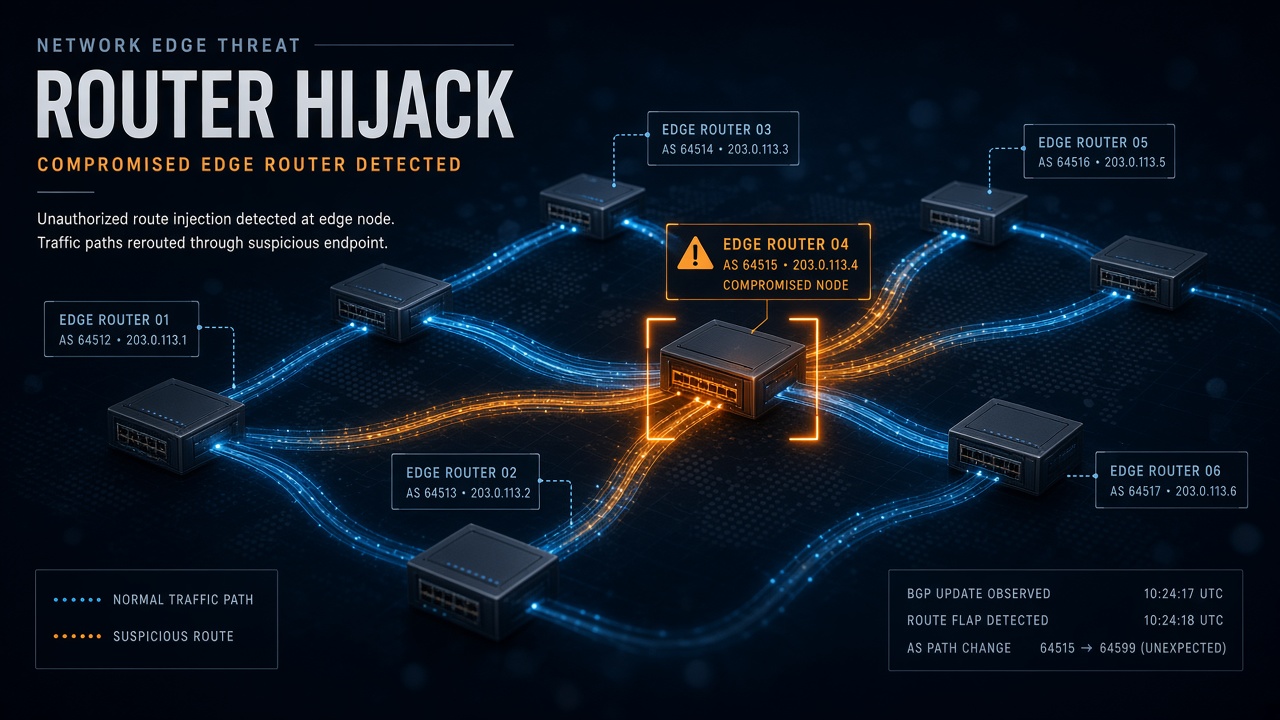
Cisco enterprise routers are widely used in businesses around the world, providing critical networking capabilities that support the modern enterprise. However, recent findings have revealed a vulnerability that exposes these routers to potential attacks, which could disrupt business operations.

The vulnerability, tracked as CVE-2022-23038, affects the IOS XR operating system used in several Cisco enterprise routers. It allows an attacker to execute arbitrary code on the target device remotely. With this access, attackers can manipulate the device and potentially cause disruptive and damaging effects.

The vulnerability’s impact on businesses can be severe, ranging from denial of service (DoS) attacks to complete data breaches. Attackers can access and modify sensitive information, which could lead to reputational damage, financial losses, and even legal action against the affected business.

Cisco has issued a patch for the vulnerability, urging customers to update their systems as soon as possible to avoid potential attacks. However, patching can be a complex process, and businesses with outdated systems may be at a higher risk of falling victim to this vulnerability.

The discovery of this vulnerability highlights the importance of timely and thorough patch management in cybersecurity. Businesses must stay vigilant and proactive in identifying and addressing potential vulnerabilities to prevent them from being exploited by attackers.

Moreover, the discovery of this vulnerability in Cisco enterprise routers highlights the growing importance of network security in the enterprise. As businesses become more reliant on technology, it is crucial to ensure that networking infrastructure is secured against potential threats.

In conclusion, the vulnerability discovered in Cisco enterprise routers is a significant threat to businesses that rely on this technology. Cisco’s prompt response in issuing a patch highlights the importance of patch management in cybersecurity. It is crucial for businesses to stay vigilant and proactive in addressing potential vulnerabilities to avoid falling victim to cyber attacks.

Using ChatGBT to Enhance Security

The adoption of AI and machine learning in cybersecurity is on the rise, and the ChatGPT model, created by OpenAI, has been integrated into various security products by several companies. One such example is Microsoft, which has incorporated ChatGPT into their Office 365 Advanced Threat Protection (ATP) to improve their email security capabilities.

Perception Point, an Israeli cybersecurity firm, is another company that has integrated ChatGPT into their Email Security Platform. The platform uses the model to detect and mitigate language-based threats such as phishing attacks and social engineering scams. By integrating ChatGPT into their Email Security Platform, Perception Point has improved their ability to detect and prevent email-based attacks.

Another company that has integrated ChatGPT into their cybersecurity product offerings is JP Morgan Chase. The company has incorporated the model into their security operations to enhance their fraud detection capabilities. ChatGPT’s ability to analyze large amounts of data and detect fraudulent activity has proven to be particularly valuable for the banking industry.

The adoption of ChatGPT and other AI models in the cybersecurity industry is a significant development that has improved the effectiveness of security products and services. As the technology continues to advance, we can expect to see more companies incorporating AI and machine learning capabilities into their security products to stay ahead of cyber threats.

In summary, Microsoft, Perception Point, and JP Morgan Chase are just a few examples of companies that have integrated ChatGPT into their security products. By doing so, they have enhanced their ability to detect and prevent cyber threats, which is crucial in today’s ever-evolving cybersecurity landscape.

FBI Seizes Major Hacker Website

0

Federal authorities in the United States have seized a website that was allegedly used to sell a powerful Trojan malware capable of taking control of victims’ computers remotely. The website, named “Imminent Monitor,” sold a type of malware known as a Remote Access Trojan (RAT) that allowed cybercriminals to take full control of infected computers.

According to the United States Department of Justice (DOJ), the Imminent Monitor RAT was one of the most prolific and powerful RATs available for purchase. It was used by cybercriminals worldwide to gain unauthorized access to victims’ computers, steal sensitive information, and engage in other illegal activities.

The Imminent Monitor website was seized as part of an international law enforcement operation targeting the creators and users of RATs. The operation, which was conducted by the DOJ and law enforcement agencies from around the world, resulted in the arrest of 13 individuals and the seizure of 430 domain names and command-and-control servers.

While the seizure of the Imminent Monitor website is a significant victory for law enforcement, it is unlikely to put an end to the sale of RATs and other types of malware. Cybercriminals are constantly developing new and more sophisticated forms of malware, and there will always be a demand for these tools in the underground cybercrime market.

Furthermore, the seizure of these domains and servers may cause short-term disruptions to the operations of some cybercriminals, but they are likely to simply move their operations to new domains and servers, making it more difficult for law enforcement to track and disrupt their activities.

In conclusion, the seizure of the Imminent Monitor website and the arrest of 13 individuals is a significant step forward in the fight against cybercrime. However, it is important to remember that the battle against cybercrime is an ongoing one, and law enforcement must remain vigilant and adaptable to stay ahead of cybercriminals’ tactics and techniques.

Hacker Claims to have Breached Major Cybersecurity Firm

Swiss-based cybersecurity firm, Acronis, has allegedly been breached by a hacker! This news comes as a shock to many who considered Acronis to be one of the most secure companies in the industry.

According to reports, a hacker claims to have breached Acronis and has even provided evidence to support their claim. The company has yet to confirm the breach, but if it is true, this could have serious implications for Acronis and its clients.

The hacker claims to have stolen data from Acronis, but the exact nature of the data is unknown at this time. It’s possible that the hacker has gained access to sensitive information such as customer data, financial information, or even intellectual property.

This news highlights the importance of cybersecurity measures for all companies, no matter how big or small. Hackers are constantly finding new ways to breach even the most secure systems, so it’s crucial for companies to be proactive in protecting their data.

If the breach is confirmed, it will be interesting to see how Acronis responds and what measures they take to prevent future breaches. This could also have wider implications for the cybersecurity industry as a whole, as it serves as a reminder that no company is completely immune to cyber attacks.

As individuals, we can also take steps to protect ourselves from cyber threats. It’s important to use strong passwords, enable two-factor authentication, and avoid suspicious emails or links. By taking these steps, we can help to prevent our own personal data from being compromised.

In conclusion, this breach at Acronis serves as a wake-up call to all companies and individuals to prioritize cybersecurity measures. The cyber world is constantly evolving, and it’s up to us to stay vigilant and protect ourselves from these threats.

The Rise of AI-Generated Phishing Emails

0

Artificial intelligence (AI) writing assistants like ChatGPT are becoming popular among cybercriminals as they use the programs to generate malicious content such as phishing emails. These attacks have been around for a long time and they have become more sophisticated over the years. According to a report, a security system that filters out phishing emails is unlikely to detect AI-generated content due to its near-accuracy.

What Are Phishing Emails?

Phishing emails are fraudulent messages that trick victims into divulging personal information like passwords or credit card numbers, clicking on malicious links or downloading corrupted attachments. These emails frequently give the impression that they come from a reliable source, like a bank, social media site or reputable business.

It’s essential to be cautious when receiving unsolicited emails and to verify the sender and the content of the email before taking any action.

Recent Developments in Human and AI-Generated Phishing Emails

AI has developed rapidly and continuously integrates into many aspects of life. However, these developments come with new challenges, particularly regarding cybersecurity. One such concern is the rise of AI-generated phishing attacks, which are becoming more sophisticated and challenging to detect.

In the past, human attackers who used their knowledge of human psychology and their ability to write convincing emails to trick victims created phishing emails. However, with AI’s increasing sophistication, there’s a growing concern that attackers could use AI to write even more convincing phishing emails.

AI-generated phishing emails are created using machine learning algorithms trained on large amounts of data, such as previous authoritative emails from reputable companies. The algorithms analyze the data to identify patterns and generate text tailored to the interests and vulnerabilities of the target audience. The result is a phishing email that’s often difficult to distinguish from a legitimate one.

This level of personalization can make it challenging for recipients to recognize that the email is a phishing attempt because it may contain details that appear authoritative and specific to the target. While human attackers may have knowledge of human psychology and be able to write convincing emails, they may have a different level of data analysis and capabilities than AI algorithms.

One of the main features of AI-generated phishing emails is their ability to bypass traditional email filters and security measures. Conventional email filters use rule-based systems to detect and block spam emails. Still, AI-generated emails that mimic the language and structure of authoritative ones can fool these filters. This makes it more difficult for individuals and organizations to protect themselves against malicious attacks.

Another feature of AI-generated phishing emails is their scalability. With AI, attackers can generate and send a large number of phishing emails in a short period, increasing their chances of success. This is particularly concerning for businesses because a successful phishing attack can result in sensitive data and financial losses.

How to Protect Against Human and AI-Generated Phishing Emails

Below are a few steps that individuals and organizations can take to protect themselves against any form of phishing emails:

1. Implement Advanced Security Measures

One of the most effective ways for individuals and organizations to protect themselves against phishing emails is by using anti-phishing software and email filters that use AI algorithms to detect and block malicious emails in real-time. This method analyzes incoming emails and compares them to known phishing templates and behaviors.

2. Regularly Update Software and Security Measures

It’s essential to regularly update software and security measures to protect against the latest threats and vulnerabilities. This includes updating operating systems, antivirus software and anti-phishing filters. Individuals and organizations can conduct regular security audits to identify and address any vulnerabilities in their plans.

3. Protect Sensitive Information

One of the primary goals of phishing attacks is to obtain sensitive information. To protect against these attacks, everyone should consider using unique passwords for all accounts and changing them regularly. They must also be cautious of providing personal information over the phone or via email, especially if the request seems suspicious.

4. Be Cautious of Suspicious Emails

Individuals and organizations should always be cautious of emails that seem fishy or create a sense of urgency or fear. These emails may contain a request for personal data or a link that leads to a malicious website. For protection against such incidents, they can check the sender’s email address and verify if it’s legitimate.

5. Stay Informed

Cybercriminals are constantly evolving their methods to bypass traditional security measures and everyone needs to stay up-to-date with the latest information to protect themselves against these attacks. One way to stay informed is by keeping track of news and alerts from reputable sources, such as the Cybersecurity and Infrastructure Security Agency and the Federal Trade Commission.

Protect Yourself Against Phishing Emails

AI-generated phishing emails are a growing concern for individuals and organizations. These emails are becoming more sophisticated and challenging to detect, making it essential to stay informed about the latest developments in this area and to take proactive steps to protect against these attacks.

5 Proven Methods for Secure API Authentication

0

Secure API Authentication: Why It’s Important

An integral part of modern web development is APIs or Application Programming Interfaces. As APIs continue to grow, the importance of ensuring their security and authentication increases as well. They allow for seamless data exchange between different applications, platforms, and systems.

Authentication of an API ensures that only authorised parties can access the API’s data and functionality, as it verifies the identity of the user or system accessing it. When APIs are not authenticated properly, they can be vulnerable to security breaches and attacks, resulting in significant harm to businesses and their customers.

We will examine five proven methods for authenticating APIs in this article, including Basic Authentication, OAuth 2.0, JSON Web Tokens (JWT), API Key, and OpenID Connect. We will examine each method’s strengths and weaknesses and provide recommendations for businesses to choose the right one for their needs.

Method 1: Basic Authentication

In API authentication, Basic Authentication is a simple, widely-used method. In this method, a username and password verify the identity of the user or system accessing the API. To ensure data confidentiality, credentials are encoded and transmitted over an encrypted SSL/TLS connection.

Although Basic Authentication is an easy-to-implement method, it also has its limitations, since credentials are transmitted with every request. As a result, it is susceptible to eavesdropping and man-in-the-middle attacks. Additionally, an attacker would have full access to the API if the user’s password were compromised.

Method 2: OAuth 2.0

In OAuth 2.0, users are able to share resources stored on one site with another site without revealing their passwords, allowing them to share data and information. In addition to offering a secure and scalable method for authentication and authorization, OAuth 2.0 is a popular choice for developers and businesses.

In OAuth 2.0, the user grants permission to a client application to access their resources stored on a resource server. An access token is returned by the authorization server to the client application. The token can be used to access the user’s resources.

The benefits of OAuth 2.0 over Basic Authentication include the following:

  • The ability to revoke access.
  • The ability to limit the scope of access.
  • The ability to use refresh tokens to renew access without requiring the user to re-enter their credentials.

Method 3: JSON Web Tokens (JWT)

JWTs are compact and secure methods for API authentication. They are JSON objects that are signed and encrypted, allowing them to be securely transmitted over the network. They are self-contained, meaning all of the information required for authentication and authorization is contained within the token.

There are several benefits to using JWTs as an API authentication method over other methods. Additionally, they are stateless, meaning they do not require a database or other stateful systems to maintain their information. They can be easily integrated into existing systems and are easy to implement.

A JWT is not encrypted by default, so its contents can be easily read if intercepted. Additionally, as the value of the token increases, the size of the token can become an issue.

Method 4: API Key

A unique, secret identifier assigned to each client application that accesses an API is an API Key, a simple, secure method of API authentication.

The API Keys can be implemented quickly and provide a secure authentication method as long as they are kept confidential. However, they can be vulnerable to attacks if they are intercepted or leaked. Additionally, revoking access to a client application may be difficult, as the API Key must be regenerated and re-distributed to all the authorized applications again.

Method 5: OpenID Connect

A widely used and secure API authentication method, OpenID Connect adds an authentication layer to OAuth 2.0, allowing users’ authentication information to be securely exchanged.

An OpenID Connect user authenticates with an identity provider, which then returns an ID token containing the user’s information. The token is then used to access APIs, ensuring API authentication and authorization are secure.

As a secure and scalable API authentication method, OpenID Connect uses OAuth 2.0 to provide additional features, such as revoking access and limiting access scope. However, it can also be more complicated to implement and maintain than other methods, such as API Keys or JWTs.

How to Choose the Right Method for Your Business

That’s not all, though, FireTail has developed a hybrid solution for API security, consisting of an open-source library that evaluates and blocks API calls and a cloud-based management system with centralized audit trails, detection, and response capabilities.

In conclusion, several proven methods for secure API authentication exist, including Basic Authentication, OAuth 2.0, JSON Web Tokens (JWT), API Key, and OpenID Connect. Each method has its strengths and weaknesses, and the best method for a business will depend on the specific requirements and security needs of the API.

5 Programming Skills Essential for a Career in Cybersecurity

0

As technology advances, we have seen an increase in the number of cyber crimes worldwide. This has given birth to a rising demand for cybersecurity experts. These experts need a wide range of skills to succeed in their careers.

This is required since they have to identify potential attacks in time and develop solutions to prevent them. In addition, they have to keep up with the latest trends surrounding the cybersecurity world.

Programming skills are among the necessary skills to be a cybersecurity expert. Here are some of the programming skills essential for a career in cybersecurity.

  1. JavaScript

JavaScript is one of the best programming languages, especially for people who want to execute cross-site scripting and work with event handlers and cookies. It is also the most common programming language for building websites and web applications.

Due to this, most websites and web applications are commonly targeted by cybercriminals. If, for instance, cybercriminals manage to control a website or web application, they can do anything they want and gain access to sensitive information.

This means that you need to be skilled in JavaScript for a successful career in cybersecurity. There are many ways of learning these programming languages. However, when starting, ensure that you have joined one of the best coding bootcamps like Altcademy.

  1. HTML

HTML is a markup language that is used in almost all websites. It is also the most straightforward and fundamental programming language today. According to studies, about 90% of websites use HTML.

Cybercriminals can use HTML in different ways. For instance, they can insinuate HTM code into websites. This is a type of cyber attack known as multi-site scripting. They can also use HTML to circulate information or deform websites.

They can spoof websites and collect information from site visitors. These are things that cybersecurity experts need to be aware of. They need to find solutions and protect their websites from attacks easily. They can only do that if they are skilled in HTML.

  1. C

C is the best programming language for finding exposures and reverse engineering. It is also one of the oldest, having been created in the early 1970s. Developers can use the C programming language for the creation of low-level code.

When building applications using C, developers should ensure that the applications do not have vulnerabilities. However, cybercriminals use the same programming language to look for loopholes and gain unauthorized access to applications.

A career in cybersecurity requires one to be skilled in C. The best cybersecurity analysts, for instance, use C programming language in most of their work. They are tasked with threat analysis and alleviation as well as finding exposures.

  1. PHP

PHP (Hypertext Preprocessor) is a scripting language used in web development. According to studies, a more significant percentage of modern top websites have been designed using PHP. It is also the most popular server-side programming language.

Cybercriminal experts need to be skilled in PHP to defend their systems against cybercriminals. These criminals use PHP in a hacking technique known as Denial of Service (DoS). With this technique, cybercriminals can deny users access to websites or systems.

PHP can also be used to delete data from websites. It is the most used programming language when hacking personal websites. You, therefore, need to understand the ins and outs of how PHP works for you to protect your systems and applications from attack.

  1. Python

Python is essential when it comes to malware research and task automation. It also comes with many libraries with different scripts. Cybercriminals use these scripts to gain access to applications, especially when they cannot write their own code.

Apart from the use of scripts, cybercriminals also use tools like Auto Sploit, a hacking tool that uses Python scripts. This tool is common among cybercriminals who want to automate the manipulation of remote multitudes.

Cybersecurity experts need to be skilled in Python for them to create scripts and tools that can secure and protect their websites from attack. They can also use Python to employ artifacts, logs, and data when analyzing loopholes or courses of attack.

Other essential programming skills for a career in cybersecurity include C++, Java, SQL, and Assembly. Getting skilled in all these programming languages is not a walk in the park. However, if you start with a couple of the languages discussed in this article, you can be assured of a successful career in the cybersecurity world.

How to Respond to a Vendor Data Breach

0

Cyberattacks are a real threat to businesses and organizations, becoming more common every year. Studies show they rose 42% during the COVID-19 pandemic compared to 2021. These attacks are indiscriminate, targeting businesses from automotive companies to steel manufacturers and even prisons.

These attacks can have widespread effects, such as stealing valuable data to be ransomed later or crippling a business’s supply chain. IT professionals must stay vigilant as much as possible, but the unfortunate truth is that they can’t have eyes everywhere.

Your response has to be swift and professional if a cyberattack on one of your third-party vendors is successful. Here are some tips on how you can handle the situation.

Ask the Right Questions

The first step to reducing any cyberattack’s impact is gathering information. Here are some good questions to ask your vendor if a cyberattack occurs.

  • Are the attacks still occurring?
  • Has the data breach been stopped?
  • How did the attackers get into the system?
  • Was there an information leak? Was someone responsible?
  • If so, was it done intentionally?
  • Does the vendor have cyber insurance?
  • Will the vendor pay your legal fees if a lawyer is needed to evaluate breach notification obligations?

Determine if There Has Been a Data Breach

About 56% of companies say they’ve experienced a data breach caused by one of their vendors. However, leaks can be contained if the stolen information has not been exploited. If that is the case, your priority should be to secure your data immediately to minimize the impact on your business.

Ask your vendor if the data leak can compromise your system. The vendor should have immediately launched an investigation when the breach occurred. Ask them how far they are into it and what investigative firms they are working with. If there is a report available, ask for access to it.

Secure Your Data Immediately

If a significant breach of your vendor’s systems has occurred, you must secure your data as soon as possible. Take these steps to ensure your information remains safe.

  • Fix vulnerabilities in your systems: Start a thorough scan of your plans to fix any vulnerabilities that cyberattackers can exploit. This includes changing computer access codes and physical locations that might be at risk.
  • Start moving your breach response team: Contact your third-party security consultant immediately to begin formulating a plan in case the cyberattackers target you.
  • Inform and train your team: Make sure your data forensics team understands the situation and takes steps to prevent a data leak on your end. This includes changing passwords and looking for suspicious emails, texts and phone calls.


Recognizing a Cyberattack

The best way to prevent a data breach is to know what a possible cyberattack can look like. They are constantly evolving, but these are the most common types.

Phishing

Phishing is the most common type of cyberattack. Phishers will register a fake domain that will look like a legitimate organization. They will then attempt to contact you through email, text message or phone, posing as a representative or a regular contact.

Once they make contact, they will attempt to get you to reveal information such as access credentials or persuade you to click a link that would introduce malware into your computer system. If a cyberattack threatens your organization, training your people to recognize phishing emails, messages and phone calls is essential.

Credential Stuffing

Credential stuffing is a form of cyberattack that injects stolen credentials — usually usernames and passwords — into multiple website login forms to gain access to confidential systems. Your organization could face this kind of cyberattack if your vendor’s security is breached.

Credential stuffing is a form of brute force attack. An automated program will try to access login forms within your organization by continuously entering usernames and passwords. It is easy to prevent if you integrate multifactor authentication software into your cybersecurity or have employees change their passwords immediately.

Identity and Financial Fraud

This is usually the end goal of cyberattacks. However, depending on what kind of information your vendors lost, cyberattackers may already be able to impersonate you to the extent that they can buy goods and services in your name.

Contact your bank immediately to stop all transactions if your business is being impersonated. You should also reach out to any financial and legal counsel to mitigate the damage. One preventive measure you can take is purchasing identity theft insurance for your business.

Respond to Vendor Data Breaches to Keep Your Information Safe

Being forced to handle a possible data breach can be a harrowing experience, especially if it has never happened to you before. The important thing is to remain calm and begin taking steps to protect your business. That can mitigate or completely prevent any damage to your company and its reputation.

Generating Random Numbers

Random numbers are an essential component of many applications, including cryptography, simulations, and gaming. A random number generator is an algorithm that produces a sequence of numbers that are unpredictable and uniformly distributed. In this article, we will explore the basics of random number generation and discuss how to create an algorithm to generate random numbers.

Types of Random Number Generators

There are several types of random number generators, including true random number generators and pseudorandom number generators. True random number generators use physical processes, such as atmospheric noise or radioactive decay, to generate random numbers. Pseudorandom number generators, on the other hand, use mathematical algorithms to generate a sequence of numbers that appear to be random.

Pseudorandom number generators are widely used because they are fast, reliable, and can produce a large number of random numbers. The most common type of pseudorandom number generator is the linear congruential generator (LCG), which uses a simple mathematical formula to generate a sequence of numbers.

Linear Congruential Generator (LCG)

The LCG algorithm is based on the following formula:

x_i = (a * x_{i-1} + c) % m

where x_i is the i-th number in the sequence, x_{i-1} is the previous number in the sequence, a is a constant called the multiplier, c is a constant called the increment, and m is a constant called the modulus. The initial value of x, called the seed, determines the starting point of the sequence.

The LCG algorithm can be implemented in a variety of programming languages, including C, C++, and Python. The following code demonstrates how to implement the LCG algorithm in C++:

#include <iostream>
#include <cstdlib>
#include <ctime>

int main() {
   srand(time(0));
   int x = rand();
   for (int i = 0; i < 10; i++) {
      x = (1103515245 * x + 12345) % 2147483647;
      std::cout << (double) x / 2147483647 << std::endl;
   }
   return 0;
}

This code generates 10 random numbers in the range [0,1) using the LCG algorithm. To change the seed value, simply modify the value of x before the for loop.

Evaluating Random Numbers

To evaluate the quality of random numbers generated by a random number generator, several statistical tests can be used. The most common tests include the chi-squared test, the Kolmogorov-Smirnov test, and the Runs test. These tests check the randomness of the numbers generated by the generator and whether they are uniformly distributed.

The chi-squared test determines if the distribution of generated numbers is uniform. The test divides the range of generated numbers into k intervals and counts the number of generated numbers in each interval. If the generator is producing numbers that are uniformly distributed, the number of generated numbers in each interval should be approximately the same. The test calculates a chi-squared statistic based on the observed and expected number of generated numbers in each interval and compares it to a critical value. If the calculated statistic is larger than the critical value, it indicates that the generator is not producing numbers that are uniformly distributed.

The Kolmogorov-Smirnov test determines if the distribution of generated numbers is different from a uniform distribution. The test calculates the largest difference between the cumulative distribution function (CDF) of the generated numbers and the CDF of the uniform distribution. If the difference is large, it indicates that the generator is not producing numbers that are uniformly distributed.

The Runs test determines if the generated numbers are random by counting the number of runs in the sequence. A run is a sequence of consecutive numbers that have the same sign. If the generator is producing numbers that are random, the number of runs should be close to the expected number of runs for a random sequence.

Conclusion

In conclusion, generating random numbers is an important task in many applications. Pseudorandom number generators, such as the LCG, are widely used because of their fast speed, reliability, and ability to produce a large number of random numbers. When evaluating the quality of generated numbers, statistical tests such as the chi-squared test, the Kolmogorov-Smirnov test, and the Runs test can be used. By understanding the basics of random number generation and following the steps outlined in this article, developers can create their own algorithms to generate random numbers.