Tuesday, April 14, 2026
Home Blog Page 304
AI cybersecurity guidance for small businesses

Know where your business is exposed, what matters most, and what to fix first.

CyberExperts gives small businesses AI-generated cyber checkups, practical recommendations, and recurring cyber hygiene monitoring — without enterprise consulting complexity.

AI Cyber CheckupIdentify likely weak points and get a prioritized action plan.
Recurring MonitoringStay current with updated cyber hygiene guidance over time.
Built for SMBsPractical recommendations for real-world small business setups.

Most small businesses know cybersecurity matters. Very few know what to fix first.

CyberExperts turns cybersecurity confusion into a practical action plan. Instead of vague fear, generic checklists, or expensive consulting, you get AI-generated guidance focused on likely risks, weak spots, and the most important next steps.

How it works

1. Tell us about your businessShare your team size, tools, email setup, device practices, and current security habits.
2. CyberExperts analyzes your setupOur AI reviews likely weak points, common risks, and practical cyber hygiene gaps.
3. Get a prioritized action planReceive clear next steps in plain English — focused on what matters most.
4. Stay current with ongoing monitoringAdd recurring cyber hygiene monitoring if you want updated guidance over time.

Start with a checkup. Continue with monitoring.

AI Small Business Cyber Checkup

A one-time AI-generated assessment that identifies likely weaknesses, highlights the biggest issues, and gives you a practical action plan.

  • Likely weak points and avoidable risks
  • Top-priority recommendations
  • Plain-English next steps

AI Cyber Hygiene Monitor

A recurring cyber hygiene subscription that updates your recommendations, flags likely weak spots, and helps you stay current over time.

  • Recurring reassessment
  • Updated recommendations
  • Refreshed priorities over time

What CyberExperts does — and does not do

Done by AICyberExperts is built as an AI-delivered cybersecurity guidance product.
For small businessesDesigned for operators who want practical guidance without enterprise complexity.
Not a magic guaranteeIt helps identify likely risks and prioritize what to fix first.
Recurring option availableContinue with ongoing Cyber Hygiene Monitor updates over time.

See your biggest cybersecurity gaps in plain English.

Start with an AI Cyber Checkup and get a practical view of what to fix first.

DMARC policy: an effective remedy for BEC attacks


Business email compromise (BEC) or email account compromise (EAC) are a huge concern for most of the organizations these days. These attacks are designed to trick people into thinking that the email that they are receiving is from a person belonging to a senior position such as the Chief financial officer, CEO or a partner in the organization. The email is forged with the content that requests the employees to wire money to fraudulent locations. It can be in the form of:

  1. Fake name in the ‘From’: The ‘From’ field in the email consists of the spoofed name of the executive.
  2. Incorrect ‘Reply-to’: Here, attackers use the real name and email address of the impersonated person. However, the ‘reply-to’ field consists the email address of attacker.
  3. ‘Reply-to’ is missing: The name and the email address belongs to the impersonated executive. However, there is no email address in the ‘reply-to’ thus making it difficult to communicate with the ‘executive’.
  4. Identical Domain: Here, attacker not only impersonates the executive but also, uses a ‘From’ address that is identical to the original one.

In the year 2013, BEC scams began with hacking or spoofing of email accounts of chief financial officers or chief executive officers. Fraudulent emails requesting wire payments to fraudulent locations were sent to employees. BEC attacks result in the compromise of personal emails, vendor emails, spoofed lawyer email accounts. It can be in the form of:

  1. Bogus Invoice: In this type of BEC attack, attackers pretend to be the suppliers requesting for fund transfers as payments to an account owned by fraudsters.
  2. CEO Fraud: Attackers pose as the CEO or any executive and send an email to employees in finance, requesting them to transfer money to the account they control.
  3. Account Compromise: A high-level employee’s email account is hacked and used to request invoice payments to vendors listed in their email contacts. Payments are sent to fraudulent accounts.
  4. Attorney Impersonation: Attackers pretend to be a lawyer or from the law firm who oversees crucial and confidential matters.
  5. Data Theft: Employees under HR or bookkeeping are targeted to obtain personally identifiable information (PII) of employees and executives to be used for future attacks.

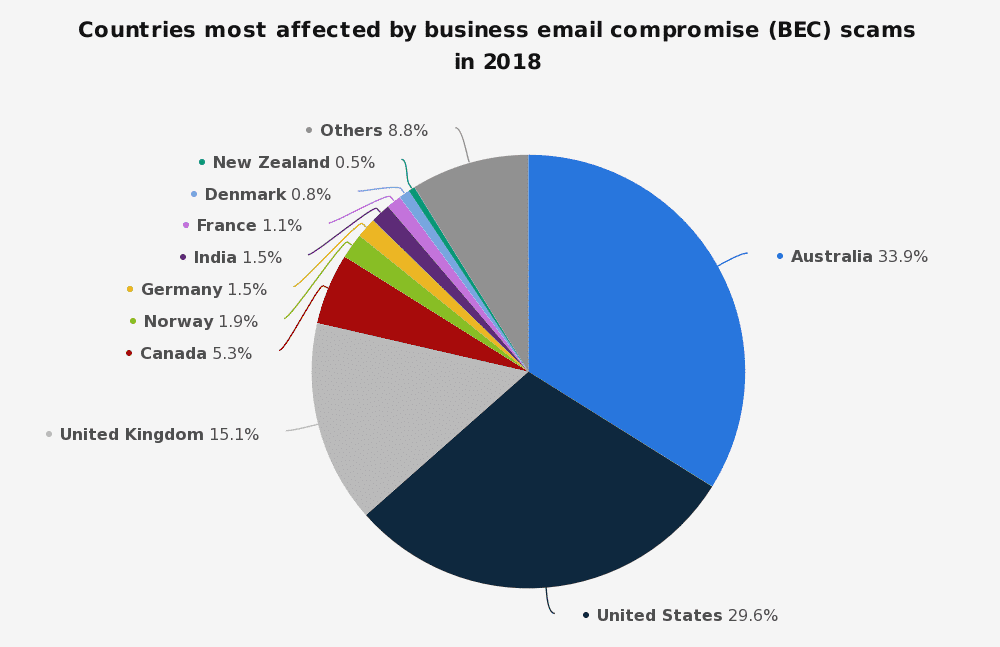
A close up of a logo Description automatically generated

Source: Statista

The market for BEC attacks has expanded very fast within a period of few years. According to FBI’s latest report on BEC frauds, losses due to BEC scams have reached $12.5 Billion worldwide. Between October 2013 and December 2016, financial losses due to BEC had cost organizations $5.3 billion globally. In May 2018, the FBI’s Internet Crime Report indicated more than $675 million losses due to BEC in the year 2017. Complaints related to BEC rose up to 351,937 with a 14.3% increase from the year 2017 to 2018. Losses due to BEC attacks increased by 90.8% from $1,418.7 million to $2,706.4 million during 2018.

So, why are BEC attacks so popular?

Unlike phishing or ransomware attack, there are no malicious URLs or attachments in these emails. BEC is a form of social engineering attack that is designed to psychologically trick employees with the help of impersonated identities that are already known to them. This includes ordering employees to perform their daily tasks or sending emails that are written in an authoritative manner thus, making it difficult for victims to question the legitimacy of the email and follow what is being narrated to them via forged email. In short, attackers do not have to put in much effort other than using their brains to manipulate victims.

With this emerging trend of deploying BEC attacks, it becomes extremely important to employ security measures to safeguard your organization and its employees against such cyber-threats.

How can you protect your organization against BEC attacks?

Limited authority: It is imported limit the authority to people who check payments and those who approve or process wire transfer.

Train your employees: One of the effective ways of safeguarding against BEC attacks is by providing cyber awareness training. The training helps employees in gaining awareness about BEC attack as well as about the methodologies and strategies used by attackers to trick them.

A screenshot of a computer Description automatically generated

Policy-based protection: This can be considered as the most effective preventive measure against BEC attacks. This helps in examining the sender reputation and sender-recipient relationship that can detect different forms and types of BEC attacks. Policy or authentication-based protection helps in authenticating your email domain. With the help of SPF and DKIM, the authenticity of an email can be easily established. SPF is an email authentication technology that specifies the sender who can send an email on domain’s behalf. DKIM allows the transmission of an email in a manner that it can be verified by the email provider. A more powerful authentication tool is DMARC that adds on to the protection provided by SPF and DKIM.

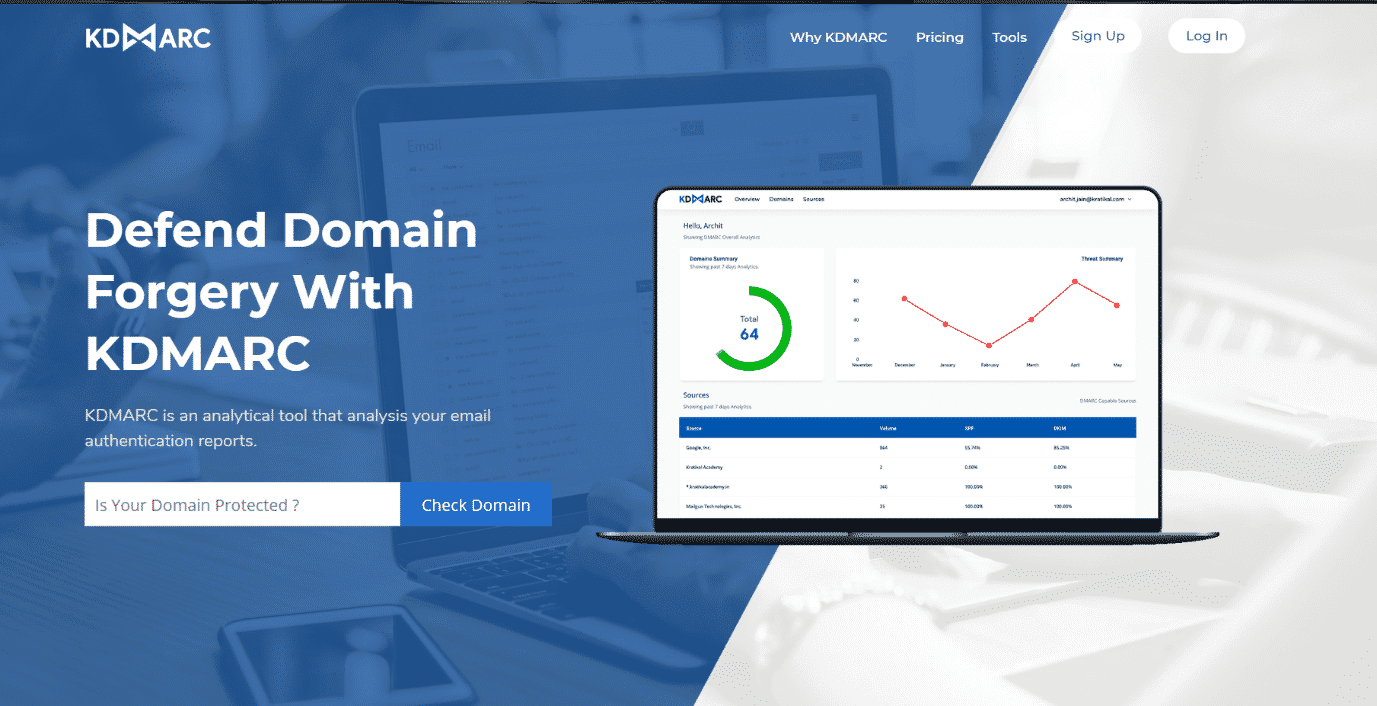
Setting up DMARC policy helps in allowing sender to indicate that their email is protected by either DKIM and SPF or both. DMARC records consists of these policies and helps in defining DMARC rulesets. It ensures that spoofed emails are not delivered to your email domain. With the help of products such as KDMARC, DMARC records can be generated and analysed for effective protection of the email domain.

The main source of communication within an organization is email. Conducting businesses, sending proposals, major decisions and deal closure are all done through emails. It is, therefore, extremely important to secure your email domain by implementing security measures that can effectively block malicious emails.

The Security Downside of SMS-based Multi Factor Authentication (MFA)

MFA is not always secure.

Multifactor authentication (MFA) is thought to be an effective technique for identifying legitimate system users before granting access. MFA is a security mechanism that requires users to provide at least two types of correct authentication alongside valid credentials.

This means that a user has to provide a correct username and password. Then the user must provide another form of proof like a verification code or use a physical object which only a legitimate user can possess.

Some forms of MFA are vulnerable to security threats and may not serve the intended purpose of providing access only to authorized users. Such include using text messages for MFA verification.

SMS and MFA

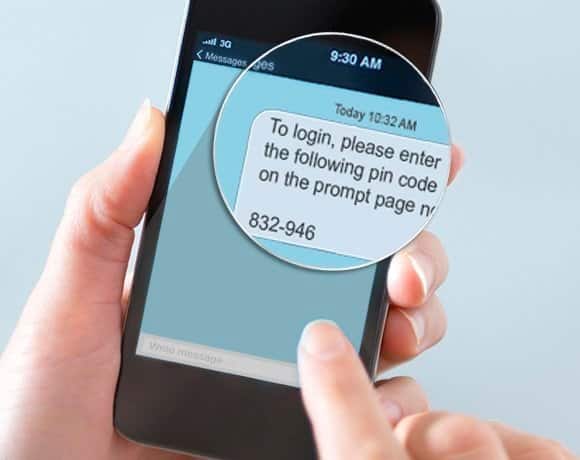
The use of SMS in MFA is one of the most popularly used means for authenticating users. Industry leaders like Google and Microsoft often send verification codes using phone numbers linked to different accounts. Upon submitting the correct code, a user is granted access.

However, what many individuals may be unaware of are the severe security threats of using SMS-based MFA. For example, a leading communications company based in San Diego, Voxox, failed to secure a database housing over ten million messages with a password. The database was leaked, and anyone could access real-time messages with two-factor verification codes for Google, Microsoft, and Huawei IDs[1]. Imagine a malicious individual with access to such a database.

SIM Swap Attacks

Also, an SMS-based MFA is insecure due to the ease with which a SIM Swap attack can be executed. A SIM Swap attack does not require one to possess any expertise as an individual with the necessary information can do it with ease. In a country like the U.S., a social security number of the targeted SIM holder can be used to request a SIM Swap with one phone call to the carrier. The new SIM can be used to request authentication codes providing an attacker direct access to all accounts.

Network Security Flaws

The SS7 network used by most carriers for text or call management has numerous security flaws that can be easily exploited. SS7 networks can be breached, allowing a hacker to intercept any message sent to or from your device. SS7 portals, for instance, can allow a hacker to forward all intercepted messages to online devices before rerouting them to the original destinations. As such, it is possible to intercept and use a verification code even before the owner can use it.

Forensic expert Jonathan Zdziarski argues that using text messages isn’t the best MFA approach. He stated that “mobile phone as a means of authentication can be socially engineered out of your control”[2]. This and other vulnerabilities has led the National Institute of Standards and Technology (NIST) to discourage companies from using MFA based on text messages. Rather than using SMS messages, NIST and leading organizations advocating for the use of other more secure means like dedicated MFA apps such as RSA SecurID and Google Authenticator and dedicated secure devices e.g. dongle.


[1] https://techcrunch.com/2018/11/15/millions-sms-text-messages-leaked-two-factor-codes/

[2] https://medium.com/@powerb91/text-message-based-two-factor-authentication-is-a-weak-form-of-security-choose-a-more-robust-64fbb89e52f7

7 Easy Steps – How to Become a Cybersecurity Specialist

We outline how to  become a cybersecurity specialist and enter a rewarding and exciting career path.

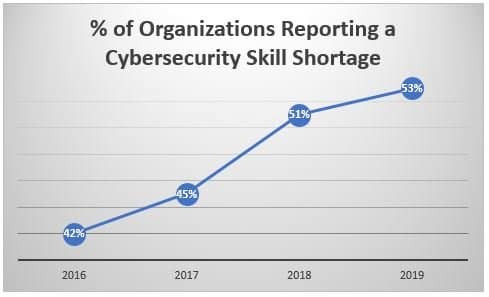
Cybersecurity is one of the fastest-growing fields today. As a result, there is a huge skill gap in the cybersecurity industry. This gap has been widening. Organizations report that the shortage of cybersecurity skills has increased in every year since 2016.[1]

How to become a cybersecurity specialist

Similarly, the World Economic Forum indicated in a 2019 report that the U.S. has more than 200,000 cybersecurity specialist positions that are hard to fill.[2]

However, organizations are prioritizing cybersecurity due to an increase in cyber-crime. This leads to our question:

How can one take advantage of the situation and become a cybersecurity specialist?

First, Identify your desired career path

Cybersecurity is a broad field with multiple career paths. You should first identify a suitable career before you join the industry. Various cybersecurity careers have different roles and responsibilities. There are different skills required for different roles. Identifying your ideal position first will ensure that you are on target for a fulfilling career.

Common career paths include:

Chief Information Security Career (CISO)
Cybersecurity Consultant
Security Architect
Penetration Tester/Ethical Hacker

Gain general IT experience

General IT skills are an essential foundation. You must understand how technology works to secure it from hackers. Some cybersecurity professionals gain experience in college. Others don’t focus on IT until later in their careers.

Some of the entry-level jobs that can be used to gain experience include:

Web developer
Systems administrator
IT technician
computer software engineer.

Continuously Learn

Cybersecurity evolves every day due to the emergence of new technologies and hacking techniques. Cyber-criminals create more than 350,000 new malware and unwanted applications every day.[3] New threats mean that a cybersecurity professional has to learn new ways of securing information systems and data continuously.

Success can only be possible through continuous learning. Acquiring new cybersecurity skills also opens up new opportunities that will help you progress in your career.

For example, an ethical hacker should be familiar with all skills a hacker uses to penetrate systems. Otherwise, the ethical hacker might fail to identify some vulnerabilities. Failures like this could lead to a data breach.

Continuous learning enables one to acquire new skills needed in the ever-changing field of cybersecurity.

Obtain cybersecurity certifications

By 2021, cybersecurity jobs will have exceeded 3.5 million.[4] There will be a lot of job openings! But this does not mean that it will be easy for job seekers.  Organizations are only interested in the most skilled professionals. To demonstrate that you have the needed skills, you should work to obtain cybersecurity certifications.

Certifications prove that you have the skills needed to do the job and are instrumental in helping you get the job you want. Many cybersecurity industry jobs require certifications as a prerequisite.

Examples of certifications that can build your cybersecurity career are listed below:

  1. Certified ethical hacker (CEH)
  2. CompTIA Security+
  3. SANS GIAC Security Essentials (GSEC)
  4. Certified in Risk and Information Systems Control (CRISC)
  5. Certified Information Security Manager (CISM)
  6. Certified Information Systems Security Practitioner (CISPS)

Select a holistic cybersecurity course

A comprehensive cybersecurity course often offers two learning methods:

Practical – how-to, hands-on, and step by step (lab work and on the job training)
Theoretical – classroom training

Both types of learning are required if you are to become proficient in your chosen cybersecurity field.

Through a holistic cybersecurity approach, you gain enough skills which enable you to anticipate security risks and threats and be proactive in developing new solutions. It further provides you with the knowledge needed to handle cybersecurity incidences as they occur.

A holistic program enables you to adapt to technological changes since they significantly impact the cybersecurity landscape. A cybersecurity specialist must be able to apply hands-on experience to adapt to new trends. A holistic cybersecurity program provides such capabilities.

Understand the cybersecurity industry

It is vital to first understand the industry before embarking on a cybersecurity career. You should:

  • Have an understanding the available cybersecurity jobs
  • Know the training required for each job

Understanding the cybersecurity industry plays an integral role in the decision-making process when choosing the field in which to specialize. People sometimes rush into a career only to switch to a different domain. Learn all you can about the industry so that you can be confident that you are choosing the right path for you.

Choose a cybersecurity field you are passionate about

The cybersecurity industry provides professionals with enormous opportunities for pursuing individual interests. You should thus pursue the area in which you are most passionate. For instance, a person passionate about hacking would make a great ethical hacker. Someone who loves fighting the bad guys would be suited for an Incident Response position.

Network with other cybersecurity experts

Networking can provide many opportunities for advancing a cybersecurity career. Cybersecurity requires a lot of creativity. Interacting with other professionals can offer avenues to learn and grow.  There are many cybersecurity-focused events and meetups that you can attend.

Conclusion

Cybersecurity careers are incredibly satisfying and pay well. Because of this, it is a great time to consider a career in cybersecurity. There are many different ways that you can learn about cybersecurity. Many online sites offer training in various cybersecurity fields. Acquiring certifications are added advantages for building a career in cybersecurity.

  1. https://www.csoonline.com/article/3331983/the-cybersecurity-skills-shortage-is-getting-worse.html
  2. https://blog.eccouncil.org/the-truth-about-the-growing-cybersecurity-skill-gap/
  3. https://www.av-test.org/en/statistics/malware/
  4. https://cybersecurityventures.com/jobs/

12 Types of Cybersecurity

The purpose of this Types of Cybersecurity Guide is to provide a simple framework for integrating cybersecurity activities and give a brief overview of the security controls that should be exercised.

Cybercrime is a growing concern in the digital environment. Most smaller companies do not have their own cyber security teams and cybercriminals who seek financial or business benefits are likely to target these smaller and more vulnerable targets.

This Types of Cybersecurity Guide contains the different types of cybersecurity and their safeguards. We have compiled a list of 12 cybersecurity themes, along with basic and advanced recommendations that will help protect against data breaches and cyber-attacks.

12 Types of Cybersecurity / Cybersecurity Themes:

ENGAGE TOP MANAGEMENT

Involving top management in the project is essential to creating a sustainable training strategy throughout the organization.

BASIC PROTECTION
  • Designate an information security officer.
  • Identify your ICT risk and protect your business for the future.
  • Comply with legal and regulatory requirements regarding privacy, data processing and security.
  • Be aware of cyber threats and vulnerabilities on your networks.
ADVANCED PROTECTION
  • Make sure the information security officer is an independent agent who is not part of the IT department.
  • Clearly define the objectives of system and network monitoring.
  • Identify the legal consequences of a data leak, a network failure, etc.
  • Periodically conduct a risk and security audit. Communicate the results and the action plan to management.

DEVELOP A SECURITY POLICY AND A CODE OF CONDUCT

This is a set of rules, laws, and practices that must be followed in the workplace.  It is based on existing risks and aimed at making management and employees more accountable for the prevention of security incidents.

BASIC PROTECTION
  • Create and apply procedures for the arrival and departure of users (staff, trainees, etc.).
  • Describe roles and responsibilities for security (physical, personnel).
  • Develop and distribute a code of conduct for the use of computing resources.
  • Schedule and run security audits.
ADVANCED PROTECTION
  • Create a classification scheme and traceability of sensitive information.
  • Introduce the notions of “need to know”, “least privilege” and “segregation of duties” into your corporate policies and processes.
  • Publish a responsible disclosure policy.
  • Store sensitive documents in locked cabinets.
  • Destroy sensitive documents with a shredder.
  • At the end of the work day, destroy the documents left on the printer.
  • Apply Locked Print if available.
  • Develop a concept and training plan for cybersecurity.

SENSITIZE YOUR WORKERS TO CYBER RISKS

Workers are the weakest link in the information security chain. Make your internal and external employees aware of information security risks. Make sure they understand your messages and test their knowledge. They will be your first line of defense in case of attack.

BASIC PROTECTION
  • Inform your users to your code of conduct. Regularly remind users of the importance of safe behavior.
  • Regularly remind users that information should be considered sensitive and handled in a manner that respects the rules of privacy protection.
  • Inform users about how to recognize phishing (e-mail fraud) and how to react.
  • Inform accounting staff about the phenomenon of “CEO fraud” and provide for control procedures in connection with the execution of payments.
ADVANCED PROTECTION
  • Integrate knowledge and respect of the code of conduct into staff evaluation.
  • Periodically evaluate user awareness and responsiveness.

MANAGE YOUR IMPORTANT COMPUTER RESOURCES

It is obvious that securing important data is a central issue for all businesses today. There are multiple threats to information systems and most company systems contain crucial private information.

BASIC PROTECTION
  • Inform about the importance of all equipment and software licenses.
  • Keep a detailed and up-to-date map of all your networks and interconnections.
ADVANCED PROTECTION
  • Use a configuration management tool (or at least one tool such as Microsoft MMC, etc.).
  • Define a basic security configuration.
  • Make sure that Service Level Agreements and other Agreements have security clauses.
  • Implement a change control process.
  • Implement a uniform level of security for all your networks.
  • Regularly audit all configurations (including servers, firewalls, and network components).

UPDATE ALL PROGRAMS

Updates play an important role in protecting your devices as they can fix errors or fix security vulnerabilities. They also give you access to the latest software features and design improvements.

Take the example of an antivirus: An antivirus is software that can fight against computer attacks, malware, and for the security of your device (computer or smartphone). This software must be regularly updated because new computer viruses are constantly being created.

BASIC PROTECTION
  • Introduce an internal culture of the “patch” (workstations, mobile devices, servers, network components, etc.).
  • Perform security updates of all software as soon as possible.
  • Automate the update process and audit its effectiveness.
ADVANCED PROTECTION
  • Set up a test and reference environment for new patches.
  • Update all third-party software, such as browsers and plugins.
  • Perform a full backup for the servers before the update and create emergency repair disks after the update.

INSTALL ANTIVIRUS PROTECTION

This is a crucial step to protect your personal data!

Your computer or device contains a lot of files and data about you. This includes photos and text documents (pay slips, taxes, scans, etc.).  It also includes your browsing data.

This data can be used to exploit certain sensitive data that could lead to the theft of your digital identity. Examples of this include spoofing your identity using your private information including your phone number, email, photos, etc.). This spoofing may be used to harm you financially or harm your reputation.

Viruses spread to both computers and smartphones (iOS or Android).  They also can affect tablets and other devices.

It is necessary to ensure that all of your devices are protected by antivirus software.

BASIC PROTECTION
  • Antivirus software is installed on all workstations and servers.
  • Antivirus updates are automatically done.
  • Users know how antivirus software alerts you of a viral infection.
ADVANCED PROTECTION
  • All virus alerts are analyzed by an ICT expert.
  • Antivirus software is installed on all mobile devices.
  • Antivirus is regularly tested using the EICAR test.

SAVE ALL INFORMATION

Your company’s employees exchange sensitive documents internally and externally on a daily basis. For legal, strategic, and security reasons, your data must be regularly backed up. It is prudent to engage a solution provider for your backup strategy. A trusted provider can ensure that your data is backed up and can assist with restoring data.

Data security is not just about adopting a backup solution. You should establish a data backup policy within your organization and establish procedures that must be followed by all employees.

BASIC PROTECTION
  • Back up your important data daily.
  • Host your backup solutions on your own servers or in the cloud.
  • Back up backups offline and in a separate location (if possible, away from their source).
ADVANCED PROTECTION
  • Backups are stored in a vault or in a secure data center.
  • Periodic restore tests are performed to evaluate the quality of backups.
  • Encrypt data stored in the cloud.

MANAGE ACCESS TO YOUR COMPUTERS AND NETWORKS

In the workplace, all computers connected to a server can be considered to be part of the network. You are responsible for the security of this vast system and you must defend the network against intruders. You must also ensure the integrity of data on computers inside the network.

Maintaining the physical security of your computing environment is essential to protecting your systems. Any system that is connected and left unattended is vulnerable to unauthorized access.

The areas around the computer and the computer hardware must be physically protected from intruders and unauthorized access.

You must also prevent unauthorized connection to a system or network by assigning a password or connection control. All accounts on a system must be password protected. While a password is a simple authentication mechanism, it protects the entire network from intruders. A strong password will protect against brute force attacks.

BASIC PROTECTION
  • Change all default passwords.
  • Nobody has administrator privileges for daily tasks.
  • Keep a limited and up-to-date list of system administrator accounts.
  • Passwords must be at least 10 characters long (a combination of character types) and must be changed periodically or whenever there is a suspicion of compromise.
  • Use only individual accounts and never share your passwords.
  • Disable unused accounts immediately.
  • Make authentication and password rules mandatory.
  • Rights and privileges are managed by user groups.
ADVANCED PROTECTION
  • Users are only allowed to access the information they need to perform their missions.
  • Detect and block unused accounts; Use multi-factor authentication.
  • Block access to the Internet from accounts with administrator rights.
  • Detect irregular access to information and systems (delays, applications, data, etc.).
  • Frequently audit the central directory (Active Directory or LDAP directory).
  • Limit worker access with a badge system and create multiple security zones.
  • Save all visits.
  • Organize office cleaning during working hours or under permanent supervision.

SECURE WORKSTATIONS AND MOBILE DEVICES

The number of threats on smartphones continues to grow. Android devices are especially targeted by hackers. All users are at risk and business users are heavily targeted.

The business workstation is also a common target for computer attacks. Implementing simple and quick tips for protecting your employees’ workstations is one of the most important steps you can take to secure your infrastructure.

Poorly protected workstations are a vulnerability that hackers look to exploit to gain personal data. Workstations can also become gateways for attacks on more sensitive systems within the company. There are some simple steps to apply to guard against these risks.

BASIC PROTECTION
  • Workstations and unused mobile devices are locked automatically.
  • Laptops, smartphones and tablets are never left unattended.
  • Disable the “Autorun” function of external media.
  • Store or copy all data on a server or NAS (Network Area Storage).
ADVANCED PROTECTION
  • Discarded hard drives, media and printers containing data are physically destroyed.
  • Prohibit connection of personal devices to the organization’s information system.
  • Encrypt hard drives on laptops.
  • Sensitive or confidential data is transmitted only in encrypted form.
  • Technically prevent the connection of unregistered portable media.
  • Data stored in the cloud is encrypted (eg BoxCryptor).
  • The guarantees offered by the cloud provider correspond to the criticality level of the stored information.
  • External media players such as USB sticks are checked for viruses before they are connected to a computer.

SECURING SERVERS AND NETWORK COMPONENTS

The security measures to be taken to secure a server depend on the services that it runs, the level of confidentiality of the data it contains, and the risks involved.

System administrators or network administrators are responsible for the preparation, installation, and maintenance of the servers. The role of a system administrator does not stop with the installation and configuration of machines. This person also holds a key role in network security over the long term.

The more connected a company is, the more vulnerable it is. New communication or sharing technologies (e-mail, mobility, video conferencing, online tools) have become part of our daily lives. These technologies also generate new challenges for the security of your business.

BASIC PROTECTION
  • Change all default passwords and disable unused accounts.
  • Protect Wi-Fi with WPA2 encryption.
  • Close unused ports and services.
  • Avoid remote connection to servers.
  • Use secure applications and protocols.
  • Security logs on servers and firewalls are kept for a period of at least 1 month.
  • The public Wi-Fi network is separate from the corporate network.
ADVANCED PROTECTION
  • Security logs are kept for a period of at least 6 months Protect enterprise Wi-Fi by WPA2.
  • Enterprise with a system
    device registration.
  • Reinforce all systems according to the supplier’s recommendations.
  • Use a network (logically) separate from the user’s network for server administration.
  • Evaluate all events and alerts for servers, firewalls and network components.
  • An alert-based analysis and alerting system for detecting malicious behavior (SIEM).
  • An IDS / IPS system (Intrusion Detection / Prevention System) monitors all communications.
  • Physical access to servers and network components is limited to a minimum number of people.
  • All physical access to servers and network components is logged.
  • Perform intrusion tests and vulnerability scans.

SECURE REMOTE ACCESS

Mobile staff, adoption of cloud applications, and expanded network access for consultants and business partners are blurring the boundaries of the traditional network security perimeter. Organizations must deploy remote access security solutions in order to keep data secure when employees are inside and outside of the office.

When enterprise resources are dispersed across local, cloud, and virtual applications, it is critical to have a central management point from which uniform access controls will be defined and enforced to ensure security and optimal transparency.

BASIC PROTECTION
  • Remote access should be closed automatically when idle for a period of time.
  • Limit remote access to what is strictly necessary.
  • All connections to the corporate network are secure and encrypted.
ADVANCED PROTECTION
  • Only allow Virtual Private Network (VPN) connections from endpoints.
  • Strong authentication is used when connecting from outside public networks.
  • Remote access is limited to the IP addresses of the providers and the necessary regions.

HAVE A PLAN FOR CONTINUITY OF ACTIVITIES AND AN INCIDENT MANAGEMENT PLAN

This is the set of measures aimed at ensuring, under various crisis scenarios (including in the face of extreme shocks), the maintenance of services essential to the business. A Business Continuity Plan (BCP) includes risk analysis to deal with multiple scenarios. It can be an IT problem, a data breach attack, a natural disaster on a site, a fire, or another scenario.

The business continuity plan provides for the maintenance of the company’s essential services such as the work of certain services on a fallback site. It also provides for the planned recovery of activities.

A Business Continuity Plan (BCP) is essential for any sector when there is a risk of disruption of critical activities that may lead to economic losses or to reputation losses of the company.

Responding correctly to scenarios, including sending a clear and precise alert using a crisis management system, can increase credibility among employees and customers.
The management and control of risks associated with a change is essential to ensure the sustainability of a company.

It is necessary to carry out one or more crisis risk analyzes:

Analysis of the repercussions on the operations: in the context of a crisis scenario, what are the activities, the processes essential to the durability of the company?

IT risk analysis: Is the use of IT essential to the smooth running of the business? In case of affirmation, what impacts should we expect to face?

Chemical, Flood or Fire Risk Analysis: Does the company have a hazardous substance that can ignite? Is it located in a flood risk zone? Is it surrounded by other companies equipped with dangerous substances? A disaster can be caused by the proximity of other risks of internal or external origin.

BASIC PROTECTION
  • Have an incident management plan to respond to an incident
  • Have a business continuity plan to preserve the business
  • All workers must know the point of contact to report an incident
  • Distribute and update contact point information (internal and external contacts, management and technical contacts, etc.)
  • Report all incidents to the management
ADVANCED PROTECTION
  • Evaluate and test these plans annually.
  • Evaluate the advisability of insurance against incidents of
    cybersecurity.
  • Install emergency devices for utility services (electricity, telephone, Internet, etc.).

CONCLUSION

Cybercrime is growing at a fast pace and more and more businesses are being targeted. In the United States, nearly 44% of small businesses have been victims of a cyberattack and the number continues to increase each year. This crime could cost more than $ 2 billion in 2019. This is four times more than in 2015.

Developing a strong, multi-layered security strategy using each of the 12 types of cybersecurity that we outlined can save a business.

Continuous training of employees and the implementation of security technologies will provide the first line of defense and significantly reduce the number of security breaches.

Finally, a reliable backup and recovery solution will be the second and most important layer that gives businesses the ability to reboot quickly in the event of a major incident.

THIS TYPES OF CYBERSECURITY GUIDE HAS BEEN DEVELOPED BY TECHNICAL EXPERT HICHAM, IN PARTNERSHIP WITH “cyberexperts.com“. IT IS BASED ON CONTRIBUTIONS AND BEST PRACTICES IN ORDER TO HAVE A ROBUST DEFENSE AND FACE THE DIGITAL THREAT.

Note: The information provided on this types of cybersecurity guide is exclusive of a general nature and do not intend to take into consideration any particular situation.


IoT Cybersecurity Issues

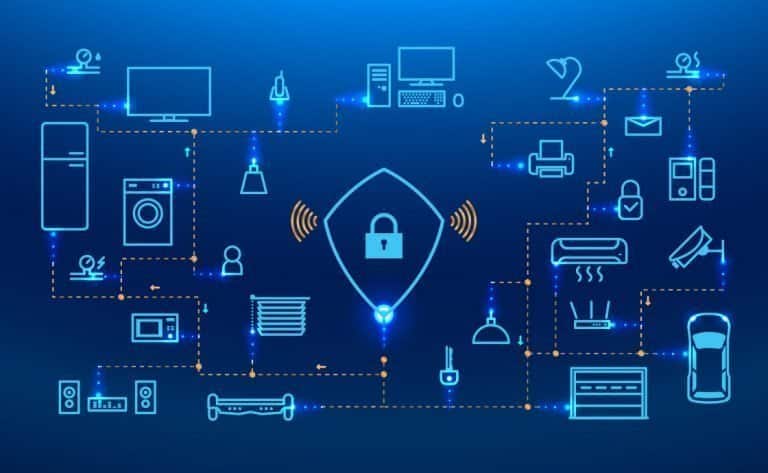
The Internet of things encompasses all components that are interconnected by a worldwide computer network and communicate with each other. The components transmit data through shared resources like servers and storage devices. Security becomes paramount to all these components because these devices can be used by hackers. Hackers may gain access to confidential information.

The Internet of things helps in sharing resources and making life better, but also it comes with challenges.  Your cybersecurity is critical when it comes to the internet of things (IoT). This article describes the effects of poor IoT security.

  1. Loss of information and data

Just by connecting your laptop to the internet, you are now part of the internet of things. All your information that is on your computer is at risk. Hackers use code scripts and techniques to search for and detect new devices that have recently connected to the internet of things. They have advanced technologies to know if these components have proper cybersecurity controls. If they do not have the appropriate controls, then it is easy for hackers to access your private information.

Hackers will use unprotected components as a gateway or access point to other protected components, putting even the protected components at risk.

For your safety, you should have firewalls to protect all your connected components so that they may not fall prey to hackers. Having a reliable antivirus software will also assist you in making sure that you are safe from attacks.

IoT components may be used as botnets that are controlled remotely using malware. As technology advances, hackers are becoming more sophisticated. IoT devices often have limited processing power. But when many thousands of IoT devices are leveraged as botnets, they can be mighty. They can be used to create a disruptive denial of service attack that creates havoc for the targeted organizations.

Guidelines for Cybersecurity on Ships

Ships have become a target for cyber attacks. Hackers know that many of the ships are vulnerable, making them easy to hack.

One of the things that have made ships an easy target is because they often do not take security precautions. Most of them do not have instruments that prevent and protect them from cyberattacks. They rely on old technology, which has many vulnerabilities. These vulnerabilities make them easy to be attacked by hackers who have sophisticated technology.

Ships need to invest in new technology, and they also need to have security standards to protect them from hackers.

Security standards are an essential aspect of any organization. They assist in protecting the interests of those institutions. For ships, they need standards to develop understanding and awareness of the critical elements of cybersecurity and cyber safety.

They focus on distinctive issues onboard ships. Consequences of not following standards could be severe, like physical loss of vessels, damage to boats, bodily injury to crew and onboard people, or the loss of cargo.

Here are standards to make sure that ships stay secure and there cybersecurity is not infringed:

  1. Establishment of awareness of the safety, security and commercial risk

Everyone onboard needs to know the chances that the ship is exposed to when sailing. Management should have safety measures taken to mitigate the risks and also should have a plan that can be made in the event of an attack. The education of security measures should ensure that all on the ship are aware of the risks.

  • Protection of ship with IT infrastructure

For the vessel to be safe, there is a need to use technology to protect it from attackers. Equipment like firewalls that can protect the ship from intruders and against vulnerabilities that allow the ship’s GPS systems to be attacked.

  • Authentication and authorization system

Access controls should be in place. Everyone should go through an authentication and authorization process before being allowed to access information or even certain private areas of the ship. Management of the users is critical to make sure that only those with “Need to Know” can access the information that they need.

  • Recovery plan

If a security event occurs, there is a need for a Blan B. A rollback plan or a restoration plan should be in place to make sure everything can go back to normal even after an attack has occurred. There must be resilience for the ship to go on.

In conclusion, maritime is facing many attacks in recent years and should be focused on cybersecurity. Ships are losing millions of dollars from attacks and are the high time to focus on security.